Hanmi Pharmaceutical has developed an innovative artificial intelligence (AI) platform capable of analyzing subtle changes in protein sequences and designing novel drug candidates.
This breakthrough marks a significant milestone in the pharmaceutical industry, as it represents the first instance of a South Korean pharmaceutical and biotech company advancing an AI-discovered first-in-class candidate to clinical trials for global development.
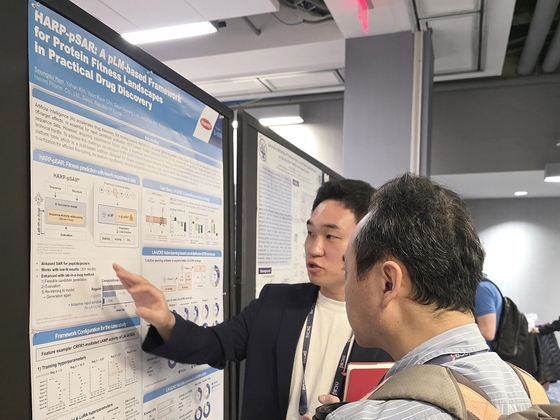
On Friday, Hanmi Pharmaceutical announced that they had presented their research findings on obesity drug development using their proprietary HARP-pSAR platform at the International Conference on Intelligent Systems for Molecular Biology (ISMB) in Washington D.C., which took place from June 12-16.
HARP-pSAR is Hanmi’s cutting-edge AI platform that leverages machine learning to understand the intricate relationship between protein sequences and pharmacological activity, enabling the design of potential drug candidates. The platform’s key advantage lies in its ability to predict protein activity with minimal experimental data.
This groundbreaking study garnered significant attention because it demonstrated AI’s capacity to not only predict protein activity but also propose optimal protein sequence designs, ultimately leading to the discovery and clinical development of promising drug candidates.
Utilizing this advanced platform, Hanmi has successfully created HM17321 (LA-UCN2), the world’s first obesity treatment candidate designed to simultaneously promote weight loss and muscle gain.
Unlike conventional GLP-1 class drugs, this novel candidate selectively targets the CRF2 receptor and is currently undergoing Phase 1 clinical trials in the United States.
In a related development, Hanmi unveiled HM500197 (LA-MSTN) at the American Diabetes Association (ADA) conference in June. This peptide-based myostatin inhibitor candidate for muscle enhancement represents another pioneering achievement in the field.
The research team explained that by focusing on AI-proposed protein sequences, they were able to streamline the selection process for candidate substances, significantly reducing the number of experiments, costs, and development time. Notably, the AI system demonstrated the ability to predict the activity of novel protein sequences not included in the training data and suggest optimal amino acid positions, thereby enhancing the efficiency of candidate substance design.
Looking ahead, Hanmi plans to further develop HARP-pSAR into a versatile AI-based drug design platform applicable to a wide range of targets, moving beyond its current role as a predictive model for specific tasks.
Dr. Choi In-young, Vice President and head of Hanmi’s Future Growth Division, emphasized the significance of this research, stating that this study demonstrates AI’s potential as a collaborative research partner, working alongside scientists to design new drug candidates, rather than serving merely as an analytical tool. The successful progression of AI-designed molecules to innovative drug candidates and clinical trials represents a major leap forward in drug discovery. It’s proud to have shared this achievement with the global scientific community.