KAIST Research Team Uncovers Key Mechanism for Cellular Nutrient Sensing
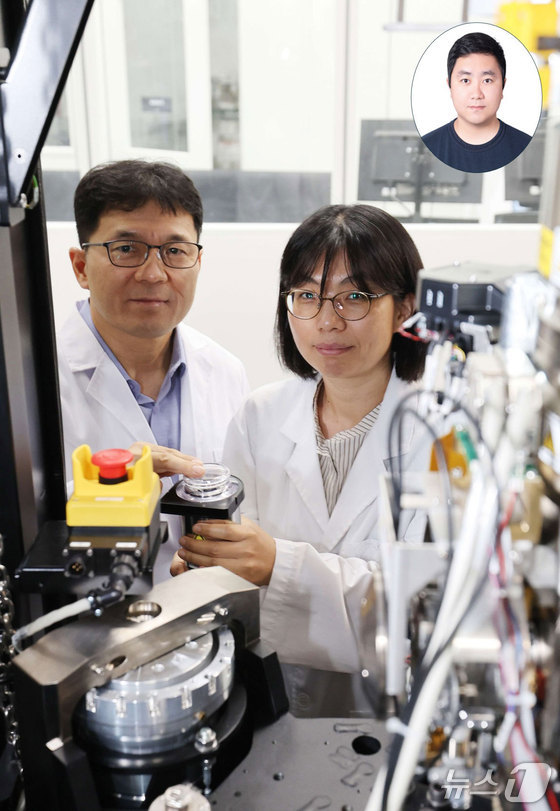
On July 26, the Korea Advanced Institute of Science and Technology (KAIST) announced a groundbreaking discovery in cellular biology. A research team led by Professors Park Hee-Sung and Kang Jin-Young from KAIST, in collaboration with Professor Seong-Hoon Kim’s team at Yonsei University, has identified a crucial mechanism by which cells detect their nutritional status and trigger growth signals.
Our body’s cells constantly monitor the availability of nutrients, such as amino acids, and adjust their growth, protein synthesis, and energy usage accordingly.
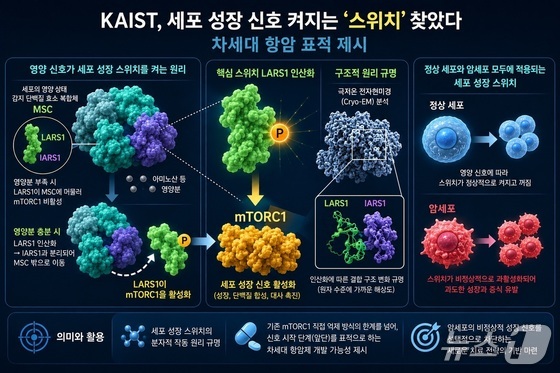
At the heart of this process is a protein complex called mTORC1, which acts as a cellular growth switch. When nutrients and energy are abundant, mTORC1 promotes cell growth, protein synthesis, and metabolism.
However, overactivation of mTORC1 can lead to excessive cell growth and proliferation.
This abnormal activation has been observed in various cancers, making mTORC1 a prime target for anti-cancer drug development. Despite its importance, scientists have struggled to fully understand how cells detect external nutrient signals and link them to mTORC1 activation.
The research team focused on a complex known as the multi-aminoacyl-tRNA synthetase complex (MSC), which houses several enzymes crucial for protein production.
Previously thought to only aid in protein synthesis, this study revealed that the MSC also serves as a critical hub for detecting cellular nutritional status and transmitting growth signals.
The key player in this process is a protein called LARS1, which recognizes the amino acid leucine.
When cells receive signals indicating sufficient nutrients, LARS1 undergoes phosphorylation – a process that attaches a small chemical tag to the protein, altering its function or binding state.
In nutrient-rich conditions, LARS1 receives a deployment signal through phosphorylation.
This causes it to separate from IARS1 (a protein synthesis enzyme that recognizes isoleucine) and move outside the MSC, subsequently activating mTORC1, the cell’s growth switch. Conversely, when nutrients are scarce, LARS1 remains bound within the MSC, preventing growth signal activation.
To verify this process, the team employed cryo-electron microscopy (Cryo-EM), a cutting-edge technique that freezes proteins at extremely low temperatures to observe their three-dimensional structures with atomic precision.
This allowed them to analyze the intricate binding between LARS1 and IARS1 at an unprecedented level of detail.
The results showed that under normal conditions, LARS1 and IARS1 are tightly bound.
However, upon receiving nutritional signals and undergoing phosphorylation, the binding between the two proteins loosens. The researchers confirmed that LARS1 then separates from the MSC to activate mTORC1.
To further validate their findings, the team created a mutant protein mimicking the phosphorylated state of LARS1.
This resulted in a significant increase in mTORC1 activity, demonstrating that LARS1’s phosphorylation acts as a critical molecular switch converting nutritional signals into cell growth signals.
Currently, some anti-cancer drugs work by directly inhibiting mTORC1.
However, since mTORC1 is necessary for the growth and metabolism of both cancerous and normal cells, direct inhibition can also affect healthy cells. The research team anticipates that by further elucidating the enzymes that phosphorylate LARS1 and their regulatory processes, they can develop more targeted anti-cancer treatment strategies.
These new approaches could more precisely block the initial stages of growth signal activation rather than directly inhibiting mTORC1.
However, the team emphasized that this study did not present specific anti-cancer candidates or demonstrate actual anti-cancer effects, stressing the need for further validation of drug targets and subsequent animal studies.
Professor Kang stated that this research structurally confirms the process by which nutritional signals convert into cell growth signals.
It hopes this leads to treatment strategies that can selectively block abnormally activated growth signals in cancer cells.
Professor Park added that this study elucidates the molecular-level processes by which cells detect their nutritional status to activate growth signals.
By uncovering this new molecular switch that regulates growth signals through the MSC, it’s established a crucial foundation for the development of next-generation anti-cancer drugs.
The research, with Dr. Kim Yoo-Jin from KAIST’s Department of Chemistry as the lead author, has been published online in the prestigious international journal Nature Communications.
This breakthrough opens up new avenues for understanding cellular metabolism and developing more targeted cancer therapies.