In the near future, breast cancer patients undergoing radiation therapy may no longer need to endure the discomfort of getting small tattoos or having reference lines drawn on their bodies.
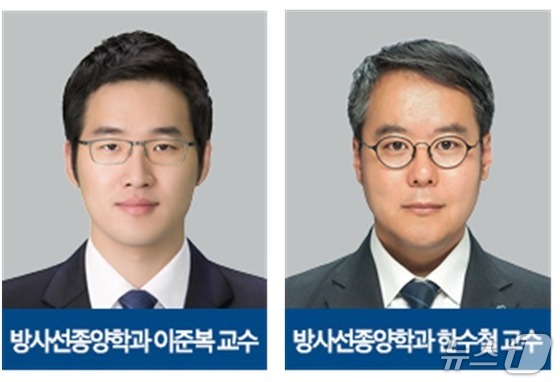
Kangbuk Samsung Hospital announced on Friday that its radiation oncology research team, led by Professors Lee Jun-bok, Han Soo-cheol, Nam Hee-rim, Cho Jin-dong, and Lee Hye-bin, has validated the geometric precision and respiratory tracking capabilities of a cutting-edge surface-guided radiation therapy system.
Breast cancer radiation treatment often employs a technique called deep inspiration breath-hold to minimize radiation exposure to the heart and lungs. This method requires patients to take a deep breath and hold it momentarily.
Traditionally, patients had to endure the inconvenience of getting small tattoos, having reference lines drawn, or wearing separate sensors to measure their breathing during each treatment session.
The next-generation surface-guided radiation therapy system aims to eliminate these discomforts by operating without the need for body markings or sensors.
Using advanced three-dimensional (3D) cameras and thermal imaging technology, the system can monitor the patient’s skin surface and movements in real-time, enabling precise position tracking.
To assess the accuracy of this new equipment during breath-hold therapy, the research team conducted experiments using a specialized phantom that accurately simulates human anatomy and breathing patterns.
The results were impressive: the next-generation system demonstrated high reproducibility with minimal deviations of just 0.3 mm in the left-right and vertical directions, and 0.7 mm in the longitudinal direction during position reproducibility tests.
When compared to existing image-guided radiation therapy systems, the new technology maintained a position error of less than 1 mm, matching the high positioning accuracy of traditional methods.
Notably, evaluations using a dynamic phantom that mimicked real breathing movements showed that the respiratory signals measured by the surface-guided system were nearly identical to those recorded by existing sensor-based equipment.
The difference in breathing movement amplitude was less than 0.3 mm, confirming the system’s ability to accurately monitor a patient’s breathing state during breath-hold therapy.
Professor Lee Jun-bok emphasized that this technology will significantly enhance both comfort and safety for breast cancer patients undergoing treatment.
Professor Nam Hee-rim added that these research findings will pave the way for exploring the system’s potential applications in treating other cancers that require respiratory-controlled radiation therapy, such as lung and liver cancers.
The radiation oncology department at Kangbuk Samsung Hospital is at the forefront of cancer treatment, utilizing state-of-the-art radiation equipment to target and destroy cancer cells. Their comprehensive services include radiation therapy for various cancers, specialized radiation treatments, and palliative care for cancer-related symptoms.
The groundbreaking research has been published in the latest issue of the prestigious international journal Radiation Physics and Chemistry.