

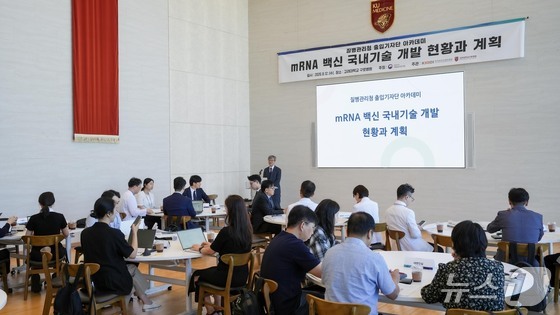
South Korea is speeding up development of domestic mRNA vaccine technology to prepare for a future pandemic and reduce reliance on overseas vaccine supplies. The government is accelerating development of domestic messenger RNA (mRNA) vaccines in preparation for a new pandemic that could emerge at any time following COVID-19. The initiative aims to secure an independent vaccine technology platform so the country does not repeat its reliance on overseas vaccines during the COVID-19 pandemic. The Korea Disease Control and Prevention Agency (KDCA) held a press briefing at Korea University Guro Hospital on Aug. 12 on the current status and future plans for domestic mRNA vaccine development. At the briefing, KDCA spokesman Ko Jae-young said, “During COVID-19, there were many variables in domestic vaccination plans depending on the supply schedules of vaccines from overseas pharmaceutical companies,” adding, “The government is actively working on mRNA vaccine development so that vaccine supplies will not be disrupted if another pandemic occurs.”
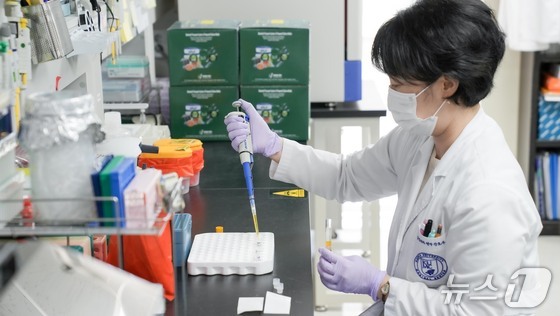
With a goal of domesticating COVID-19 mRNA vaccines by 2028, the government is pursuing its “mRNA Vaccine Development Support Project for Pandemic Preparedness.” The project has a total budget of approximately $336.8 million, including about $225.3 million in government funding. The initiative supports the entire vaccine development process, from preclinical studies through Phase 1, 2 and 3 clinical trials, sample production and manufacturing process development, with the goal of establishing a platform capable of developing a new vaccine within 200 days of the emergence of the next pandemic. Domestic pharmaceutical companies GC Biopharma and Korea BMI are currently developing mRNA vaccines with government support. Under the government’s phased competition-based approach, four companies — GC Biopharma, RemeGenex, EuBiologics and Korea BMI — were selected at the preclinical stage. Following subsequent evaluations, GC Biopharma and an consortium led by Korea BMI and including E-Gen Bio were selected for clinical development support. The government emphasized that it is pursuing a “selection and concentration” strategy to increase the likelihood of success for the project. Many companies entered the domestic mRNA vaccine development race during the COVID-19 pandemic but failed to achieve significant results. This time, the government plans to concentrate support on candidates that demonstrate competitiveness against already approved vaccines. GC Biopharma is currently the fastest-moving developer. The company received approval from the Ministry of Food and Drug Safety in December last year to begin Phase 1 clinical trials of its COVID-19 mRNA vaccine. It completed the trial involving 72 adults in April and submitted an application for a Phase 2 clinical trial in July.
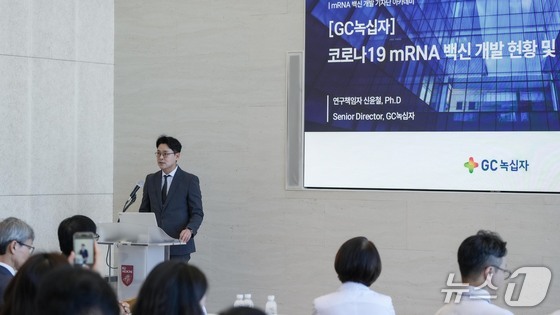
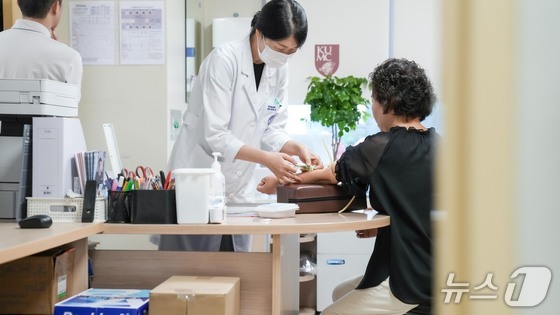
The briefing also included a look at follow-up monitoring of clinical trial participants. Jung Jin-kyung, 59, who participated in the Phase 1 trial, visited Korea University Guro Hospital for a medical questionnaire and blood test. When medical staff asked whether she had experienced any unusual symptoms since receiving the vaccine, Jung smiled and said, “There hasn’t really been anything different.” Medical staff collected her blood to examine changes in her immune response following vaccination. Phase 1 participants will undergo these examinations regularly for one year after vaccination. Jung Hee-jin, director of the Vaccine Innovation Center at Korea University Guro Hospital who led the Phase 1 trial, said, “No unusual findings have been identified among the clinical trial participants so far,” adding, “Antibody levels have increased in proportion to the dosage, suggesting that the vaccine is working well.” GC Biopharma plans to begin Phase 2 trials in earnest this year, submit its Phase 3 clinical trial plan by the second half of next year and apply for regulatory approval from the Ministry of Food and Drug Safety in 2028. Shin Yoon-cheol, head of GC Biopharma’s Development Team 2, said, “Our ultimate goal is to secure South Korea’s mRNA vaccine sovereignty,” adding, “We will complete an independent mRNA platform capable of responding immediately when the next pandemic crisis strikes.”
The government also plans to expand mRNA technology to infectious diseases beyond COVID-19. Researchers at Korea University began developing an mRNA vaccine for hantavirus this year. They aim to complete preclinical studies by the end of next year and move into clinical development. Nam Jae-hwan, director of the National Institute of Health, said, “Domestic companies have secured relevant core technologies and already have a substantial portion of the necessary production facilities,” adding, “With policy and financial support, South Korea could become a country with its own mRNA vaccine technology.” He added, “The likelihood of success can be assessed to some extent based on preclinical and Phase 1 results,” and said, “Both companies’ candidates have now cleared important hurdles, so the likelihood that they will advance through Phases 2 and 3 appears very high.”

The government also plans to expand mRNA technology to infectious diseases beyond COVID-19. Researchers at Korea University began developing an mRNA vaccine for hantavirus this year. They aim to complete preclinical studies by the end of next year and move into clinical development. Nam Jae-hwan, director of the National Institute of Health, said, “Domestic companies have secured relevant core technologies and already have a substantial portion of the necessary production facilities,” adding, “With policy and financial support, South Korea could become a country with its own mRNA vaccine technology.” He added, “The likelihood of success can be assessed to some extent based on preclinical and Phase 1 results,” and said, “Both companies’ candidates have now cleared important hurdles, so the likelihood that they will advance through Phases 2 and 3 appears very high.”