A groundbreaking study from South Korea suggests that a simple blood test could accurately diagnose colorectal cancer.
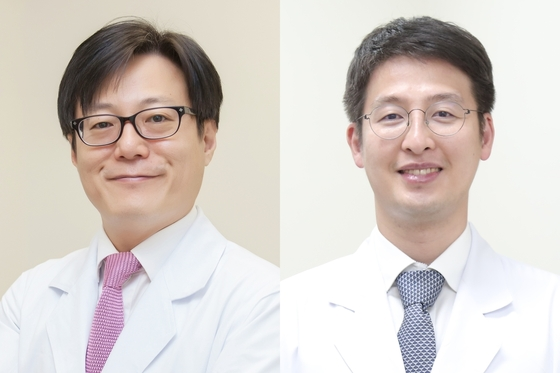
Researchers led by Drs. Byun Jeong-sik and Hong Seung-wook from Asan Medical Center’s Gastroenterology Department have developed an artificial intelligence (AI)-powered blood test that analyzes cell-free DNA (cfDNA). The team reported on Thursday that their method achieved a remarkable 90.4% sensitivity in detecting colorectal cancer, outperforming traditional fecal occult blood tests which typically range from 70% to 80% sensitivity.
The current national cancer screening program relies primarily on fecal occult blood tests for initial colorectal cancer detection, with positive results prompting a colonoscopy recommendation. However, this approach has faced criticism due to the inconvenience of stool sample collection and the demanding bowel preparation required for colonoscopies.
These factors have contributed to a concerningly low screening rate for colorectal cancer in South Korea, which stands at just 44.4% – the lowest among major cancer screening initiatives, according to the National Health Insurance Service.
In collaboration with GC Genome, a leader in liquid biopsy and clinical genomic analysis, the research team evaluated their cfDNA blood test on a diverse cohort of 1,677 individuals. This group included 302 colorectal cancer patients, 108 individuals with advanced polyps, and 1,267 healthy controls.
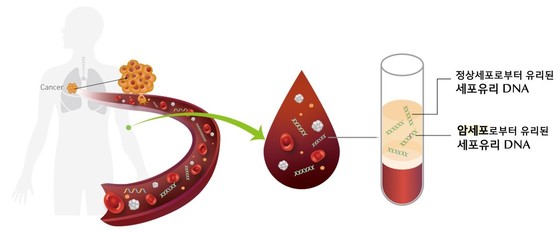
The innovative approach employs next-generation sequencing (NGS) to analyze cfDNA from blood samples. By feeding data on DNA fragment length, end structures, and genomic distribution into an AI deep learning model, the team can distinguish cancer-derived DNA from normal cellular DNA, enabling cancer detection through a simple blood draw.
The results were impressive, with the test demonstrating a 90.4% sensitivity and 94.7% specificity for colorectal cancer diagnosis. In practical terms, this means the method correctly identified 9 out of 10 cancer patients and accurately classified 95 out of 100 healthy individuals.
The test’s performance varied across cancer stages, with sensitivities of 84.2% for stage 1, 85.0% for stage 2, 94.4% for stage 3, and 100% for stage 4. Notably, it achieved a 90% sensitivity in detecting early-stage colorectal cancer (T1N0), which can often be treated with endoscopic resection alone. The test also showed promise in identifying advanced polyps – precursors to cancer – with a 58.3% sensitivity, highlighting its potential for both early diagnosis and prevention.
The study’s findings are particularly timely, given the rising incidence of colorectal cancer among younger adults aged 20 to 40, who currently fall outside the scope of national screening programs. This trend underscores the urgent need for more accessible and user-friendly screening methods to close detection gaps and boost early diagnosis rates.
Dr. Byun emphasized the significance of their work, stating that this study demonstrates the potential for a convenient blood-based screening method for colorectal cancer. The improved diagnostic accuracy achieved through AI deep learning technology paves the way for broader AI applications across various medical fields.
He added that with colorectal cancer rates increasing among younger individuals outside the current screening age range, combining the ease of blood tests with AI technology could significantly improve screening accessibility. This approach has the potential to enhance early detection rates, ultimately improving survival outcomes and quality of life for patients.
The groundbreaking research has been published in the prestigious American Journal of Gastroenterology, a leading publication of the American College of Gastroenterology.