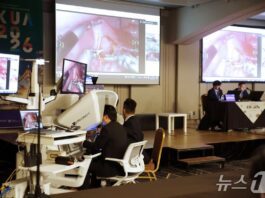
Mediwhale, a medical artificial intelligence (AI) company, has demonstrated the clinical potential of its cardiovascular disease risk assessment technology using retinal imaging at the European Society of Cardiology (ESC) Congress.
The company announced on Wednesday that it had presented three studies related to its Dr. Noon CVD technology at the annual ESC conference in Munich, Germany, which took place from August 28 to 31.
The ESC annual congress, organized by the European Society of Cardiology, is a premier international academic event showcasing cutting-edge research in cardiovascular disease prevention, diagnosis, and treatment.
Dr. Noon CVD is an innovative medical device that employs AI to analyze retinal images captured by fundus cameras, assessing the risk of cardiovascular disease. It’s currently in use at over 250 medical facilities worldwide.
This research was conducted in collaboration with the cardiology department at Papageorgiou General Hospital in Thessaloniki, Greece, and involved a large-scale cohort analysis using data from the UK Biobank.
The presented studies explored: the relationship between AI-assessed cardiovascular risk from retinal images and the severity of coronary artery disease and atherosclerotic plaque burden; the clinical effectiveness of Dr. Noon CVD in pre-screening patients for coronary artery calcification (CAC) testing; and the identification of candidates for blood tests based on cardiovascular risk using retinal AI and diabetes information.
Mediwhale reports that the findings show a correlation between AI-detected risk signals in the retina and the severity of coronary artery disease and atherosclerotic plaque burden. The research also indicates potential for using this technology to screen high-risk cardiovascular patients for further specialized tests, such as Coronary Artery Calcium (CAC) scans or blood work.
Notably, the collaborative study with Papageorgiou General Hospital was published in the American Journal of Preventive Cardiology, the official publication of the American Society for Preventive Cardiology (ASPC).
Hyung-taek Lim, Chief Strategy Officer of Mediwhale, stated that the research with European healthcare providers and large-scale cohort data has significantly bolstered the clinical evidence for Dr. Noon CVD. It has confirmed its potential in preventive medicine, where retinal scans can serve as an initial cardiovascular risk assessment, guiding patients to appropriate follow-up tests and care.
Mediwhale specializes in developing AI-powered medical devices that predict cardiovascular disease risk through retinal image analysis. Their flagship product, Dr. Noon CVD, evaluates cardiovascular risk by examining retinal images from fundus cameras. This non-invasive approach, which eliminates the need for blood draws or radiation exposure, is positioning the company as a leader in the preventive healthcare market.