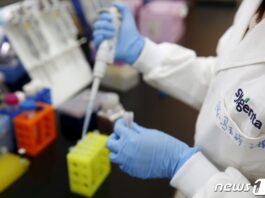
The government plans to secure research resources comprising 300 primates by 2031 to advance brain-computer interface (BCI) technologies and other brain industry innovations. They will also establish preclinical facilities to assess safety and performance before applying these technologies to humans.
The Ministry of Science and Information and Communications Technology (ICT) announced on Tuesday that the 2027 federal budget includes a new allocation of 58 billion KRW (about 43 million USD) for the establishment of a Brain Industry Preclinical Support Center. The project is set to run from 2027 to 2031, with a total budget of approximately 530 billion KRW (about 393 million USD).
This initiative brings to life the National Primate Center 2.0 (working title) proposed in the government’s Brain Future Industry National Research and Development (R&D) Strategy unveiled last March.
The Brain Industry Preclinical Support Center will facilitate essential preclinical research prior to human clinical trials in the brain industry sector, with a focus on BCI technology.
BCI technology interprets brain signals to control computers or external devices. A prime example is enabling patients with limited mobility to input text or operate robotic arms through thought alone. Rigorous preclinical research is crucial to verify safety and efficacy before human trials can begin.
In tandem with the center’s establishment, the government will gradually acquire the necessary primates for research. The plan is to start with 50 primates next year, increasing the number to reach 300 by 2031.
The primates will be sourced from international suppliers. Specific countries of origin and costs will be determined through future competitive bidding and procurement processes.
The location and operating organization for the center are yet to be determined. The Ministry of Science and ICT aims to launch the application process as early as the end of this year.
The government has identified BCI as a cornerstone of both the Moonshot Project, which aims to accelerate technological innovation through science, technology, and artificial intelligence (AI), and the Seven SEED Projects designed to secure future growth drivers. They are actively pursuing related technology development and infrastructure establishment.