The National Research Foundation of Korea (NRF) announced on Wednesday that a collaborative research team, led by Professor Oh Sung-hwan from Harvard Medical School and including scientists from Daegu Gyeongbuk Institute of Science and Technology (DGIST) and Institute for Basic Science (IBS), has uncovered the molecular mechanisms enabling beneficial gut bacteria from mothers to successfully colonize newborns’ oxygen-rich intestinal environments.
This groundbreaking study, supported by the Ministry of Science and Information and Communications Technology (ICT) and the Korea Research Foundation’s Sejong Science Fellowship program, was published online in the prestigious journal Cell on September 1.
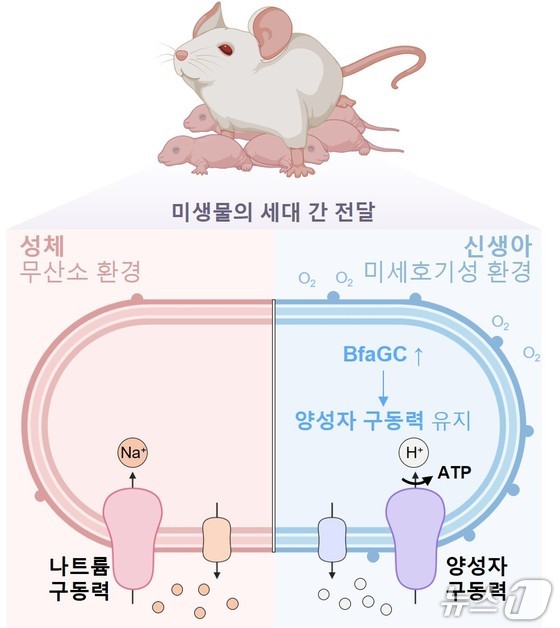
During the early postnatal period, newborns’ intestines temporarily contain oxygen, posing a significant challenge for most oxygen-sensitive beneficial bacteria. The research team focused on Bacteroides fragilis, a key symbiotic gut bacterium. They discovered that when exposed to oxygen, this microbe dramatically increases its production of alpha-galactosylceramide (BfaGC), a cell membrane glycolipid that acts as an energy shield, preventing energy loss from oxidative stress.
Bacterial strains unable to produce BfaGC showed significantly reduced ability to establish themselves during natural transmission from mother to newborn. Moreover, BfaGC not only aids bacterial survival but also directly stimulates the development of immune cells in the newborn’s gut, contributing to the simultaneous maturation of the microbiome and host immunity.
This study reveals that the transfer of gut symbionts from mother to infant is not a simple process, but rather involves complex molecular mechanisms of metabolic adaptation to the oxygen-rich environment of the newborn’s gut. These findings significantly advance our understanding of early microbiome formation and host-microbe symbiosis.
The research is expected to pave the way for developing innovative therapeutic and intervention strategies to promote healthy microbiome establishment in newborns by modulating maternal gut microbes and their metabolism.
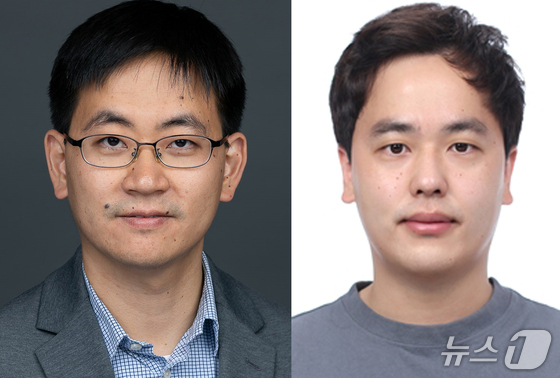
Professor Oh emphasized that they’ve identified the crucial mechanisms allowing a mother’s resident bacteria to transfer to her baby, adapt, and colonize the early gut environment. This discovery will serve as a vital foundation for developing microbiome-based personalized therapies.