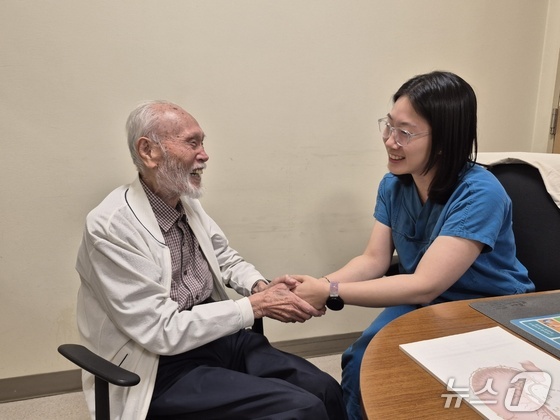
Professor Kim So-jung, a gastric cancer specialist at Catholic University of Korea’s Seoul St. Mary’s Hospital, has given new hope to a 97-year-old gastric cancer patient through innovative robotic-assisted surgery. Overwhelmed with gratitude, the patient clasped Professor Kim’s hand and said that it feel truly blessed.
The hospital reported on Friday that the patient, born in 1929, was first diagnosed with early-stage gastric cancer in the lower stomach about a decade ago. After two endoscopic resections, the patient had been under regular surveillance. This year, however, doctors discovered a new tumor in the upper stomach, near the esophagus.
Despite being classified as stage 1, the tumor’s size and indistinct borders made endoscopic resection impossible. Previous procedures on the lower stomach had left no room for partial preservation, necessitating a total gastrectomy.
Gastric cancer surgeries typically fall into two categories: partial gastrectomy, which removes only a portion of the stomach, and total gastrectomy, which removes the entire organ. These procedures differ significantly in their extent, complexity, reconstruction processes, and post-operative impact on the patient.
Total gastrectomy involves a more extensive resection and lymph node removal compared to partial gastrectomy, with a much more intricate process of reconnecting the intestines. Fortunately, detailed scans showed no signs of metastasis, and the patient’s robust physical and cognitive functions made her a suitable candidate for surgery.
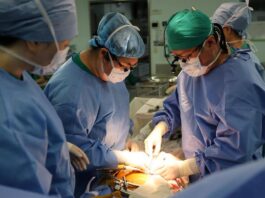
Given the patient’s advanced age, the medical team opted for robotic surgery last month. This cutting-edge technique allows for precise movements in confined spaces, enhancing surgical accuracy while minimizing blood loss.
The patient, a former educator, has long prioritized her health through regular walking and strength training. She finds solace in her faith, attending church, reading the Bible, and cherishing moments of spiritual reflection.
During her first post-discharge follow-up on Tuesday, the patient expressed heartfelt gratitude to Professor Kim, the medical staff, and her family. She shared her plans to celebrate the upcoming Chuseok holiday with her grandchildren, who have followed in her footsteps in the field of education.
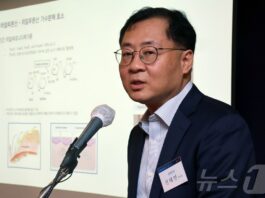
Professor Kim’s treatment philosophy is deeply rooted in her personal experience of caring for a family member with cancer during her medical school years. She specializes in laparoscopic and robotic surgeries for gastric diseases, including cancer.
When treating patients, it considers not just the disease, but how the entire family is coping with the treatment process, she explained. It’s crucial to approach patients and their families with genuine care to help alleviate their fears and anxieties.
Professor Kim emphasized that age alone should not dictate cancer treatment decisions in elderly patients. Rather than imposing limitations based solely on age, she advocates for a holistic assessment of overall health, physical capabilities, existing medical conditions, cognitive functions, and potential for post-surgical recovery.
For elderly patients, post-operative care is just as critical as the surgery itself, Professor Kim noted. She stressed the importance of carefully monitoring nutrition, encouraging appropriate exercise, managing underlying conditions, and preventing complications to ensure patients can safely return to their daily routines.