Samsung Biologics unveiled groundbreaking process innovations at a global biotech conference, reducing biopharmaceutical development time by 3.5 months and doubling cell culture productivity.
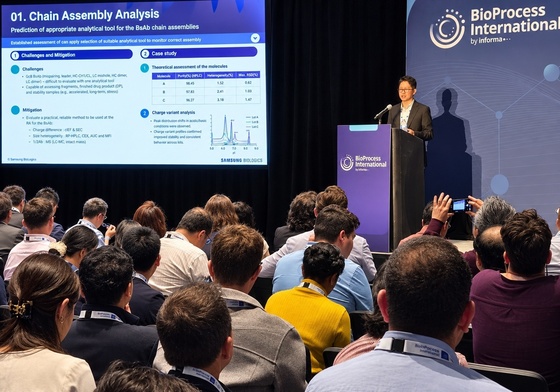
The company announced on Monday that it had showcased its biopharmaceutical manufacturing process innovation strategies at the 2026 BioProcess International (BPI) conference in Boston from September 22-25.
BPI is a premier event for sharing cutting-edge technologies across all aspects of biopharmaceutical development, production, and analysis. This year’s conference attracted over 250 companies and more than 3,000 biotech experts worldwide. Samsung Biologics has been a consistent participant since 2018, marking its sixth consecutive year.
The company set up a dedicated booth to demonstrate its comprehensive capabilities in supporting the entire drug development lifecycle, from Contract Research Organization (CRO) services to Contract Development Organization (CDO) and Contract Manufacturing Organization (CMO) offerings. They highlighted their innovative Samsung Organoid technology, advanced CDO capabilities, and versatile multi-modality production capacity.
A standout presentation came from Lee Tae-hee, Samsung Biologics’ Executive Director of Antibody Cell Purification Process Development. He detailed how the company leveraged integrated Chemistry, Manufacturing, and Controls (CMC) to design tailored processes for specific pharmaceuticals. This approach reportedly slashed development time from 13 to 9.5 months while maintaining rigorous quality standards.
Samsung Biologics has recently expanded its scope beyond traditional Contract Development and Manufacturing Organization (CDMO) services to include early-stage drug candidate discovery.
In June of last year, the company launched its Samsung Organoid service, which uses three-dimensional (3D) models of patient tumor tissues to evaluate drug candidate efficacy, marking its entry into the CRO sector. This March, it bolstered its CDO services by developing in-house capabilities for Master Cell Bank (MCB) production and vector manufacturing.
These strategic moves aim to enhance the company’s Contract Research Development and Manufacturing Organization (CRDMO) framework, offering end-to-end support from initial candidate discovery through development and production under one roof.
The conference also spotlighted research breakthroughs in process productivity. Lee So-jung, head of the culture process development group, presented a case study using the S-Tensify™ platform, which increased cell culture density and doubled the titer (drug concentration in culture media) compared to previous levels.
Samsung Biologics also showcased its advancements in cell and gene therapy. At the concurrent International Conference on Cell and Gene Therapies, the company presented a sophisticated analytical strategy for assessing the proper encapsulation of therapeutic genes in adeno-associated viruses (AAV).
James Choi, Vice President of Sales Support at Samsung Biologics, emphasized the significance of showcasing their unparalleled, full-spectrum biopharmaceutical support capabilities at BPI. He affirmed the company’s commitment to further solidifying its global market position through continued technological advancements and service excellence.