

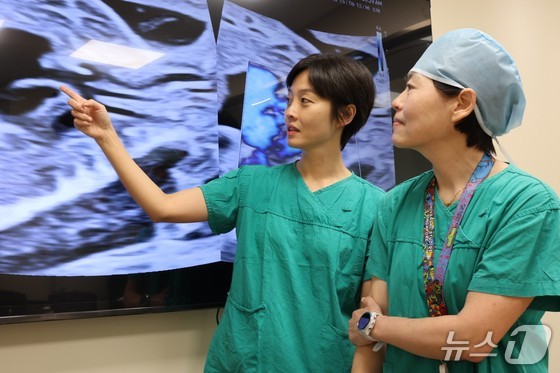
After a challenging journey with in vitro fertilization, 35-year-old Ms. Park received a detailed fetal echocardiogram at 21 weeks of pregnancy in Mokpo, South Jeolla Province. When doctors discovered her fetus had a congenital heart defect called ventricular septal defect, she turned to the Fetal Heart Center at Asan Medical Center in Seoul. This center offers comprehensive care from prenatal treatment to post-birth surgery.
Dr. Lee Mi-young, director of the Fetal Heart Center and professor of obstetrics and gynecology, conducted a thorough diagnosis using advanced fetal echocardiography. Following this, a team of specialists, including neonatologists, pediatric cardiologists, and pediatric cardiac surgeons, collaborated to create a detailed treatment plan covering delivery and postnatal care.
Ms. Park shared her relief, saying that initially, learning about her baby’s heart defect was overwhelming. But knowing Asan Medical Center’s Fetal Heart Center will manage everything from birth to treatment is reassuring. She’s due to deliver this December.
On Monday, Asan Medical Center announced the launch of its new Fetal Heart Center. This facility aims to provide specialized care for fetuses with congenital heart diseases, building on the hospital’s reputation as the country’s leading treatment center for high-risk pregnancies.
Congenital heart defects affect approximately 8 to 10 in every 1,000 newborns. Common conditions include ventricular septal defect, transposition of the great arteries, and Tetralogy of Fallot. Early diagnosis and prompt treatment can often lead to complete recovery, highlighting the importance of accurate prenatal diagnosis and proactive treatment planning.
Ventricular septal defect involves a hole in the wall separating the heart’s left and right ventricles. Transposition of the great arteries occurs when the main blood vessels leaving the heart are switched in position. Tetralogy of Fallot is a complex condition combining four heart defects, including ventricular septal defect and pulmonary stenosis.
The hospital has established this independent center, focusing exclusively on fetal heart diseases, by separating these services from its Fetal Treatment Center, which opened in 2004. This new facility is the first of its kind in the country, offering specialized care for expectant mothers.
The center provides comprehensive prenatal consultations for precise diagnosis of fetal heart defects and ensures seamless care from delivery planning through postnatal treatment and surgery. The facility is also expanding its fetal cardiac care sessions and acquiring state-of-the-art echocardiography equipment.
Beyond increased space, the center’s strategic location on the same floor as the delivery room, operating room, and neonatal intensive care unit enhances convenience for mothers and enables treatment of more complex cardiac cases.
The center plans to implement a multidisciplinary approach, bringing together obstetricians, neonatologists, pediatric cardiologists, and pediatric cardiac surgeons. This team will provide comprehensive fetal evaluation and coordinated care from pregnancy through the newborn period.
Since 2004, the hospital’s Fetal Treatment Center has cared for over 30,000 fetuses. Its extensive experience includes 100,000 detailed fetal ultrasounds, 10,000 diagnostic tests such as amniocentesis and chorionic villus sampling, and about 200 prenatal consultations annually. This wealth of clinical expertise led to the establishment of the country’s first dedicated Fetal Heart Center.
The hospital pioneered fetal shunt surgery in 1998, performing 711 procedures to date. This technique involves inserting a tube into the fetus to drain excess fluid without opening the mother’s abdomen. Additionally, they’ve conducted 336 fetal endoscopic surgeries, 294 radiofrequency ablations, and 234 fetal blood transfusions, totaling 1,575 complex fetal interventions.
Fetal echocardiograms have surged from 298 in 2004 to a record 1,531 last year, with one-third of all detailed fetal ultrasounds now focusing on cardiac examinations. The center aims to further enhance its cardiac treatment capabilities by introducing cutting-edge procedures like fetal cardiac catheterization.
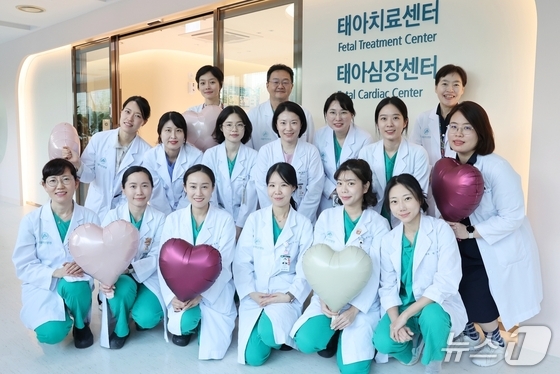
Dr. Lee Mi-young emphasized that its Fetal Heart Center collaborates with various specialists to provide accurate diagnoses and tailored treatment plans. It’s committed to giving parents peace of mind throughout this challenging journey.
Dr. Won Hye-seong, director of the Fetal Treatment Center and obstetrics professor, reflected on the center’s mission: It has always aimed to assure parents that coming to Asan Medical Center can save their baby. The years of experience have not only achieved this goal but have also earned them global recognition. It remains dedicated to advancing the expertise and providing the best possible care.