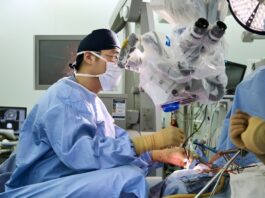
A startling culprit has been identified, causing distress for stroke patients who thought they were out of the woods. The air we breathe daily contains a hidden danger: sulfur dioxide, which acts as a ticking time bomb for stroke recurrence.
Researchers led by Dr. Lee Geon-joo from Korea University’s Guro Hospital have uncovered a link between sulfur dioxide (SO₂) exposure post-discharge and the risk of stroke recurrence in acute ischemic stroke patients. Their groundbreaking findings were published in the Journal of Stroke, a prestigious international publication of the Korean Stroke Society, on Thursday.
While the connection between air pollution and cardiovascular diseases, including strokes, is well-established, its impact on patient recurrence rates remained a mystery. Given that stroke recurrence dramatically increases the risk of disability and death, identifying environmental factors became crucial.
To shed light on this issue, the research team analyzed data from 27,340 acute ischemic stroke patients enrolled in the CRCS-K-NIH, a nationwide prospective multicenter cohort study in Korea, from March 2014 to April 2021.
Using data from national air monitoring stations, the team estimated average concentrations of six air pollutants in patients’ residential areas for three months post-discharge. These pollutants included fine particulate matter (PM10), ultrafine particulate matter (PM2.5), nitrogen dioxide (NO₂), sulfur dioxide (SO₂), carbon monoxide (CO), and ozone (O₃). The researchers then tracked stroke recurrence over the following year.
The results were striking: among the six pollutants, only sulfur dioxide showed a significant correlation with stroke recurrence. As SO₂ levels rose, so did the risk of recurrence. This groundbreaking discovery marks the first time a link between post-discharge sulfur dioxide exposure and stroke recurrence has been confirmed.
Further analysis revealed that longer exposure to sulfur dioxide corresponded with a higher risk of recurrent strokes. While one-month post-discharge concentrations weren’t significant, the correlation strengthened after two months, reaching statistical significance by the third month. This suggests that prolonged exposure poses a greater threat than short-term exposure.
A regional breakdown showed elevated sulfur dioxide levels in major port cities like Incheon, Ulsan, and Busan. However, the link between SO₂ and stroke recurrence held even when residents of these cities were excluded from the analysis, indicating that the risk isn’t limited to port areas.
Dr. Lee emphasized that traditionally, secondary stroke prevention has focused on managing blood pressure, blood sugar, lipids, and medication. The study highlights the need to consider local air quality when assessing recurrence risk for discharged patients.
He cautioned that while the observational study can’t definitively prove that sulfur dioxide directly causes recurrence, nor can it establish specific concentration thresholds as clinical guidelines, patients should continue their prescribed secondary prevention treatments while staying informed about air quality in their area.
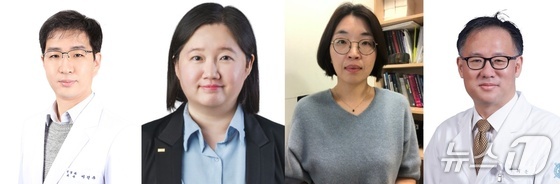
This pioneering research was a collaborative effort, involving Dr. Lee, Professor Hwang Jeong-eun from Soonchunhyang University’s Medical Information Technology (IT) Engineering Department, and Drs. Kim Sung-eun and Bae Hee-jun from the Neurology Department at Bundang Seoul National University Hospital. The study was made possible through support from the Creative Challenge Research Program of the National Research Foundation of Korea.