

Korean spine implant companies are moving beyond the U.S. Food and Drug Administration (FDA) approval hurdle and accelerating efforts to gain traction in operating rooms. As they move beyond securing FDA 510(k) clearance to registering products at U.S. hospitals, winning adoption by surgeons and generating repeat use, the center of competition in the U.S. market is shifting from regulatory approval to commercialization.
Medyssey Expands U.S. Market Reach With PEEK Cervical Implants Following Titanium Products
According to industry sources on the 12th, Medyssey, a subsidiary of Dongwha Pharm, recently secured FDA 510(k) clearance for a cervical implant made from polyether ether ketone (PEEK). Following clearance in June for a 3D-printed titanium product, the company is expanding its cervical implant portfolio across different materials as it pursues the U.S. market.
PEEK is a widely used polymer material for spinal implants and, alongside titanium, is used in the U.S. cervical implant market. By offering cervical products made from different materials, Medyssey is broadening the options available to meet U.S. surgeons’ preferred surgical techniques and material preferences.
However, FDA clearance is only the starting point for doing business in the United States. To sell products in the market, companies must secure hospital and surgeon adoption and demonstrate their value in clinical practice. As a result, how quickly Korean companies can build a track record of actual surgeries after obtaining FDA clearance is emerging as a key measure of competitiveness.
L&K Biomed Records 50 Cumulative Surgical Levels After FDA Clearance, With Products Registered at 27 Hospitals
L&K Biomed is building a track record of clinical use. Its BlueX-C expandable cervical cage received FDA clearance in May and was used in its first U.S. surgery in late June. The company subsequently expanded clinical use among leading spine specialists and, by mid-August, had recorded procedures covering all levels from one to four.
About a month and a half later, cumulative use in the United States surpassed 50 surgical levels. BlueX-C is now registered at 27 U.S. hospitals, roughly double the number shortly after its initial registrations.
L&K Biomed says that, beyond increasing the number of initial procedures, it is seeing more cases in which U.S. surgeons who previously used other products switch to BlueX-C and continue using it in subsequent procedures.
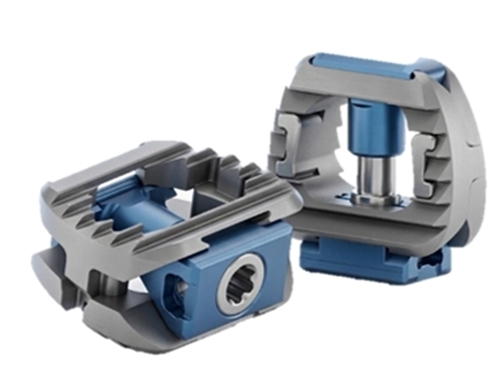
BlueX-C is an expandable cervical implant that allows surgeons to adjust the cage’s height during surgery. According to the company, its height can be adjusted after insertion to accommodate a patient’s anatomy and the circumstances of the procedure, making it suitable for a range of cervical surgeries.
L&K Biomed is expanding product sales to hospitals and surgeons in collaboration with its local partners. In September, it also signed a technical agreement with internationally renowned spine surgeon Dr. K. Daniel Riew for joint product development, as it seeks to broaden its cervical implant portfolio.
CG MedTech Also Secures FDA Clearance for Lumbar Implant, Accelerates U.S. Expansion
CG MedTech is also pursuing growth in the U.S. market based on FDA clearance. Having secured FDA 510(k) clearance for a lumbar implant, the company’s next step is to expand product use among U.S. medical institutions and surgeons.
Overall, Korean spine implant makers are moving beyond the first hurdle of FDA clearance and focusing on actual market penetration.
Because surgeons’ choices of spinal implants are closely linked to surgical outcomes, clinical experience and repeat use are considered important indicators of market acceptance. As Korean companies continue to secure FDA clearance for their products, their competitiveness is expected to depend on how quickly they can win hospital and surgeon adoption and translate that into procedures and sales.
“Domestic spine implant makers are moving beyond the stage of securing FDA clearance and into the stage of getting U.S. surgeons to use their products and expanding adoption within hospitals,” an industry official said. “Ultimately, sustained use in surgeries and the ability to generate sales in the U.S. market will determine success or failure.”