

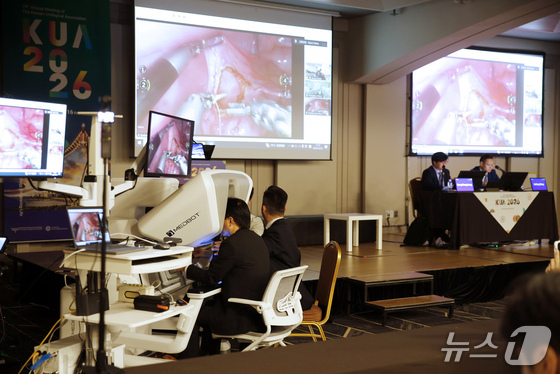
A groundbreaking advancement in cross-border remote surgery technology now allows doctors to perform operations without being physically present at the patient’s side. This innovative approach was successfully demonstrated in South Korea, using a surgical robot located approximately 870 km away in Shanghai, China. The demonstration showcased the potential for remote surgery to expand beyond traditional hospital settings.
On October 16, Professor Kang Seok-ho from Korea University Anam Hospital presented this cross-border remote surgery during the 78th Annual Conference of the Korean Urological Association (KUA 2026) at COEX in Seoul.
Professor Kang operated the robot from a surgical console set up at the COEX conference venue. The surgical robot in Shanghai, approximately 870 km (about 541 miles) away in a straight line, replicated his movements in real-time, enabling the team to perform surgery on an animal model at the Shanghai site.
This demonstration marks the first instance of implementing cross-border remote surgery using commercially available surgical robots in South Korea. It’s particularly significant as South Korean medical professionals directly operated a surgical robot across national borders. The procedure utilized the Toumai surgical robot from China’s MicroPort MedBot.
Toumai is a multi-jointed surgical robot designed for laparoscopic procedures, offering high-definition 3D imaging. When doctors manipulate the console, the robot’s arms execute precise movements. The system supports remote surgeries using advanced technologies such as 5G, fiber optics, and satellite communications. It received clinical approval for remote surgical systems in China last year.
Remote surgery involves real-time operation of surgical robots through communication networks when the doctor and patient are physically separated. This technology has the potential to reduce healthcare disparities in areas with a shortage of medical professionals or limited access to specialists, as skilled doctors can participate in surgeries without being on-site.
There are also hopes that remote surgery can provide specialized surgical care in inaccessible locations, such as war zones or disaster areas. In the long term, the technology could extend to extreme environments like polar regions, maritime areas, and even outer space, where direct access for doctors is challenging.
A notable example of long-distance remote surgery is the Lindbergh Operation conducted in 2001. During this groundbreaking procedure, medical professionals in New York operated a surgical robot remotely to perform a cholecystectomy on a patient in Strasbourg, France, demonstrating that surgeries could be performed thousands of miles apart.
As surgical robots and communication networks advance, the technical foundation for long-distance remote surgery is rapidly developing. Improvements in 5G, fiber optic networks, and satellite communications have reduced communication delays and instability. New surgical robots designed specifically for remote operation are also being developed. Reports indicate that over 1,500 remote surgeries have been performed worldwide this year.
However, technical implementation and actual patient care remain separate issues. For remote surgery to become a standard medical service, several challenges must be addressed. These include regulations governing cross-border medical practices, liability for medical accidents, qualifications for medical personnel, treatment costs and insurance coverage, privacy protection, cybersecurity, and emergency response systems in the event of communication failures.
It’s important to note that this surgery involved a preclinical demonstration on an animal model rather than a human patient. To apply cross-border remote surgery to actual patients, it is essential to thoroughly verify patient safety, surgical accuracy, and communication stability. Additionally, relevant laws and regulations must be established.
The scope of remote surgery is also expanding beyond Earth. Simulated surgical technology demonstrations are underway, allowing ground-based medical professionals to remotely operate surgical robots in space environments such as the International Space Station (ISS). Research continues to develop techniques that enable surgeons to operate in locations where they cannot physically go.
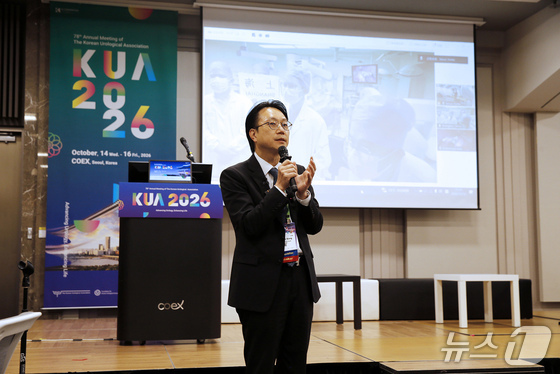
Professor Kang Seok-ho stated that this demonstration confirms how remote surgery can be implemented in real surgical environments, transcending the physical distance between Korea and China. He emphasized the need for thorough verification of patient safety and institutional foundations before applying this technology in real medical settings.
He added that once a solid foundation is established, remote surgery can expand surgical treatment possibilities in regions where specialized medical professionals are hard to reach. In the long term, it should explore its potential in extreme environments such as the sea or polar regions, as well as in outer space.
Professor Kang specializes in urological tumors, including bladder and prostate cancers, and robotic surgery. He has pioneered high-difficulty robotic surgeries for bladder cancer, successfully performing radical cystectomy and total intracorporeal urinary diversion as the first in Asia. Currently, he serves as the president of the Korean Society of Endourology and Robotics.