Artificial intelligence is transforming healthcare, from drug development and diagnosis to treatment and hospital operations. However, concerns are growing that its benefits could be concentrated in a handful of countries and among privileged groups. In response, South Korea and the World Health Organization (WHO) have agreed that the gains from AI-driven healthcare innovation should be shared equitably worldwide and called for coordinated international action.
“AI Must Be Used to Protect Human Dignity and Advance Equity”
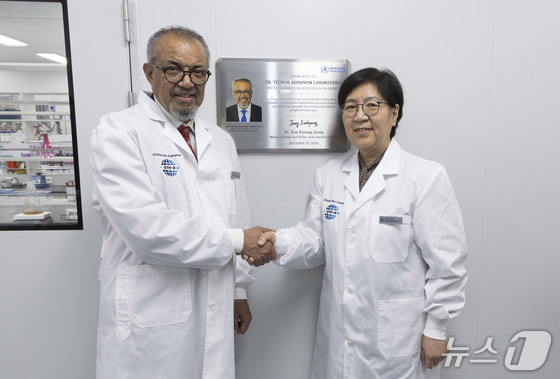
South Korea’s Ministry of Health and Welfare and the WHO announced the “Seoul Declaration on AI Healthcare for Responsible Innovation and Global Solidarity” on the 21st at the 2026 World Bio Summit, held at the COEX Magok Convention Center in Seoul. Health and Welfare Minister Jung Eun-kyeong and WHO Director-General Tedros Adhanom Ghebreyesus personally introduced the declaration.
This marks the first time the South Korean government and a WHO director-general have jointly issued an international declaration on the use of AI. As AI rapidly reshapes healthcare systems, the declaration emphasizes that technological progress must go hand in hand with safety, accountability, access to healthcare and international solidarity.
In particular, the declaration warns against a scenario in which the benefits of AI innovation vary according to a country’s wealth or income levels. It stresses that AI must be used ethically and responsibly to protect human safety and dignity and improve equity in access to healthcare.
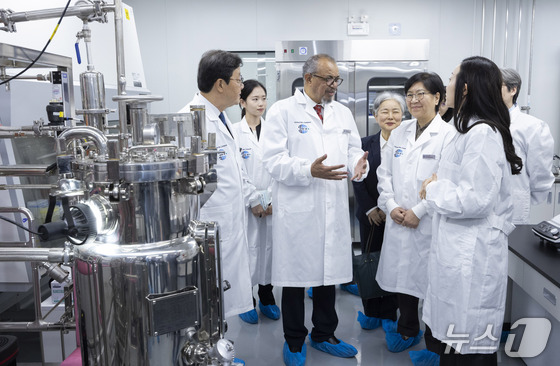
To advance these goals, South Korea and the WHO agreed to expand joint research into AI-driven healthcare industry innovation and solutions to major healthcare challenges, strengthen the foundations for data use, and work to ensure that the resulting benefits are distributed fairly. They also established a principle of expanding investment in research and development and infrastructure while prioritizing unmet medical needs.
Managing risks arising from the growing use of AI in clinical settings was another major priority. The two sides agreed to recognize and address risks associated with AI use, strengthen accountability and improve healthcare professionals’ capabilities in using AI. The declaration also calls for oversight frameworks tailored to the intended use and risk level of each application.
The declaration also highlights cross-border cooperation on health security. The parties agreed to use AI to detect public health emergencies earlier, strengthen cybersecurity and biosecurity, and reinforce collaborative frameworks involving governments, the healthcare sector, AI developers, WHO collaborating centers and civil society.
To ensure the declaration goes beyond a statement of principles, it also outlines follow-up action. Countries are expected to respect domestic laws and national circumstances as they implement the declaration while working together to ensure AI contributes to better human health and that its benefits are shared equitably.
Minister Jung said the benefits of AI innovation should be shared fairly around the world rather than confined to particular countries or social groups. WHO Director-General Tedros also said healthcare innovation must narrow disparities between countries and ensure equitable access, adding that the WHO would continue working with South Korea.
World Bio Summit Runs Through the 22nd, Alongside World Hospital Congress
The World Bio Summit is an international event jointly organized each year by the South Korean government and the WHO since 2022, building on a shared recognition of the need for international solidarity to respond to infectious disease emergencies and strengthen global health security. This year’s summit is being held in conjunction with the 49th World Hospital Congress, led by the International Hospital Federation (IHF).
Participants include international organizations such as the WHO, the Organisation for Economic Co-operation and Development (OECD) and the European Medicines Agency (EMA), along with global pharmaceutical, biotechnology and AI companies and academic experts. Discussions are also set to intensify on how AI is reshaping the healthcare industry, including drug development, clinical trials, AI transformation in healthcare institutions and regulatory approval of medical devices.
The two-day event runs through the 22nd. Its diverse program will address the future of science shaped by AI, drug and clinical development, hospital operations, medical device regulation, global investment and international cooperation, with discussions focused on the direction and challenges of AI healthcare.
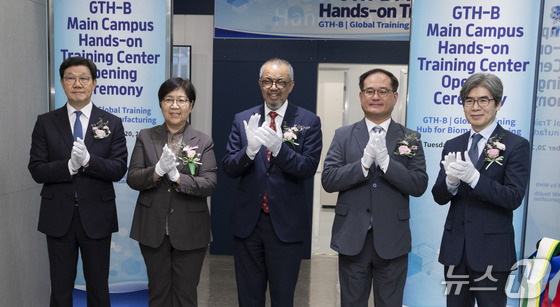
WHO Director-General Tedros is visiting South Korea for the first time since taking office. His visit is the first by a WHO director-general to the country in 11 years, since former director-general Margaret Chan visited in 2015. Tedros is scheduled to visit the Global Bio Workforce Training Hub campus in Incheon, the Ethiopian Korean War Veterans Memorial Hall and biopharmaceutical companies.
The Ministry of Health and Welfare said the Seoul Declaration would serve as a basis for using AI not merely as a tool for industrial innovation but as a means of addressing global healthcare challenges. The ministry also plans to strengthen international cooperation to ensure that the benefits of technological progress are not divided along lines of healthcare quality or economic capacity.