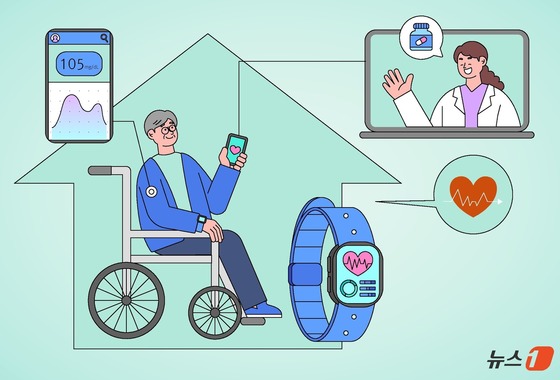
The U.S. Food and Drug Administration (FDA) has refined its guidelines for apps used in conjunction with prescription medications. The agency has established criteria for including these apps in drug labeling based on their impact on safe and effective medication use. Similarly, South Korea is developing approval and review standards for products that merge pharmaceuticals with digital technology.
Industry sources reported on Thursday that the FDA released final guidelines on Tuesday, detailing criteria for labeling and information submission requirements for software used with prescription drugs. This document finalizes the 2023 draft, clearly defining regulatory standards based on app functionality and clinical significance.
These new guidelines outline when pharmaceutical companies must include companion apps in drug labeling and specify when app-displayed information should be submitted to the FDA.
Software integrated with medical devices, such as asthma inhalers, generally requires inclusion in drug labeling. Conversely, standalone apps like medication reminders or symptom trackers are recommended for inclusion only if they are essential for safe and effective drug use or offer significant clinical benefits.
Simple medication reminder apps do not automatically qualify for inclusion in drug labeling. However, if an app proves crucial for safe and effective drug use or demonstrates substantial clinical advantages, it may be incorporated into the labeling.
The FDA also aims to regulate patient information provided through these apps. Most information displayed in drug-related apps will be treated as promotional or advertising material. This approach requires pharmaceutical companies to manage information about both their drugs and associated digital services.
These guidelines don’t impose new approval requirements on all medication management apps. Rather, they aim to reduce regulatory ambiguity by clarifying how existing drug labeling and advertising rules apply to prescription drug-related software.
In South Korea, the Digital Medical Products Act, effective since last January, established a framework for products combining pharmaceuticals with digital technology. Digital combination drugs, which integrate pharmaceuticals with digital medical devices or health support tools, require separate product approval.
However, no digital combination drugs have yet received approval in South Korea. An official from the Korea Food and Drug Safety Evaluation Institute confirmed this, stating that no products have been approved to date.
In July, the Ministry of Food and Drug Safety convened with seven companies, including four pharmaceutical firms and three digital medical device manufacturers, to address regulatory challenges and potential improvements in the digital combination drug sector.
The ministry plans to release guidelines for designing clinical trials for digital combination drugs by year-end. An official explained that these guidelines will provide a reference for designing clinical trials for specific types of digital combination drugs.
The FDA’s guidelines differ in scope from those being developed in South Korea. While the FDA focuses on labeling and information provision criteria for prescription drug-related apps, South Korean guidelines emphasize supporting clinical trial design for digital combination drugs.
With no approved digital combination drugs in South Korea yet, there’s significant interest in whether the upcoming clinical trial design standards will catalyze actual product development and approvals.