SK Bioscience is pioneering vaccine production innovation through artificial intelligence (AI). After implementing an AI-based yield analysis system at its Andong facility, the company is now expanding AI applications to research and development, clinical trials, regulatory approvals, and quality control, aiming to boost overall operational efficiency.
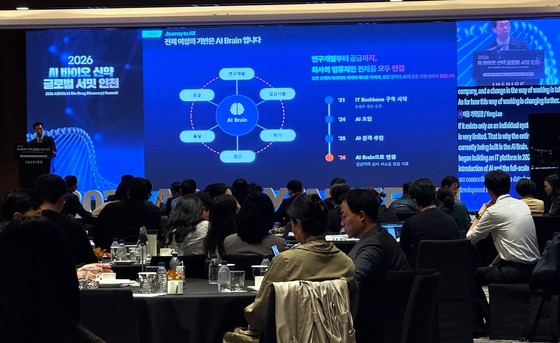
On October 23, SK Bioscience showcased its AI applications and company-wide AI transformation (AX) strategy at the AI-Bio New Drug Hub Global Summit in Incheon, held at the Inspire Entertainment Resort on Yeongjong Island.
Lee Yong, head of SK Bioscience’s AX Planning Team, delivered a presentation titled, AI: Overcoming Field Challenges, detailing the AI technologies applied to vaccine production processes and the company’s digital transformation roadmap.
The company has integrated an AI-powered Yield Guide Agent into its flu vaccine production process at the Andong L HOUSE facility. This system analyzes production data to identify yield-influencing factors and recommends optimal operational conditions. It assists production staff in understanding process conditions and making data-driven decisions. However, AI’s role is limited to analysis and recommendations, with key decisions still requiring review and approval from responsible personnel.
Given that flu vaccines must be adapted annually to address evolving virus strains, analyzing process data and determining appropriate production conditions is crucial. The company aims to enhance production efficiency and stability through AI utilization.
AI applications are expanding beyond production to research and development, clinical trials, regulatory approvals, and quality assurance. In Research and Development (R&D), AI supports data collection and research tasks. For clinical trials and regulatory processes, it streamlines related activities. The quality assurance department is exploring AI solutions for repetitive tasks such as documentation and audit responses.
While leveraging its internal capabilities, SK Bioscience is also collaborating with global partners, including the Gates Foundation and the international health organization PATH.
Since establishing its information technology (IT) infrastructure in 2021, the company has been steadily advancing its digital transformation. Currently, it’s developing a company-wide AI system called AI Brain that integrates work processes from R&D to production and supply. The company plans to expand AI’s operational support by 2027-2028 and fully pursue sector-specific goals starting in 2029.
Lee emphasized that it’s extending AI applications beyond production to R&D, clinical trials, regulatory approvals, and quality assurance. The aim is to create a synergistic work environment where AI and humans collaborate by interconnecting data and knowledge across various tasks.
SK Bioscience, which evolved from SK Chemicals’ vaccine division, has grown into a specialized vaccine company through in-house vaccine development and production, COVID-19 vaccine contract manufacturing, and global co-development initiatives. Recently, it has bolstered its global presence by acquiring Germany’s IDT Biologika and establishing a global R&D center in Songdo, South Korea.