“Just as every person has a different facial appearance, bacteria isolated from patients also differ from one another. Even strains of MRSA (methicillin-resistant Staphylococcus aureus) can respond differently to antibiotic combinations because of their distinct genetic characteristics. Some combinations produce synergistic effects, while others can reduce effectiveness through antagonistic interactions or cause toxicity. That is why combination therapy tailored to both the patient and the bacterial strain is necessary.”
Kim Yong-gyun, a professor of infectious diseases at Hallym University Chuncheon Sacred Heart Hospital and director of the Hallym International Antibiotic Resistance Center, explained the need for precision diagnostics that can identify the effects of antibiotic combinations for individual patients as antibiotic resistance continues to worsen.
Antibiotic resistance is no longer merely a medical challenge for individual countries; it is increasingly recognized as a problem that humanity must solve collectively. The World Health Organization (WHO) has identified antibiotic resistance as a global health threat. The burden on clinicians is particularly severe when patients with resistant bacterial infections deteriorate and develop sepsis, yet available antibiotics are limited or no suitable drugs remain.
To address this challenge, researchers from Hallym University and Sweden’s Uppsala University are conducting a joint study to identify the most effective antibiotic combinations for bacterial strains isolated from individual patients. At the center of the project is CombiANT, a diagnostic technology designed to rapidly analyze the effects of different antibiotic combinations. The researchers aim to improve treatment outcomes by identifying which combinations work best while reducing unnecessary medication use and adverse effects.
New Potential for Existing Antibiotics: CombiANT Predicts Combination Effects
The joint research gained momentum after being selected for Eurostars, a European Union-supported international collaborative research program. The project runs from August last year through July 2028.
The two institutions are combining Sweden’s technology for predicting the effects of antibiotic combinations with South Korea’s clinical data and collection of drug-resistant bacterial strains to develop precision diagnostics capable of predicting treatment responses for individual patients. The goal is to leverage Sweden’s antibiotic stewardship systems and research expertise alongside South Korea’s extensive clinical data and resistant bacterial strains to develop technology that can be used in actual patient care.
Kim Yang-soo, a professor of infectious diseases at Hallym University Sacred Heart Hospital, explained, “Sweden has strong basic research capabilities because its antibiotic resistance rates are low, but it faces limitations in research materials when conducting large-scale studies or validation of resistant bacteria in actual clinical settings. South Korea, by contrast, has an advantage because it has extensive clinical data and bacterial strains.”
He added, “By combining Uppsala University’s technology for predicting antibiotic combination effects with more than 3,000 linked patient-and-bacterial-strain data pairs accumulated by Hallym University, we have been able to conduct meaningful translational research.”
CombiANT, the core technology behind the collaboration, analyzes interactions between two or more antibiotics used together to identify effective combinations for individual bacterial strains. The researchers plan to test bacterial strains isolated from patients against different antibiotic combinations to establish evidence that can guide actual treatment decisions.
Professor Kim Yong-gyun emphasized that CombiANT represents a new approach in which antibiotic combinations can be tailored to individual patients. “With the development of new antibiotics becoming increasingly difficult worldwide, CombiANT is significant because it can identify effective combinations by testing even existing antibiotics against bacterial strains isolated from individual patients,” he said. “The approach itself is a new undertaking.”
He continued, “Our goal is to apply bacteria isolated from patients to the CombiANT kit and determine within 24 hours which combinations, such as A+B or A+C, produce synergistic effects. If this can improve treatment outcomes while reducing medication doses, it could also help lower the burden of adverse effects and toxicity.”

The researchers have conducted retrospective studies involving methicillin-resistant Staphylococcus aureus (MRSA) and carbapenem-resistant Pseudomonas aeruginosa (CRPA), two major types of multidrug-resistant bacteria. Retrospective studies analyze existing patient records and test results to examine associations between specific factors and treatment outcomes. Building on this work, the team is analyzing bacterial characteristics and the effects of antibiotic combinations, with the aim of developing diagnostic technology for future clinical use.
In related research, the team analyzed clinical data and bacterial characteristics from 842 patients with MRSA bloodstream infections and found that heteroresistance, known as hVISA, was associated with the risk of death within 90 days. Heteroresistance is a phenomenon in which some bacteria within a single bacterial population respond differently to antibiotics, making it difficult to detect through conventional testing alone. The findings were published in the international journal Nature Communications.
“It’s Devastating When No Antibiotics Can Be Prescribed”: Tackling Resistance Starts With Precision Diagnostics
Antibiotic resistance is not just a challenge confined to research laboratories. In clinical settings, patients can deteriorate from infections caused by resistant bacteria even when the antibiotics available to treat them are limited.
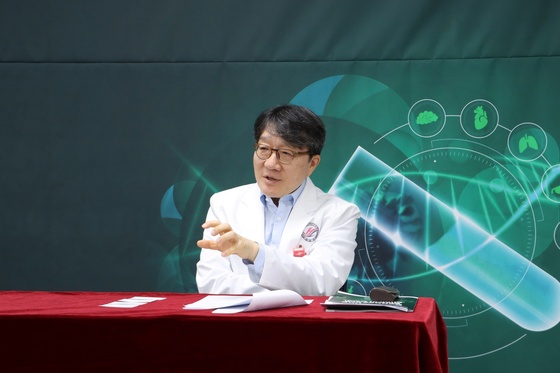
Professor Kim Yang-soo said, “As a physician, one of the most frustrating and devastating situations is facing a patient whose condition is deteriorating into sepsis because of a resistant bacterial infection and having no antibiotic that I can actually prescribe.”
Antibiotic susceptibility testing determines which antibiotics are effective against a particular bacterium. However, testing the response to individual antibiotics alone makes it difficult to understand how multiple antibiotics will interact when used together. This is why precision diagnostics are needed to identify which combinations work best against bacterial strains isolated from individual patients.
People who have never taken antibiotics are not necessarily free from the risk of infection with resistant bacteria. Professor Kim Yang-soo explained, “Even someone who has never taken antibiotics in their life can carry bacteria that are resistant to them. Epidemiological research is important for understanding which bacteria are circulating in the community and which antibiotics are effective against them.”
Moving Beyond Retrospective Studies to Clinical Validation: Commercialization Targeted for 2030
For CombiANT to be used in routine clinical practice, researchers must establish not only the performance of the testing technology but also its impact on patient outcomes. Building on retrospective studies using existing patient data, the team plans to pursue prospective clinical trials, complete the relevant regulatory approval processes and bring the technology to market by 2030.
Prospective clinical trials involve collecting new patient data and test results according to a predefined research plan to assess a technology’s safety and effectiveness. The researchers plan to verify whether CombiANT can help clinicians select antibiotics more effectively and improve treatment outcomes in real-world clinical settings.
The team is also considering ways to integrate the technology with targeted polymerase chain reaction (PCR) test panels, multi-omics analysis and multimodal artificial intelligence (AI) prediction models. The broader goal is to establish a precision infectious disease treatment system that identifies pathogens and resistance risks and helps determine the most appropriate treatment strategy for each patient.
Professor Kim Yang-soo said, “The ultimate goal of research conducted by physicians is not simply to publish academic papers, but to apply the findings to actual patient care.” He added, “We hope to complete prospective clinical validation and technical improvements by 2030 and commercialize CombiANT, helping reduce antibiotic misuse and save the lives of patients with severe infections.”