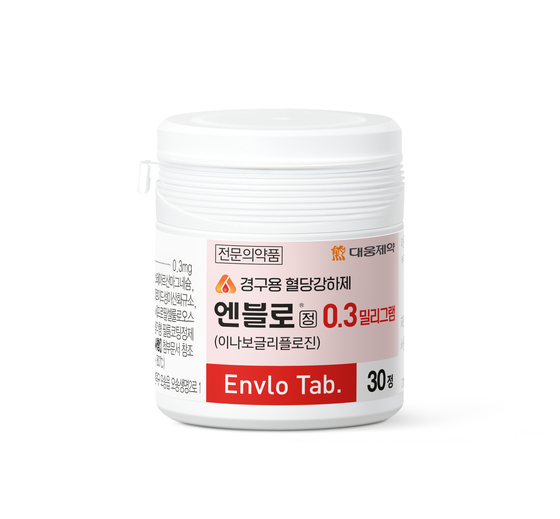
Daewoong Pharmaceutical announced on the 28th that a study published in the international journal Cardiovascular Diabetology found that its diabetes drug Enblo, whose active ingredient is enavogliflozin, reduced blood leptin levels approximately twice as much as dapagliflozin, another drug in the same class of sodium-glucose cotransporter 2 (SGLT-2) inhibitors.
Leptin is an appetite-regulating hormone secreted by fat cells that helps maintain stable levels of body fat. However, people with type 2 diabetes, particularly those who are also obese, often have elevated blood leptin levels.
This is attributed to “leptin resistance,” a condition in which the brain fails to respond properly to leptin signals despite sufficient hormone production. Because leptin resistance tends to occur alongside insulin resistance, a reduction in leptin levels may be interpreted as a positive sign of improved metabolic health.
Until now, reductions in leptin have generally been regarded as a secondary effect of weight loss. However, the new study found that the extent of leptin reduction differed between drugs even after accounting for differences in weight loss. The findings suggest that a drug may lower leptin levels independently of weight reduction.
The researchers conducted a pooled analysis of two Phase 3 clinical trials of Enblo published in 2022: ENHANCE-M, which evaluated the drug in combination with metformin, and ENHANCE-D, which evaluated triple therapy with metformin and gemigliptin. The analysis compared changes in 427 patients with type 2 diabetes who received Enblo or dapagliflozin for 24 weeks.
After 24 weeks, blood leptin levels decreased by 2.08 µg/L in the Enblo group, approximately twice the reduction of 1.09 µg/L in the dapagliflozin group. The difference remained approximately twofold after statistical adjustment for differences in weight changes between the two groups.
Insulin resistance also improved alongside the reduction in leptin. The homeostatic model assessment of insulin resistance (HOMA-IR) index decreased by 1.36 in the Enblo group, a significantly greater improvement than the 1.05 decrease observed in the dapagliflozin group.
HOMA-IR is an index used to estimate insulin resistance based on fasting blood glucose and fasting insulin levels. In general, a higher score indicates that insulin is less effective at regulating blood glucose.
Changes in leptin also moved in the same direction as changes in HOMA-IR, insulin and C-peptide, a marker used to assess insulin secretion. As leptin levels declined, these insulin metabolism indicators tended to improve as well.
By contrast, there were no significant differences between the two drugs in changes in glycated hemoglobin (HbA1c), a marker of blood glucose control, or body weight. The findings indicate that although the drugs had similar glucose-lowering effects, they differed in their effects on leptin and certain measures of insulin resistance.
Park Hyung-chul, head of the ETC Marketing Division at Daewoong Pharmaceutical, said, “The findings are significant because Enblo demonstrated distinct metabolic characteristics by producing a greater reduction in leptin levels in a direct comparison with another drug in the same SGLT-2 inhibitor class.” He added, “SGLT-2 inhibitors are considered important medicines for cardiovascular-kidney-metabolic (CKM) management, and we will continue generating clinical evidence for Enblo in line with this trend.”