

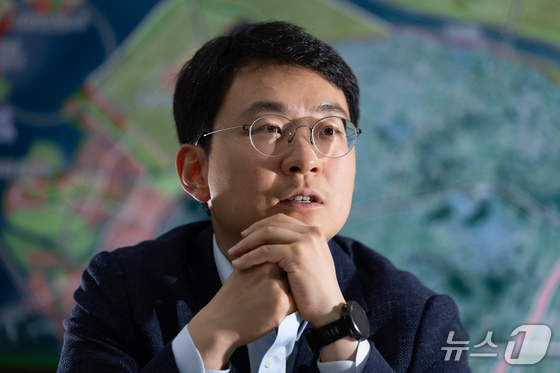
Determining a school’s location alone won’t solve regional healthcare issues.
Rep. Park Ji-won of the Democratic Party, who serves on the National Assembly’s Health and Welfare Committee, emphasized that establishing a national medical school in Namwon must link education, training, and post-graduation employment to effectively boost the local healthcare workforce. He stressed the importance of creating an environment where students can live, experience medical practice, and settle in the area.
As a lawmaker representing Jeonbuk, Park has consistently advocated for the national medical school to have a robust educational and training foundation in the region. During an August Health and Welfare Committee meeting where a dual-campus model for Seoul and Namwon was discussed, he pushed for prioritizing a single campus in Namwon. Park also pledged to secure funding for the campus design as a member of the Budget and Accounts Committee once the establishment is confirmed.
Moving beyond attracting a medical school: Connecting education, training, and employment for local retention
In a recent News1 interview at the National Assembly, Park emphasized the importance of students practicing at local healthcare facilities and interacting with medical staff, allowing them to envision a future in the area.
He cautioned that if students only receive partial theoretical education in Namwon and complete their training in the metropolitan area, they might view the region as merely a temporary stop. Park believes that living and building relationships in the area until graduation can significantly influence future career choices.
Park asserted the need to establish systems and healthcare infrastructure that enable trained personnel to work and continue their employment in local and essential medical fields.
He underscored the importance of designing post-graduation employment obligations and support. While these should align with the goal of securing public healthcare workers, Park noted that the obligations and support range must be clearly defined. He warned that imposing obligations without improving working conditions would hinder long-term workforce retention.
Park also highlighted the need for comprehensive financial planning that includes educational facilities, teaching hospitals, practical training bases, faculty, and student support services. He committed to actively seeking funding for the Namwon campus design.
Park’s focus in local healthcare isn’t just on the number of facilities or doctors, but on ensuring residents can receive care when they need it.
According to Park, in the first half of this year, 26 out of 35 local medical centers nationwide suspended or reduced operations in certain departments. In non-metropolitan areas, 22 out of 26 centers reported gaps in medical services.
He stated that it needs to change the structure where a specialist’s retirement in a specific department leads to an immediate halt in services. Even a well-equipped hospital can’t fulfill its role without medical staff.
Park believes that allocating personnel and financial resources should consider factors beyond population and facility numbers, including the proportion of elderly residents, medical vulnerability, travel distances, and gaps in essential medical services. He also emphasized the importance of improving working conditions and compensation to encourage long-term employment in the area.
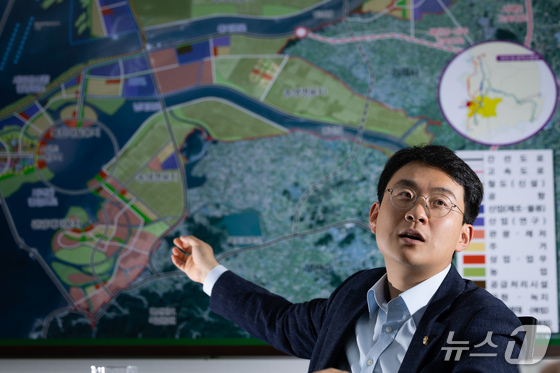
Telemedicine: Flexibility for Underserved Areas and Ensuring Medication Safety
Park noted that telemedicine should be tailored to the reality of regions struggling to attract medical professionals. He suggested flexible approaches, such as exceptions for areas with low medical access, given the persistent challenge of attracting doctors even with increased salaries.
However, he cautioned against viewing telemedicine as a cure-all for local healthcare gaps, emphasizing the need for policies that maintain local medical staff and emergency and critical care capabilities.
Park argued that telemedicine’s scope should consider factors beyond initial or follow-up consultations, including the nature of the illness, patient condition, medical history, professional judgment, and the potential need for in-person care. He insisted on swift transitions to face-to-face consultations when new symptoms arise or conditions worsen.
Regarding medication delivery, Park advocated for a system that enhances accessibility while ensuring proper guidance, storage, transportation, receipt confirmation, and follow-up care.
He clarified that the core of the policy isn’t about blanket expansion or restriction of delivery. It needs to carefully design targets and procedures to ensure patient access while guaranteeing safe medication use.
Park emphasized the need for safe use of abortion medications like mifepristone within the formal medical system, warning that prolonged ambiguity could lead to the use of unverified medications or lack of proper care.
He argued for connecting counseling, prescriptions, and follow-up care alongside scientific validation and formal approval processes. Park suggested considering public support and potential health insurance coverage, stating that merely providing access to medications without ensuring safe use is irresponsible policy.
Park also highlighted the importance of integrating healthcare and caregiving, noting that local service delivery capacity is crucial. He pointed out that even under the same system, benefits may vary based on available personnel, local finances, and actual services provided.
It’ll prioritize creating conditions for actual service access over merely having a system in place, Park stated, expressing his desire to be evaluated on tangible improvements in local healthcare access and timely care delivery.
Profile of Park Ji-won
△Iksan, Jeonbuk △Sangsang High School, Jeonju △Seoul National University, Law Department △Passed the 51st Bar Examination △41st Judicial Research and Training Institute △Representative attorney at the Law Firm Daijwon △Legal advisor to Gimje City △Chairman of Jeonju City Sports Council △Vice Chair of the Democratic Party’s Legal Committee △Supreme Council member of the Democratic Party △22nd National Assembly member (Jeonbuk Gunsan, Gimje, Buan) △Member of the National Assembly’s Health and Welfare Committee and Budget and Accounts Special Committee.