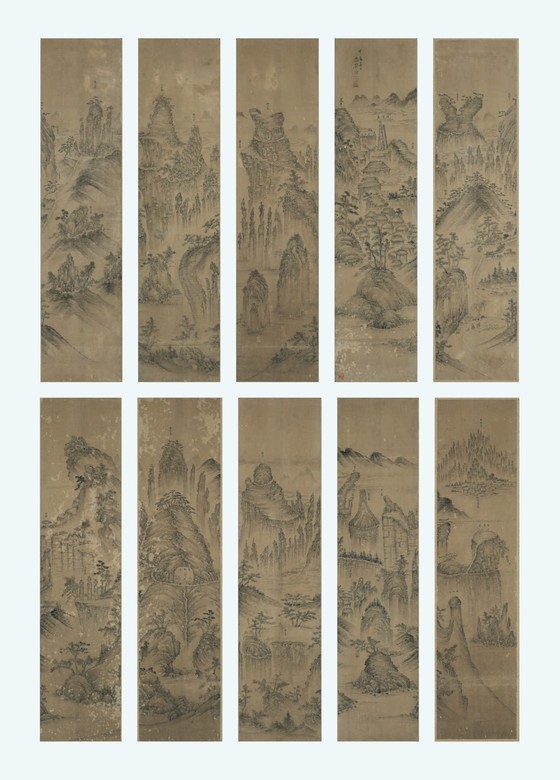
The Metropolitan Museum of Art (The MET) in New York is set to breathe new life into a Joseon-era landscape masterpiece, Chilbo Mountain (七寶山圖), through an ambitious preservation and restoration project. The painting will be returned to its original folding screen format, showcasing the beauty of Korean art to a global audience.
In an exciting announcement on Wednesday, the Overseas Cultural Heritage Foundation, operating under the Cultural Heritage Administration, revealed plans to conduct the preservation and restoration of the 19th-century Chilbo Mountain painting in South Korea. This prized artwork is currently part of The MET’s collection.
This groundbreaking initiative is a selected project under the Overseas Cultural Heritage Preservation and Restoration Support Program. It’s being carried out as part of Samsung Cultural Foundation’s commitment to social responsibility. The project’s primary goals are to spotlight the international significance of Korean cultural heritage and to demonstrate South Korea’s expertise in preservation techniques on the world stage.
Chilbo Mountain, nestled in the northeastern region of Hamgyeong Province, is renowned for its breathtaking and distinctive landscape. The Chilbo Mountain painting vividly captures the mountain’s awe-inspiring scenery, featuring rugged cliffs, deep valleys, and cascading waterfalls. Each panel of this impressive work measures 121 cm (47.6 inches) in height and 28.3 cm (11.1 inches) in width.
While The MET initially acquired this masterpiece as a scroll divided into ten sections, the current preservation efforts aim to restore it to its original glory as a ten-panel folding screen. The artwork made its journey back to South Korea last December and has found a temporary home at the prestigious Leeum Museum.
A spokesperson for the Overseas Foundation shared that since 2013, they’ve been dedicated to supporting the preservation, restoration, and promotion of overseas cultural heritage. It’s committed to ensuring that Korean cultural treasures abroad are not only preserved but also gain the global recognition they deserve.