North Korea is revamping the Sinuiju area, which suffered extensive damage from last year’s massive flooding, as a border gateway city. This effort to restore Sinuiju, a key hub for North Korea-China trade and tourism, appears to be part of a broader plan to expand foreign exchanges.
The Workers’ Party’s official newspaper, Rodong Sinmun, reported on Sunday that North Pyongan Province has set ambitious goals to transform Sinuiju’s appearance and is engaged in vigorous efforts to achieve them.
According to the newspaper, North Korea is currently repaving all roads in Sinuiju. Construction has already been completed in Cheonbyeon-dong, Bonbu-dong, and Sinseon-dong.
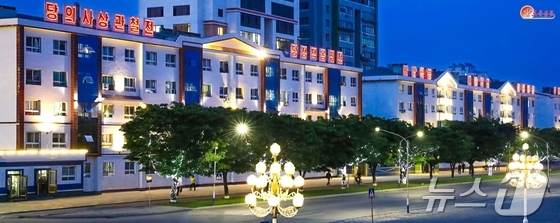
To enhance the urban landscape, authorities are planting thousands of trees and developing parks and recreational areas that reflect the region’s characteristics.
The newspaper described plans to adorn houses, buildings, public facilities, and street trees along major roads with colorful lighting, promising a dazzling night view.
To implement these plans, officials are swiftly establishing measures to secure necessary materials under the guidance of the provincial party committee, the newspaper highlighted.
Sinuiju experienced severe flooding last summer when the Yalu River overflowed, inundating many homes and agricultural lands and damaging infrastructure, including railways and roads. As a result, North Korea’s head of public safety and the party secretaries for North Pyongan Province and Chagang Province were replaced.
Recently, North Korea has begun preparations to welcome foreign tourists again after keeping its borders closed for over five years due to COVID-19. In this context, Sinuiju, which borders Dandong in China and is considered North Korea’s largest border city, is undergoing hurried restoration and renovation.
Earlier, the satellite imagery analysis company SI Analytics (SIA) reported on June 8 that while North Korea left flooded homes in Sinuiju unattended, it was observed constructing new embankments and buildings near Wihwa Island, which directly borders China.
SIA noted that Wihwa Island plays a significant role in attracting foreign currency, accounting for 70% of North Korea’s trade with China. The company described the efforts to strengthen infrastructure in this key area of exchange with China as a strategic move.
The newspaper emphasized that authorities are mobilizing capabilities and resources to undertake extensive embankment and rock-fill construction, aiming to transform the appearance of the provincial capital. It also stressed the need for thorough preventive measures to avoid future flooding in the Sinuiju area.