

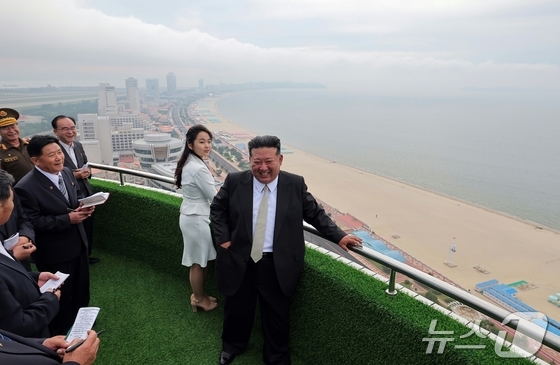
North Korea has been intensifying efforts to boost tourism, including the adoption of its first-ever Tourism Law in 2023. However, experts argue that policies aimed at revitalizing the tourism industry may pose a significant burden on the regime’s stability. They analyze that the activation of tourism inevitably provides both North Korean citizens and the international community with opportunities for an objective assessment of the country.
A report published in the May issue of the North Korean Economic Review by the Korea Development Institute (KDI), titled “The Dawn of North Korea’s Opening to the Outside World and Its Likelihood of Success: After the Adoption of the Tourism Law,” states that North Korea adopted its first tourism law in August 2023.
The law codifies principles such as tourist protection, conservation of tourism resources, and sustainability. Analysts view this as an attempt by North Korean authorities to develop tourism into a systematic industry and a first step toward reopening borders that had been closed due to COVID-19.
To promote the tourism industry, North Korea held its first Pyongyang Tourism Souvenir Exhibition in 2022. The country continued the same event last year and adopted a special law for the Wonsan Kalma Coastal Tourist Zone in May, further promoting domestic tourism.
Additionally, North Korea is developing mountainous tourist sites in Samjiyon County, dividing them into a Multiple Mountain Tourism Zone, a Four Seasons Mountain Zone, and a Baekdusan Tourism Culture Zone.
Na Yong Woo, Director of the North Korean Research Division at the Korea Institute for National Unification, explains that North Korea aims to promote national pride by building world-class tourist destinations to reinforce the resilience of its regime. He also says authorities believe opening to foreign tourists can help rehabilitate the country’s negative image.
The economic motivation behind North Korea’s push to revitalize tourism appears substantial. According to Reuters, approximately 350,000 Chinese tourists visited North Korea in 2018, generating an estimated revenue of $175 million.
Moreover, analysts suggest that, due to restrictions on oil and raw material imports, North Korea is leveraging tourism revenues as a key driver of economic growth.
However, Na warns that increased foreign access could destabilize the regime.
He explained that contact between tourists and North Korean citizens at major sites raises the risk of exposing citizens to foreign information and culture. He points out that foreign tourism was halted in February after tourists in Rason publicly revealed the internal conditions.
He further noted that although North Korea has enacted strict laws—such as the Law on Crowd Reporting and the Law on Rejecting Reactionary Thought and Culture—to impose criminal penalties on the distribution and acceptance of outside information, completely blocking the flow of information remains difficult.
He concluded that North Korea may ultimately face a dilemma in which the very policies designed to support the regime could undermine it instead. Without fully opening up to the outside world, the long-term prospects of the country’s tourism sector remain uncertain.
The report also emphasized that international sanctions present another major barrier. Na argued that unless North Korea undertakes denuclearization measures, it will be nearly impossible for the international community to ease or lift sanctions. He noted that the United States continues to enforce secondary sanctions targeting third-country financial institutions, businesses, and individuals who engage in transactions with North Korea.