

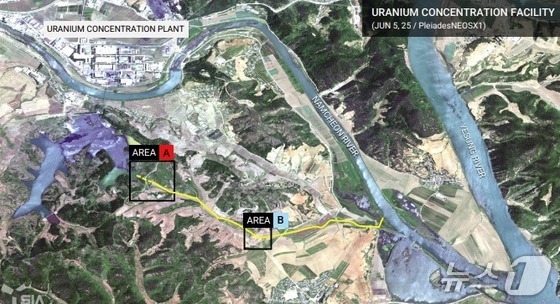
The South Korean government recently conducted a special investigation into concerns that North Korea is releasing radioactively contaminated wastewater from its uranium refining facility in Pyongsan County. The investigation concluded that there is no negative impact on South Korea. This issue has become one where the combination of the enigmatic North Korean regime and the term radioactive has fueled public fear rather than promoting scientific understanding.
“We must avoid unfounded fears and rely on scientific data.”
Lee Chun Geun, a visiting research fellow at the Korea Institute of S&T Evaluation and Planning, stated during a phone interview with News1 on July 19th that fostering unfounded fear of North Korea and radioactivity should be avoided. He emphasized the need to understand North Korea based on scientific figures and data.
Lee believes that a type of fear-based public opinion regarding the radioactive wastewater from the Pyongsan uranium mine has spread through non-expert assessments of radiation levels along the west coast, particularly via platforms like YouTube.
He stressed the importance of accurate radiation measurements using precision instruments that comply with spatial radiation measurement standards and can detect radiation sources. Lee pointed out that one organization claimed to measure radiation levels at a beach on Seongmodo Island, attributing it to North Korean wastewater, when in fact they were measuring radiation levels of land-based minerals, not water.
If land-based minerals were contaminated by wastewater from the Pyongsan facility, the route by which the wastewater reached land must be confirmed. Lee argues that judging the situation solely based on simple numbers without exploring such mechanisms is problematic. He noted that this method deviates from spatial radiation measurement standards.
“Calling it acid or alkaline wastewater would be appropriate, but calling it uranium wastewater is scientifically inaccurate.”
Lee explained that Pyongsan is where uranium is extracted from ore and processed with acids and alkalis to produce yellowcake (uranium concentrate). He stated that the uranium content in North Korean ore is known to be below 1%, resulting in waste heaps hundreds of times larger than the final product. Most of the uranium is U-238, with only 0.7% being the fissile U-235.
He added that U-235 has a half-life of 700 million years and undergoes alpha decay, emitting alpha particles with very low penetration power, meaning it’s nearly non-radioactive in its natural state. Lee highlighted that decay products include thorium-231, bismuth, and lead, which differ greatly from highly radioactive and water-soluble cesium and strontium produced through neutron-induced fission in nuclear reactors or bombs.
He estimated that the sedimentation area of the factory where the wastewater is produced stores the remnants after separating uranium from the ore, with solid waste mostly consisting of rock powder and other ore residues. Lee explained that the liquid is water mixed with some radioactive materials, acids, and alkalis. If this leaks, most heavy solids will settle nearby, while lighter solids and liquids could travel further into South Korean territory.
He continued that calling it acid or alkaline wastewater would be appropriate, but calling it uranium wastewater is scientifically inaccurate. Lee noted that this would also dilute as it travels, significantly reducing its concentration to negligible levels.
“The government should involve geological and mineral experts in future investigations.”
Following the release of the South Korean government’s investigation results, Lee suggested that future government assessments should also include geological or mineral surveys to prevent further controversy.
He cautioned against interpreting the cause of high radiation levels too broadly, stating that there are many radioactive materials in nature, and they emit various types of radiation. He emphasized the need for identifying and analyzing the materials that release radiation to understand their sources and levels of risk.
Lee also argued that the government must present clear results not only for liquid samples but also for mineral or rock samples from border areas to eliminate any doubts.
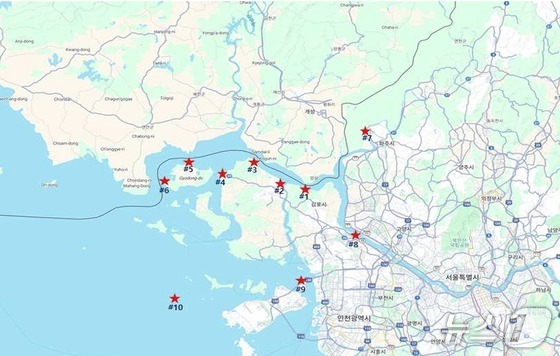
On July 4th, the South Korean government announced that it collected samples from 10 locations, including Ganghwa Island, which is closest to the estuary of the Ryesong River, and the Han River estuary. They analyzed for uranium, radioactive cesium, and five heavy metals: cadmium, arsenic, mercury, lead, and hexavalent chromium. The investigation found no traces linked to the alleged radioactive wastewater.