

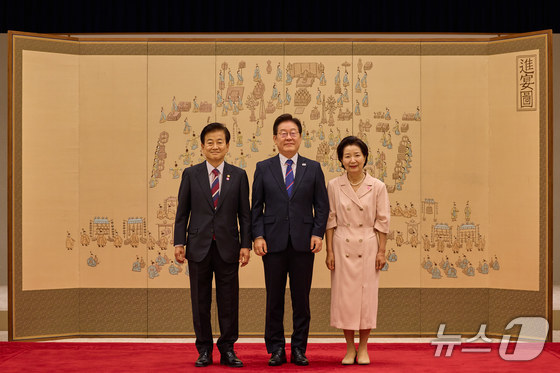
Since the inception of Lee Jae-myung’s administration, a series of conciliatory gestures have been made to thaw the frozen inter-Korean relations. The South Korean government is intensively focusing on creating an atmosphere conducive to dialogue, even considering adjustments to the South Korea-U.S. joint military exercises, which North Korea typically reacts to with extreme sensitivity.
President Lee Jae-myung, who ordered the cessation of loudspeaker broadcasts aimed at North Korea, continues to emphasize peace on the Korean Peninsula. However, experts note that substantial improvements in relations are intricately tied to the South Korea-U.S. alliance and to relationships with neighboring countries such as China, Russia, and Japan. This complexity underscores the clear limitations of bilateral dialogue between North and South Korea.
Some analysts speculate that if North Korea-U.S. relations improve, a meeting between President Donald Trump and General Secretary Kim Jong Un at the upcoming APEC summit in Gyeongju could become a possibility.
According to the South Korean Ministry of Unification on Tuesday, Kim Yo Jong, the Deputy Department Director of the Publicity and Information Department of North Korea’s Workers’ Party, made her first reference to the Lee Jae-myung administration with two consecutive days of strong statements. While her remarks were confrontational, it is notable that they marked a departure from the previous policy of refraining from responding to the new South Korean government.
The Korean Central News Agency reported that in a statement titled “Inter-Korean Relations Have Completely Moved Beyond the Concept of Shared Ethnicity,” Kim stated that no matter how much the Lee Jae-myung administration tries to feign kinship and portray itself as righteous to gain international attention, North Korea’s perception of South Korea as an adversary will not change. Kim emphasized that the historical clock that fundamentally altered the nature of inter-Korean relations cannot be turned back.
She further stated that even looking at just the first 50 days of Lee Jae-myung’s presidency, while he has spoken eloquently about easing tensions on the Korean Peninsula and improving inter-Korean relations, his unwavering faith in the South Korea-U.S. alliance and his confrontational intentions towards North Korea are no different from those of his predecessor. Kim cautioned that the U.S. and South Korea will likely attempt to shift the blame for the deteriorating situation on the Korean Peninsula onto North Korea, using their usual tactics.
Despite the sharp tone of her remarks, the fact that they constitute the first reaction to the Lee Jae-myung administration has prompted the South Korean government to closely monitor North Korea’s actions.
Notably, Chung Dong Young, the South Korean Minister of Unification, expressed his intention to propose the possibility of postponing the South Korea-U.S. joint military exercises to the President. He stated that the issue will be addressed significantly at a working-level coordination meeting the next day, once again extending an olive branch to North Korea.
The South Korean Presidential Office responded that it would consider opinions from relevant departments, including the Minister of Defense, regarding adjustments to the joint military exercises. While the likelihood of postponing or canceling the exercises seems low in practical terms, the government’s proactive stance is seen as sending a friendly message to North Korea.
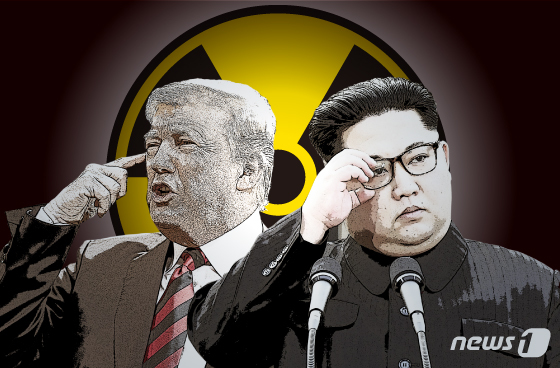
On Tuesday, North Korea also attracted attention with a statement directed at the Trump administration. While recalling the perceived humiliation of the Hanoi summit during Trump’s first term and setting high preconditions for dialogue, it left the door open for negotiations.
The South Korean Presidential Office reiterated that the United States and South Korea have consistently stated their openness to dialogue with North Korea for the peaceful resolution of the Korean Peninsula issues and the North Korean nuclear problem. The Presidential Office emphasized that they will maintain close communication and cooperation regarding overall North Korea policy, including future North Korea-U.S. dialogue.
As the South Korean government appears to be quietly exploring avenues for the restoration of inter-Korean dialogue, attention is turning to the APEC summit scheduled for late October in Gyeongju.
The South Korean Presidential Office has drawn a line against inviting North Korea to the APEC summit, and North Korea has also expressed its refusal, stating in Kim’s message that it is nurturing empty fantasies.
However, if President Donald Trump’s attendance at APEC is confirmed, the likelihood of Kim Jong Un attending could also rise significantly.
With Chinese President Xi Jinping, the chair of next year’s APEC, likely to attend, and if President Trump visits South Korea, it could lead not only to a Big Two meeting but also to subsequent multilateral and bilateral summits.
North Korea may find itself in a position to make strategic decisions to diversify its international relations beyond its close ties with Russia. In particular, if President Trump’s request for dialogue materializes, analysts predict that North Korea-U.S. relations could shift dramatically.
The South Korean Presidential Office emphasized that the government will steadfastly pursue efforts to restore trust between North and South Korea in a peaceful atmosphere and create conditions to facilitate the resumption of North Korea-U.S. talks.