

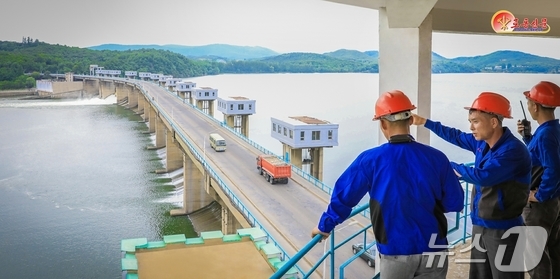
North Korea is repeatedly emphasizing the need for alertness and awareness among its officials and citizens regarding summer downpours, urging the implementation of thorough measures to prevent damage. Some analysts suggest that, following last year’s severe flooding—which led to significant recovery challenges—the regime might be intentionally concealing the potential extent of this year’s damage.
On Thursday, the ruling party’s official newspaper Rodong Sinmun reported that the State Hydro-Meteorological Administration (the equivalent of our National Weather Service) had forecast rain from Friday to Saturday in the northern regions of the western coast. The forecast specifically warned of heavy rainfall, thunderstorms, and strong winds in North Pyongan and Jagang provinces.
The newspaper noted that while many party officials across various regions recognize the importance of natural disaster prevention and are actively promoting it, some still approach it only superficially. It urged to maintain the highest level of vigilance and awareness to fully prepare for disaster-prone weather conditions.
Specifically, the newspaper instructed officials to effectively carry out river and stream maintenance, implement comprehensive erosion control projects, and repair irrigation structures to minimize the impact of heavy rain. Additionally, they were directed to involve residents in an all-out mobilization campaign.
The previous day, the newspaper featured a front-page article titled, Let Us Overcome the Impact of Disaster-Prone Weather and Achieve High Yields, warning that heavy rain had already begun on August 16 in North Pyongan and Jagang provinces due to the monsoon front, and that the risks were expected to escalate further.
Recently, North Korea has been increasing public awareness of heavy rainfall by providing daily weather forecasts through Rodong Sinmun. This measure appears to be a response to last year’s extensive flooding. In July of the previous year, North Korea experienced record-breaking floods when heavy rains caused the Yalu River to overflow, inundating more than 400 households and roads in North Pyongan and Jagang provinces, and resulting in numerous casualties.
At that time, Kim Jong Un, the General Secretary of the Workers’ Party, personally visited the flood-affected areas multiple times and directed rapid recovery efforts. This year, in anticipation of the monsoon season, the regime has been implementing various disaster prevention projects and has established a new cabinet body focused on disaster prevention.
So far this year, North Korean state media have not reported any flood-related news. However, if news of another disaster emerges, authorities may choose to suppress it to prevent further deterioration of public sentiment toward the regime, even if similar damage occurs this year.
On July 31, the North Korea-focused media outlet NK News reported—based on satellite imagery—that heavy rains had caused landslides and river flooding in areas such as Nyongbyon in North Pyongan Province.