

North Korea conducted a test firing of new surface-to-air missiles on the same day that President Lee Jae-myung began his visit to the U.S. and Japan, prompting various analyses.
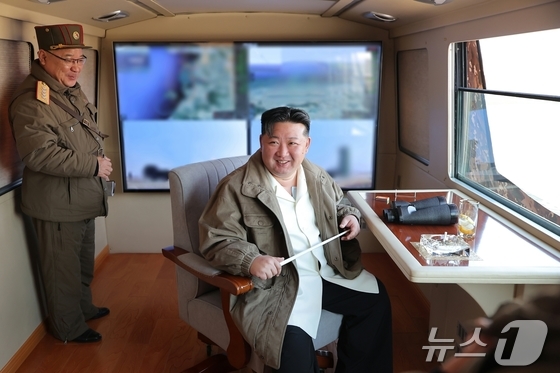
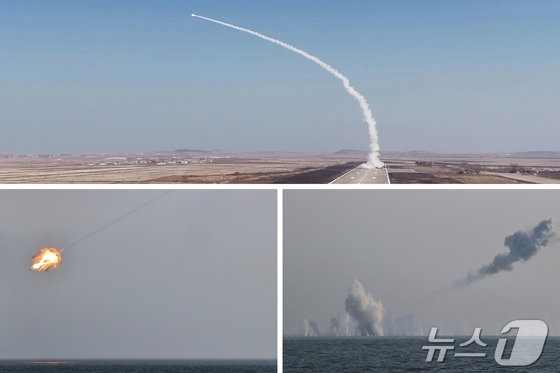
According to the Korean Central News Agency on August 24, North Korea’s Missile General Bureau carried out test firings against various targets to evaluate the combat performance of two upgraded types of new surface-to-air missiles. Kim Jong Un, Party General Secretary of North Korea, observed the tests.
The agency claimed that the new surface-to-air missile system demonstrated superior combat responsiveness against various aerial targets, including unmanned aerial vehicles (UAVs) and cruise missiles. They particularly emphasized its effectiveness in neutralizing diverse airborne threats.
In response, South Korean military officials stated on August 24 that they were aware of North Korea’s test firing activities and that detailed specifications were being analyzed by U.S. and South Korean intelligence authorities.
Experts suggest that these test firings likely aim to showcase North Korea’s defensive capabilities against U.S. and South Korean UAVs and cruise missiles, given that surface-to-air missiles are primarily used for defensive rather than offensive purposes.
Hong Min, a senior researcher at the Korea Institute for National Unification, noted that the specific mentions of UAVs and cruise missiles in this report serve to demonstrate North Korea’s deterrent and defensive capabilities to the U.S. and South Korea. He added that by revealing defensive weapons rather than powerful offensive arms, Pyongyang may be moderating its stance to some degree.
On August 22, North Korea also issued statements from the Deputy Chief of Staff and a spokesperson, interpreted as an effort to heighten military tensions ahead of the U.S.-South Korea summit.
At that time, Deputy Chief of Staff Ko Jeong-cheol condemned recent warning shots fired by South Korean forces near the military demarcation line (MDL) as a serious provocation. Meanwhile, the spokesperson threatened to respond to joint U.S.-South Korea exercises, claiming that they would exercise the right to self-defense.
The news agency also reported that Kim conveyed important tasks that need to be addressed in the field of defense science and research ahead of the party congress. Analysts expect North Korea to announce specific plans to expand its nuclear and missile technology, which is reportedly in the final stages of development, into maritime and aerial domains, as well as to enhance its air defense capabilities at the 9th Congress of the Workers’ Party, scheduled for the end of this year or early next year.
Some experts suggest that North Korea’s intense focus on developing surface-to-air missiles stems from the stark realization of the dangers posed by UAV attacks, possibly influenced by observations of modern warfare. Previously, on March 21, North Korea had announced a test launch of its latest anti-aircraft missile system, which Kim also observed.
Additionally, it has been noted that the new 5,000-ton destroyers, Choe Hyon-ho and Kang Geon-ho, unveiled in April and May, are equipped with surface-to-air missiles. North Korea is expected to continue actively upgrading these missile systems for both ground and naval applications.
Senior researcher Hong stated that the UAVs that North Korea is closely monitoring are small and slow, making it difficult for them to respond with their existing surface-to-air missiles. Further noting that North Korea will likely continue to accelerate the development of specialized weapon systems to counter this threat.