North Korea’s apparent halt in its space program, including the suspension of reconnaissance satellite launches, may actually be a cover for secret preparations for a bigger leap, analysts suggested on Wednesday.
In an interview with NK News, astrophysicist Jonathan McDowell argued that North Korea’s failed military reconnaissance satellite launch and the prolonged suspension of launches do not indicate a retreat from its ambitious satellite development plans.
Dr. McDowell speculated that Russia is likely providing assistance to North Korea’s satellite development efforts. He predicted that tangible results from North Korea-Russia cooperation may not become apparent for several years, emphasizing that Pyongyang still faces numerous challenges in achieving a breakthrough.
He added that monitoring adjustments to the position of Malligyong-1 could offer insights into North Korea’s development progress. Malligyong-1, North Korea’s first military reconnaissance satellite, was launched in November 2023. Dr. McDowell estimates that the satellite will fire its booster to adjust its orbital position around October.
According to Dr. McDowell, North Korea’s very small rocket engines mean they’ll have to struggle over several days to adjust the satellite’s position. He explained that this repositioning would serve as a functional test for the satellite, at minimum confirming whether its onboard computer can receive and execute commands from ground control.
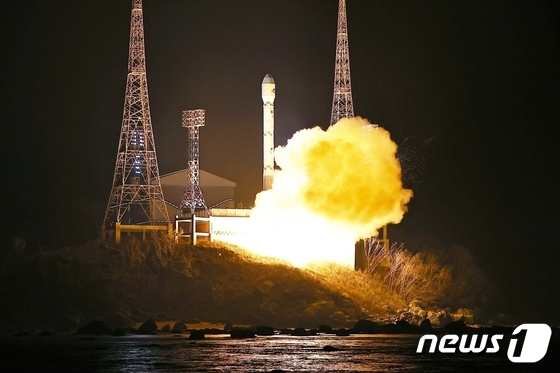
The launch of military reconnaissance satellites is a key objective in North Korea’s five-year defense development plan, unveiled at the 8th Congress of the Workers’ Party in January 2021. While Pyongyang declared its intention to launch three additional reconnaissance satellites in 2024, no further launch activities have been reported since a failed attempt in May of that year.Dr. McDowell described the Malligyong satellite as relatively small and underperforming, suggesting that North Korea might delay further launches until it can advance its satellite technology with new Russian support.
He speculated that Russian assistance is crucial to this process, suggesting that Russian personnel may be embedded within North Korea’s rocket and satellite organizations, or that North Korean engineers might have been sent to Russia for training.
The expert emphasized that Russian technical support would significantly boost North Korea’s rocket engine technology. He also noted that a major challenge for nascent space programs like North Korea’s is establishing reliable communication systems, which require powerful, high-capacity broadband transmitters and ground stations capable of maintaining stable satellite links. Dr. McDowell also suggested that North Korea’s data processing capabilities may be limited.
Dr. McDowell predicted that North Korea is likely to prioritize deploying multiple reconnaissance satellites into orbit. A critical milestone in satellite development would be launching geostationary satellites, enabling military communications and continuous surveillance of the Korean Peninsula.
However, he assessed that North Korea would need considerable time to develop a new rocket capable of placing satellites in geostationary orbit, approximately 22,236 miles (about 35,785 km) above Earth. Dr. McDowell stated that North Korea is still far from possessing a satellite that could revolutionize its military command and control.
In related news, NK News reported in June that North Korea showed signs of preparing to resume reconnaissance satellite launches from its West Sea launch site, marking the first such activity in over a year since the failed launch in May last year.