

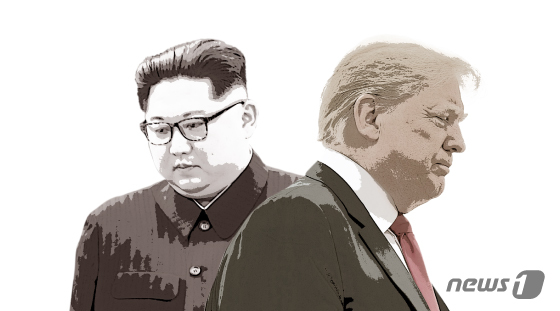
The U.S. and South Korea have positioned the upcoming Asia-Pacific Economic Cooperation (APEC) summit—set to begin in Gyeongju at the end of October—as a potential diplomatic opportunity for contact among the leaders of North Korea, South Korea, and the U.S. How does North Korea’s Kim Jong Un view this situation?
Recently, President Lee Jae-myung officially invited U.S. President Donald Trump to the Gyeongju APEC during a South Korea–U.S. summit, suggesting that if possible, to also pursue a meeting with Kim. President Trump responded favorably, describing it as a very wise suggestion. Should this proposal materialize, it would mark Kim’s first visit to South Korea since May 26, 2018—nearly seven years ago.
Despite several overtures from President Trump during his administration, Kim has not responded. However, the situation might change if President Trump suggests a meeting in South Korea. The initial contact between the three leaders at Panmunjom on June 30, 2019, originated from a tweet by President Trump while he was en route to Korea via Japan.
Realistically, however, the chances of Kim attending the Gyeongju APEC appear slim—almost nonexistent.
North Korea maintains a unique leadership system in which the supreme leader governs all aspects of the state. Articles 100 and 101 of North Korea’s socialist constitution define Kim as the supreme leader of the state, overseeing the government, the party, and the military.
However, the APEC summit—a multilateral forum involving leaders from 21 countries—requires engagement in discussions and the building of consensus. Not all nations may be favorable toward North Korea, and from Pyongyang’s perspective, it is unnecessary for their supreme leader to appear as one of them to the public or be subject to criticism from other leaders.
In contrast, a meeting at Panmunjom would likely impose a far lesser burden on North Korea. In a setting where North Korea has a stake, two or three leaders can meet on relatively equal footing.
Experts suggest that Kim Yo Jong’s recent statement—that personal friendship between the North Korean and U.S. leaders will not influence policy—should be interpreted in another light.
While many believe that North Korea is rejecting negotiations with the U.S., and that a Trump–Kim meeting would signal the start of negotiations, some interpret Kim Yo Jong’s remarks as implying that meetings between leaders, even if unrelated to negotiations, are indeed possible.
This reasoning allows North Korea to frame the situation as their supreme leader graciously accepting Trump’s meeting request without necessarily implying the initiation of negotiations. Past exchanges of private letters between Kim and Trump reveal that even amidst sharp public rhetoric following the deadlock in denuclearization talks, the two leaders maintained cordial communication.
While North Korea may have been displeased with the public disclosure of the supreme leader’s letters, they now appear poised to leverage this to their advantage.
Some speculate that although North Korea might reject a face-to-face meeting, they could respond to a letter exchange between Trump and Kim during Trump’s visit to South Korea, potentially reopening letter diplomacy. This might involve preliminary communication through back channels such as the New York channel.
Ultimately, the key factor lies in Kim’s decision. The failed Hanoi summit in 2019, which collapsed due to Trump’s unexpected demands, likely left deep trauma for Kim. During that summit, North Korea was prepared to dismantle the Nyongbyon nuclear facility in exchange for U.S. sanctions relief, but Trump’s demand for additional nuclear site closures led to the collapse of negotiations.
This failure has likely reinforced North Korea’s belief that diplomacy requires more than just symbolic events. Moreover, North Korea has strengthened its military and economic ties with Russia, thereby securing a reliable ally. Unlike before, they are no longer in a situation that necessitates rushed dialogue with the U.S.
Kim’s calculations have grown more complex. While he can base a meeting on his rapport with Trump, it remains uncertain whether such a meeting would lead to new negotiations that would benefit North Korea.
The situation is equally complicated for the South Korean government. They cannot afford to repeat past experiences in which diplomacy was heavily influenced by a single decision from a powerful country like the U.S. The lesson is clear: diplomatic events should be part of an ongoing process, rather than the sole beginning of diplomacy.