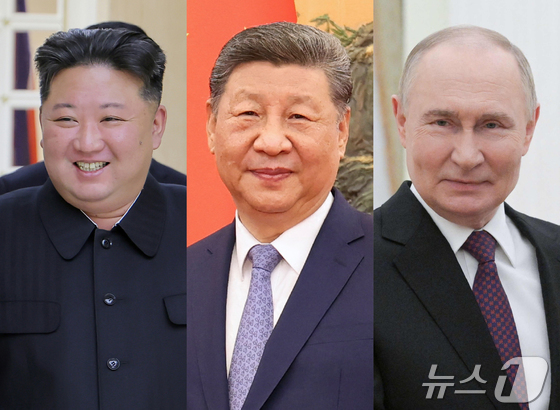
North Korean leader Kim Jong Un is expected to visit Beijing on Wednesday for the Victory Day celebrations commemorating the 80th anniversary of the triumph in the Anti-Japanese War and the World Anti-Fascist War. During his visit, he may hold separate bilateral meetings with Chinese President Xi Jinping and Russian President Vladimir Putin. Some analysts suggest that North Korea could use this opportunity to seek recognition of its status as a nuclear power and to articulate its foreign policy, which now characterizes North and South Korea as two hostile states.
Kim departed Pyongyang on his private train on the afternoon of Monday and is scheduled to arrive in Beijing on the afternoon of Tuesday. While his specific itinerary in Beijing remains undisclosed, bilateral meetings with both Chinese and Russian leaders are possible. On Wednesday, Kim is expected to observe the military parade alongside Presidents Xi and Putin from the Tiananmen Tower.
In September 2023, North Korea officially enshrined its nuclear capabilities in its constitution by including a nuclear force policy. In November, it nullified the military agreement of September 19 and redefined inter-Korean relations as those between two hostile states. Since then, North Korea has strengthened its alliance with Russia, even sending troops to support Russia in the ongoing conflict. Simultaneously, North Korea has consistently emphasized its status as a nuclear power in various statements, maintaining its disinterest in denuclearization talks.
Analysts believe that Kim’s visit to China is a diplomatic effort to solidify North Korea’s position as a nuclear power and to promote the concept of two separate Korean states on the international stage.
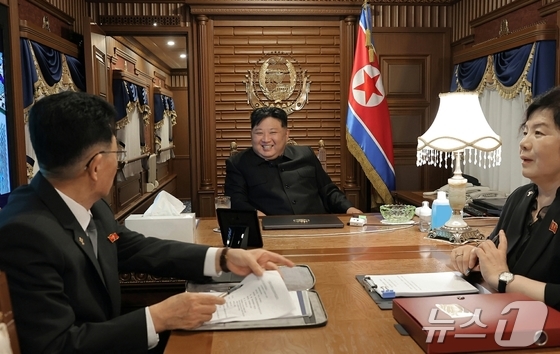
North Korea’s Two-State Theory and Nuclear Demands: Real Support Faces Limitations
However, experts agree that even if Kim requests recognition as a nuclear power, it will likely have limited success in securing support from the leaders of China and Russia.
Professor Kim of North Korean Studies at the University of North Korean Studies stated that while President Putin has repeatedly expressed an understanding of North Korea’s nuclear capabilities, it is uncertain whether President Xi will make similar remarks. Further adding that China is likely to limit its comments to general expressions of understanding North Korea’s security concerns.
He added that if Xi were to use language similar to Putin’s, it would effectively mean joining a rogue state alliance with North Korea and Russia, potentially diminishing China’s international standing. He noted that, instead, China will likely focus on restoring relations with North Korea and promising economic cooperation while emphasizing stability on the Korean Peninsula and acknowledging security concerns.
Professor Kim also noted that from China’s perspective, this meeting could serve as an opportunity to implement a wedge strategy against the U.S. He further added that while alliances with North Korea and Russia involve risks, they may also be part of a strategic calculation to showcase a loose coalition against U.S. hegemony and to unsettle countries like India.
Professor Park Won-gon from Ewha Womans University’s Department of North Korean Studies remarked that North Korea is likely to hold bilateral meetings with both China and Russia, but he doubts that it will actively explain its foreign policy or the two hostile states stance during these discussions.
He elaborated that China and Russia are bound by the Nuclear Non-Proliferation Treaty (NPT) and cannot officially recognize North Korea as a nuclear power. Highlighting the fact that doing so would undermine their own nuclear monopoly and could trigger demands for nuclear capabilities from other countries, making it a difficult path for them to follow.
However, Professor Park predicted that if a North Korea–China meeting occurs, the term denuclearization will likely not be mentioned. Further, any statements will probably remain at a general level, emphasizing the need for stability on the Korean Peninsula and consideration of North Korea’s legitimate security concerns.