

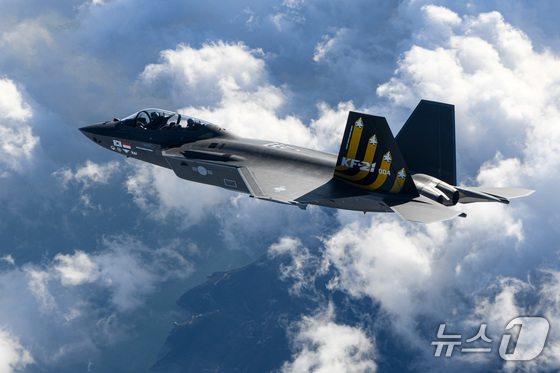
The development of a supersonic anti-ship missile with a range exceeding 300 kilometers (about 186 miles), originally intended for the South Korean produced KF-21 Boramae fighter jet, has been suspended. The decision was based on the low likelihood of engaging in long-range conflicts with neighboring countries.
According to Rep. Yoo Yong-won of the ruling People Power Party, who sits on the National Defense Committee, the Korea Institute for Defense Analysis (KIDA) concluded last month that the Anti-Ship Guided Missile-II project, which aimed to develop a long-range supersonic anti-ship missile, lacked feasibility.
The Anti-Ship Guided Missile-II project was designed to protect South Korean naval assets against maritime threats from North Korea and neighboring countries, while also aiming to develop a weapon capable of swiftly and accurately striking enemy naval forces from a distance.
The military had planned to begin system development next year for a missile capable of traveling over 300 kilometers (about 186 miles) at 2-3 times the speed of sound to strike enemy vessels, with mass production slated for 2034. Currently, the Harpoon, South Korea’s primary anti-ship missile, takes 16 minutes to hit a target 300 kilometers (about 186 miles) away, whereas the proposed supersonic missile could accomplish this in about 6 minutes.
However, KIDA determined that the project lacked feasibility, citing the low probability of penetrating enemy defense systems and the improbability of long-range engagements given the Navy’s response procedures with neighboring countries. The project’s estimated cost had ballooned from an initial 564 billion KRW (about 406 million USD) to 1.2 trillion KRW (about 863 million USD), a factor that also contributed to the decision. Consequently, the related budget was not included in next year’s government spending proposal.
The suspension of the project has raised questions about whether the feasibility study adequately considered the enhancements in naval power by North Korea and China. North Korea recently launched new 5,000-ton destroyers, dubbed North Korean Aegis destroyers, including the Choe Hyon-ho and Kang Gun-ho, which are equipped with tactical nuclear warheads and anti-ship missiles. Meanwhile, China continues to develop hypersonic anti-ship missiles.
Rep. Yoo expressed concern, stating that the setback in developing supersonic anti-ship missiles, which are capable of neutralizing tactical nuclear-capable land-attack ballistic and cruise missiles from platforms like the Choe Hyon-ho, raises worries that the military may be underestimating North Korea’s expanding maritime nuclear strike capabilities.