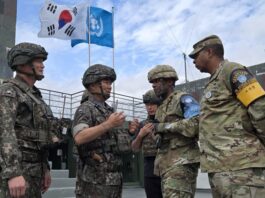
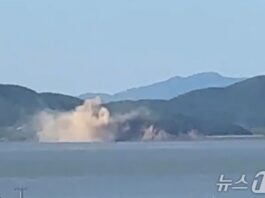
Friday marks the seventh anniversary of the 2018 inter-Korean military agreement, signed under the watchful eyes of the North and South Korean leaders. However, the accord has effectively ground to a halt. President Lee Jae-myung has pledged a phased restoration, emphasizing tension reduction, but experts highlight challenges posed by North Korea’s unresponsiveness and complex international dynamics.
At the 2025 International Korea Forum in Seoul, President Lee reaffirmed his commitment to North Korean reconciliation through a speech delivered on behalf of Deputy Head of the National Security Office, Im Woong-soon. He stated that it will not be discouraged or cease the efforts due to a lack of immediate response from the other side.
This statement underscores the administration’s unwavering resolve to revive the September 19 military agreement, a cornerstone of its policy since taking office. Lee’s remarks signal South Korea’s intent to persist in its proactive de-escalation efforts, despite North Korea’s silence.
The government has already initiated preliminary steps to restore the agreement. These include halting propaganda broadcasts to the North and scaling back certain military exercises in the border regions, targeting areas with significant potential for easing tensions. This approach is viewed as a strategic confidence-building measure aimed at mitigating conflict risks while encouraging North Korean engagement.
Defense analysts concur that a wholesale revival of all agreement provisions is impractical. Many advocate for a gradual restoration of symbolic yet feasible measures, such as dismantling demilitarized Zone (DMZ) observation posts and reestablishing no-fly zones, as the most effective strategy.
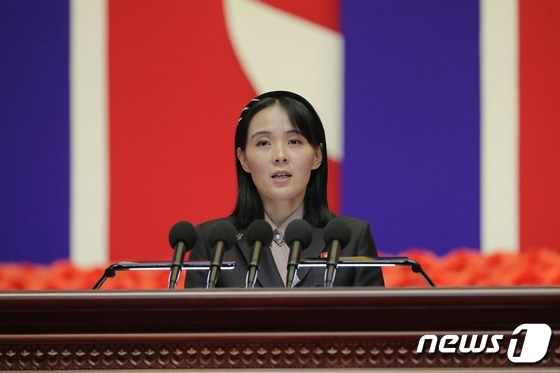
North Korea Dismissed South Korea’s Proactive Measures as Pipe Dreams, With Experts Cautioning Against Overreacting to Every Development.
The crux of the matter lies in North Korea’s response. Pyongyang has recently escalated military tensions through continued provocations, including reconnaissance satellite launches and various missile tests. Despite Seoul’s conciliatory gestures, North Korea has shown little inclination to reciprocate.
Some analysts posit that North Korea is unlikely to respond positively to South Korea’s overtures without substantial concessions, such as regime security guarantees or sanctions relief. Kim Yo-jong, a senior North Korean official, bluntly characterized President Lee’s reconciliatory statements as pipe dreams and delusions, clearly signaling Pyongyang’s lack of interest in dialogue.
Moreover, reviving the military agreement is not solely dependent on inter-Korean will. The broader geopolitical landscape, including U.S.-South Korea alliance coordination, relations with China and Russia, and the ongoing North Korean nuclear issue, significantly impacts the situation. Given North Korea’s recent strengthening of ties with China and Russia, many experts believe that inter-Korean agreements alone are insufficient to break the current impasse.
Furthermore, the erosion of trust and repeated violations of past agreements present additional hurdles. Analysts warn that formally reinstating the agreement without rebuilding trust could prove futile or short-lived.
For the South Korean government’s proactive measures to yield genuine peace, they must be complemented by a shift in North Korea’s stance and coordinated international support—a formidable challenge ahead.
Despite these assessments, some experts caution against hasty judgments on the administration’s North Korea policy, given that President Lee’s government has been in office for just over 100 days.
Professor Yang Moo-jin of the University of North Korean Studies noted that the fact that border residents are sleeping soundly and that foreign investors’ anxieties have dissipated indicates that tension reduction and peace are becoming tangible realities. Further noting that it should avoid rushing to conclusions or overreacting to every North Korean response.