President Donald Trump’s anticipated visit to South Korea next month for the Asia-Pacific Economic Cooperation (APEC) summit in Gyeongju has spurred both North and South Korea into heightened diplomatic activity. While both nations are considering dialogue, their approaches to addressing this issue are markedly different, as analyzed on September 28.
The South Korean government aims to use APEC as a pivotal opportunity for U.S.-North Korea dialogue. Following the commencement of the 80th United Nations (UN) General Assembly in New York on September 23, various diplomatic efforts have been made to facilitate talks between the U.S. and North Korea.
During his keynote address at the UN General Assembly, President Lee Jae Myung introduced the E·N·D Initiative, proposing comprehensive dialogue with North Korea on Exchange, Normalization, and Denuclearization. He also reaffirmed the three-step denuclearization principle: suspension, reduction, and elimination.
In a visit to the stock exchange, Lee revealed that during the U.S.-South Korea summit in late August, he had expressed concerns to President Trump about North Korea’s nuclear capabilities. He stated that North Korea appears to have secured enough nuclear weapons for regime preservation and is nearing the final stages of intercontinental ballistic missile (ICBM) technology. Lee warned that if left unchecked, North Korea could increase its arsenal by 15 to 20 nuclear bombs annually and potentially export weapons to other nations.
Lee further elaborated on a proposed strategy: halting North Korea’s nuclear development, exports, and ICBM progress in the short term; reducing nuclear weapons in the medium term; and pursuing denuclearization in the long term. He emphasized that President Trump is uniquely positioned as a negotiator with both the capacity and willingness to engage in these talks, and as someone North Korea might trust.
These statements suggest that as the U.S. prepares for potential nuclear disarmament negotiations with North Korea, President Lee is positioning South Korea as a pacemaker, ready to actively support negotiations alongside the U.S., which would serve as the peacemaker in this process.
Foreign Minister Cho Hyun echoed this sentiment in an interview with the AP News, stating that a U.S.-North Korea summit in the near future would be ideal. He added that President Lee had urged President Trump to bring North Korea to the negotiating table to ease military tensions on the Korean Peninsula.
Concurrently, a senior South Korean government official, meeting with reporters in New York, didn’t rule out the possibility of a U.S.-North Korea summit during APEC, expressing hope for such an encounter.
At present, there are no clear indications that North Korea will attend the APEC summit or engage with the U.S. In this context, the various messages conveyed by President Lee and his administration during the UN General Assembly might appear somewhat premature.
Critics argue that President Lee’s advocacy for dialogue and exchanges with North Korea, despite its nuclear arsenal, fails to consider public sentiment or the international climate. Conversely, some interpret this as a sign that the government views the progression of U.S.-North Korea dialogue as a crucial turning point for improving inter-Korean relations and is eagerly anticipating such developments.
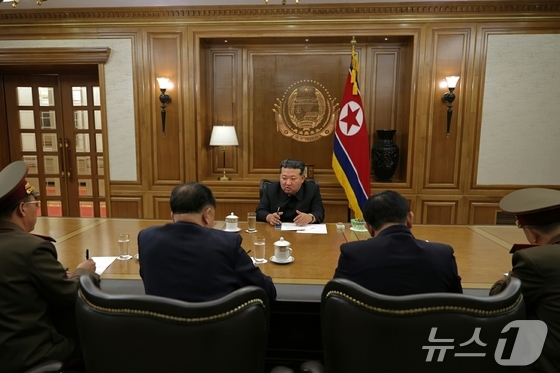
North Korea seems to be closely monitoring this situation, aiming to use future negotiations with the U.S. as an opportunity to gain official recognition of its nuclear status. This is evident from Kim Jong Un’s recent public appearances, where he has twice within a week asserted the legitimacy of North Korea’s nuclear possession and showcased its capabilities.
In a speech at the Supreme People’s Assembly just before the UN General Assembly on September 20-21, Kim stated that if the U.S. abandons its unrealistic obsession with denuclearization and seeks true peaceful coexistence with us based on acknowledging reality, we have no reason not to engage in direct talks with the U.S. This indicates a willingness to engage in dialogue if the U.S. accepts North Korea’s nuclear status.
Following the conclusion of the UN General Assembly schedule for the South Korean and U.S. presidents, Kim met with nuclear scientists and engineers on September 26. He reiterated that maintaining peace and security through strong deterrence, centered on nuclear power, is the unwavering position, emphasizing that nuclear disarmament is not an option for North Korea.
Kim also presented what is expected to be a new nuclear-related plan to be announced at the 9th Party Congress scheduled for early next year, which includes tasks for continuously enhancing nuclear capabilities. This can be interpreted as a message directed at both the U.S. and South Korea.
The Party Congress serves as North Korea’s platform for establishing its five-year national policy plan. By planning new strategies related to nuclear capabilities for the upcoming 9th Congress, North Korea is signaling its intention to maintain its nuclear program for at least the next five years, effectively rejecting denuclearization efforts.
While both North and South Korea are pursuing diplomacy centered on dialogue with the U.S., their goals and methods differ significantly. Currently, there’s a sobering assessment that North Korea, having aligned itself with China and Russia, holds a strategic advantage over South Korea. North Korea can engage in more assertive diplomacy toward the U.S., while South Korea finds itself in a defensive position due to ongoing tariff and security negotiations with the U.S.
Professor Lim Eul-chul from Kyungnam University’s Institute for Far Eastern Studies analyzed that Kim is pressuring President Trump to recognize North Korea’s status as a nuclear power while simultaneously preparing for potential military escalation if negotiations fail.