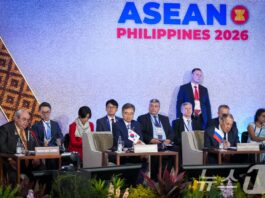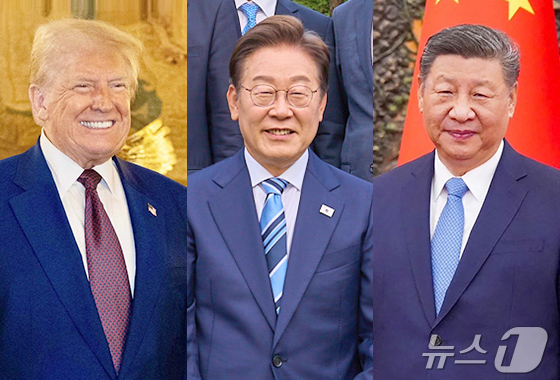
The Asia-Pacific Economic Cooperation (APEC) summit, scheduled for two days beginning on October 31 in Gyeongju, will serve as another litmus test for the Lee Jae Myung administration’s pragmatic diplomacy, offering an opportunity for critical evaluation. This summit is expected to be the largest diplomatic event since President Lee took office, bringing together U.S. President Donald Trump and Chinese President Xi Jinping for multilateral discussions.
U.S. and China Already Jockeying for Position… South Korea Must Navigate Equidistant Diplomacy
On September 19, President Trump announced via social media that he had agreed to meet with President Xi at the APEC summit in Korea. This move signals that Trump’s primary focus at APEC will be negotiations with China.
China has not yet officially confirmed President Xi’s participation at APEC. The South Korean government is actively working through various channels to secure Xi’s attendance and is meticulously preparing for the event.
The simultaneous visits of U.S. and Chinese leaders present both opportunities and challenges for South Korea as the host of the APEC summit.
As the host nation amid U.S.-China power dynamics, South Korea’s role in facilitating dialogue between the two leaders could bolster its pragmatic diplomacy. Should the U.S. and China reach a Gyeongju Agreement, it would be hailed as a major success for the summit, underscoring the need for South Korea to maintain balanced diplomacy between the two powers.
The U.S. and China appear to have already launched their diplomatic offensives, meticulously scrutinizing potential meeting locations and formats in Seoul and Gyeongju while engaging in intense strategic planning. Although specifics regarding the leaders’ meeting venue and agenda remain unconfirmed, it is believed that various behind-the-scenes negotiations are underway.
For South Korea, the summit presents diplomatic opportunities to address complex tariff and security issues with the U.S. while potentially marking a turning point in its relationship with China.
U.S.-Korea Relations: Resolving Tariff Noise is Key… Trump’s Gestures Toward Kim Jong Un Also Under Scrutiny
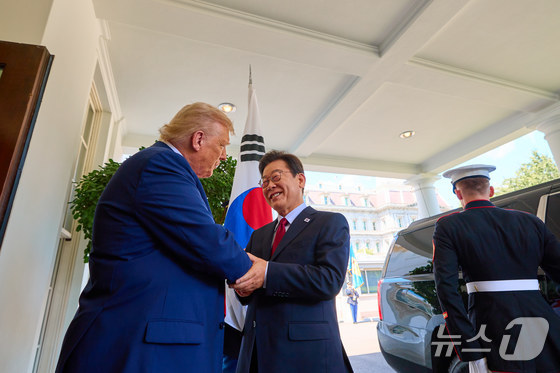
President Trump’s attendance at APEC will mark his first visit to Korea since returning to office. He and President Lee are scheduled to meet for only the second time, just over two months after their initial summit in late August.
The U.S. and South Korea have yet to finalize specific plans for tariff negotiations. Both sides are working intensively to reach an agreement before APEC, but the outcome remains uncertain. Failure to resolve tariff-related issues could lead to an awkward encounter between the two leaders at the summit.
Recent reports suggest a somewhat positive atmosphere. If the U.S. and South Korean teams have found common ground, they may use the next month to refine the details, potentially setting the stage for a productive second meeting between the leaders at APEC.
Beyond tariffs, significant issues remain between the U.S. and South Korea, including the strategic flexibility of U.S. forces in Korea, increases in defense spending, alliance modernization, and matters concerning North Korea. It is crucial that the APEC summit fosters a constructive atmosphere for these discussions.
Regarding North Korea, the South Korean government is advocating for preliminary U.S.-North Korea dialogue, making President Trump’s role at APEC a key diplomatic focus. Given Trump’s success in arranging an impromptu meeting with Kim Jong Un at Panmunjom in June 2019, preparations are likely underway to elicit a significant message from Trump on North Korea.
President Xi’s First Visit to Korea in 11 Years: Anticipated Pressure on South Korea to Distance Itself from the U.S. Containment Strategy
President Lee has adopted a stance of seeking cooperation with China while maintaining the U.S.-South Korea alliance as a cornerstone. While he acknowledges that balancing security with the U.S. and the economy with China is no longer feasible, he aims to pursue a more proactive diplomacy toward China.
The challenge lies in China’s lingering suspicion toward South Korea. Following the intense anti-China sentiment during the previous administration, China remains wary—consistently voicing concerns over ongoing anti-China protests in Seoul—and this indicates a lack of full trust in the South Korean government.
In this context, Xi is expected to seek clarity on President Lee’s vision for a new South Korea-China relationship, particularly regarding South Korea’s stance on Trump’s calls for countering China.
China’s primary leverage over South Korea involves its economic ties and the issue of North Korea. Kim’s recent attendance at China’s 80th Victory Day celebrations signals a renewed blood alliance between North Korea and China. Xi is likely to use North Korea as a bargaining chip in discussions with South Korea.
Given China’s strategic interest in expanding its influence on the Korean Peninsula, discussions are expected to focus on revitalizing cultural and people-to-people exchanges—such as lifting the Korean limitation order and expanding the recently initiated visa-free group tourism for Chinese visitors.
Professor Park Won-gon of Ewha Womans University noted that realistically, it is challenging for any country, including South Korea, to significantly influence U.S.-China relations. Nevertheless, it must persistently work to engage both sides amid China’s authoritarian tendencies and Trump’s unilateral actions.