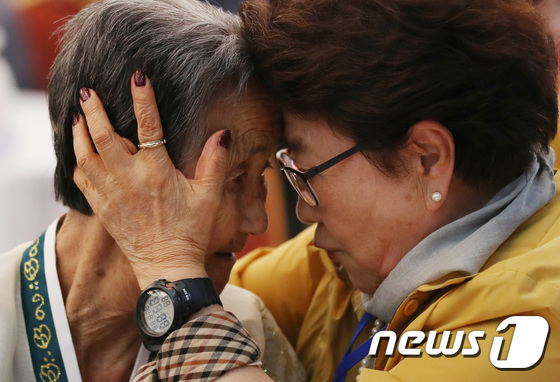
On October 3, President Lee Jae Myung proposed a humanitarian exchange initiative to North Korea, one day before Separated Family Day (October 4). With family reunions between North and South Korea having been suspended for the past seven years, all eyes are now on whether North Korea will respond to requests to confirm the status of separated families.
During a meeting with displaced persons at the Incheon Ganghwa Peace Observatory, President Lee stated that he believes it is the political responsibility of both Koreas to at least allow separated families to confirm each other’s status or exchange letters. He would like to convey that it would be beneficial if the North could consider such measures on humanitarian grounds.
This message from President Lee is the first concrete proposal for exchange following his END Initiative—which he introduced during his keynote address at the United Nations (UN) General Assembly last month—focusing on Exchange, Normalization of Relations, and Denuclearization.
Although immediate face-to-face exchanges seem unlikely due to North Korea characterizing inter-Korean relations as those between hostile states, the humanitarian rationale suggests a willingness to maintain dialogue with the North.
Analysts interpret President Lee’s remarks as reflecting his deep concerns. Given the current impasse in inter-Korean dialogue, proposing a pragmatic alternative like status confirmation for separated families appears to address the challenges of arranging direct meetings.
The suspension of family reunions has now reached a record seven years, raising concerns about the aging population and the fact that over 70% of separated family members have passed away.
Family reunions began after the Commission for Assistance in the Return of Displaced Persons, as outlined in Article 59 of the third clause of the Armistice Agreement, decided to address the issue of separated families on humanitarian grounds. Although reunions have often been suspended during periods of heightened tension between North and South Korea, they have now been on hold for seven years—marking the longest hiatus in history since the last reunion event in August 2018.
The first official reunion took place in September 1985 but ended as a one-time event. Exchanges resumed in the 1990s, and the June 15 Joint Declaration in 2000 established regular family reunions.
Subsequently, reunions were held sporadically—about two to three times a year at Mount Kumgang—until a 2008 shooting incident involving a tourist led to a suspension. Following the 2010 sinking of the Cheonan and the shelling of Yeonpyeong Island, reunions were completely halted and did not resume until 2015, six years later. However, since the last family reunion event in August 2018, even discussions about confirming the status of separated families have ceased.
According to the results of the Fourth Survey on the Status of Separated Families released by the Ministry of Unification in January, 75.5% of the 5,103 surveyed individuals reported that they could not ascertain the status of their family members or relatives in North Korea.
As of August 31, the integrated system for locating separated families indicates that 35,311 separated family members are still alive in South Korea. Of the total 134,489 registered separated family applications since 1988, 73.4% have passed away.
Two Hostile States Designation Prompts North Korea to Eliminate National Identity… Proposing Phased, Limited Exchanges
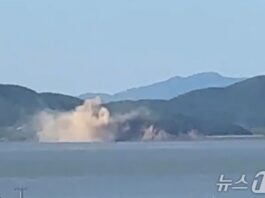
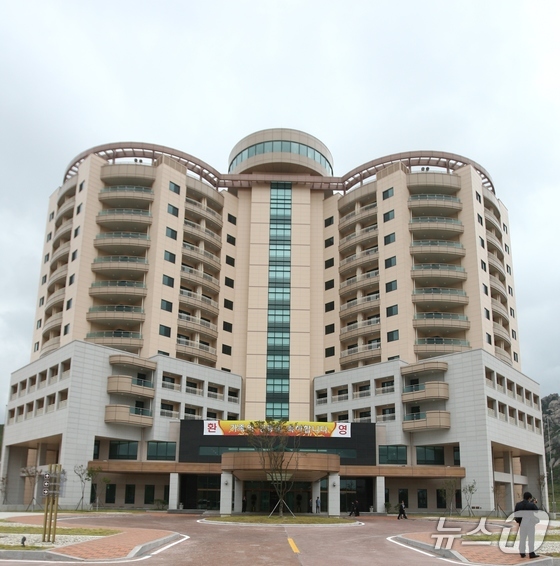
North Korea is unlikely to respond positively in the short term. Since late last year, it has even dismantled the Family Reunion Center designated for family reunions in the Mount Kumgang tourist area.
Kim Jong Un, General Secretary of the Workers’ Party of Korea, previously asserted at the party’s plenary meeting at the end of December 2023 that he would redefine inter-Korean relations as a two-state relationship. In January of last year, he described the inter-Korean relationship as one between hostile states in conflict, directing a constitutional amendment to establish territorial, maritime, and airspace provisions while removing all references related to unification.
This move is interpreted as a complete abandonment of previous unification and inter-Korean policies—which viewed the two Koreas as having a special relationship based on unification and shared ethnicity—and now treats South Korea as a separate country.
Notably, during last month’s Supreme People’s Assembly, Kim emphasized that North Korea and South Korea independently joined the United Nations in 1991, thereby solidifying their status as two separate states and indicating that the two Koreas have long been living as distinct nations.
Experts agree that as North Korea implements policies that erase the concept of shared ethnicity, the very foundation for family reunions could be undermined.
Lee Kyu-chang, a senior researcher at the Korea Institute for National Unification, stated that North Korea continues to assert that we are not of the same ethnicity, so the possibility of reunions is practically nonexistent. However, since this is a humanitarian issue, it must continue to raise the topic of separated families—even if there’s only a 1% chance.
Some have suggested exploring non-face-to-face methods.
Kim Tae-won, a research fellow at the Human Rights Research Institute of the Korea Institute for National Unification, stated that by emphasizing humanitarian reasons and international interest, it can reduce the political burden on North Korea. Further noting that it should prioritize confirming the status of separated families and gradually attempt limited exchanges that increase the likelihood of a response, such as letter exchanges, video messages, and virtual reunions.