

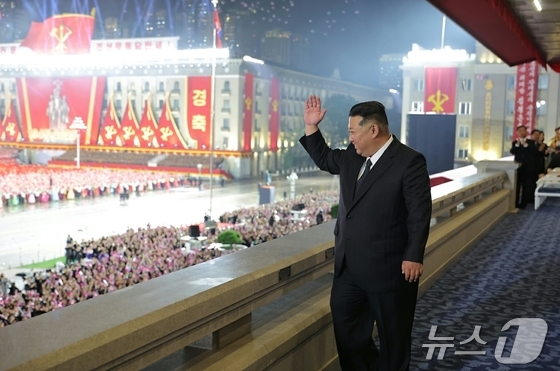
North Korea is strategically leveraging its relationships with Russia and China to expand its influence within the emerging new Cold War framework. Experts suggest that South Korea should strengthen its alliance with the U.S. and Japan while simultaneously engaging in pragmatic diplomacy to ease U.S.-China tensions and improve relations with both China and Russia.
On Monday, Lee Sung-yoon, a senior research fellow at the Sejong Institute, released a report titled, Assessing Changes in North Korea-China-Russia Relations After China’s 2025 Victory Day Celebration. He noted that the joint appearance of North Korean, Chinese, and Russian leaders during the celebrations symbolizes anti-U.S. collaboration and indicates a deepening of the new Cold War order.
Lee further analyzed that the trilateral cooperation is being strategically employed to align the differing objectives of Russia, which seeks practical benefits; North Korea, which aims to showcase its nuclear prowess; and China, which intends to reinforce its balanced diplomatic approach.
Regarding North Korea-Russia cooperation, he remarked that this partnership is likely to become long-term, based on unprecedented North Korean military deployments and weapons support. He added that despite limited compensation from Russia, the mutual dependence is solidifying, raising the possibility of future military technology transfers from Russia to North Korea.
The report reveals that North Korea has provided approximately 9.8 billion USD in support to Russia, including ammunition, missiles, and troops. In contrast, Russia’s compensation remained below 1.2 billion USD, primarily in food and fuel.
Lee pointed out that this imbalance has ironically created a mutually dependent structure that prolongs North Korea-Russia relations. Russia has become somewhat reliant on North Korea for battlefield support, while North Korea leverages this to expand its political and military influence.
Commenting on China, he stated that there is little intention to transform North Korea-China-Russia cooperation into a formal trilateral alliance, noting that China is taking a cautious stance regarding the new Cold War rhetoric between North Korea and Russia.
However, Lee highlighted that Chinese President Xi Jinping’s recent omission of the phrase denuclearization of the Korean Peninsula from a statement following his meeting with Kim Jong Un suggests that China may tacitly accept North Korea’s nuclear status in the future.
Regarding South Korea’s diplomatic strategy, Lee advised that while anchoring on the U.S.-South Korea alliance, it should also pursue practical approaches to improve relations with China and Russia and ease U.S.-China tensions. He emphasized the need for diplomatic flexibility to address national interests concerning tariffs and defense costs within the framework of U.S.-South Korea-Japan cooperation.
Lee also suggested that the upcoming Gyeongju Asia-Pacific Economic Cooperation (APEC) summit should be utilized as a platform for strengthening U.S.-South Korea-Japan cooperation while serving as a mediator to ease U.S.-China tensions. He expressed optimism that if South Korea plays a constructive mediating role in facilitating productive outcomes from meetings between Donald Trump and Xi, it could enhance its diplomatic standing and set an example of effective pragmatic diplomacy.
Additionally, Lee emphasized that South Korea should maintain diplomatic channels with both democratic and authoritarian camps based on practical diplomacy, rather than adopting a binary approach. He asserted that maintaining diplomatic balance amid the new Cold War dynamics aligns with South Korea’s long-term national interests.