

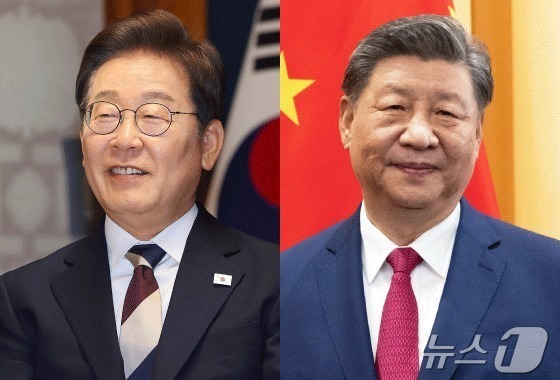
Chinese President Xi Jinping is set to visit South Korea this week for the first time in 11 years, coinciding with the Asia-Pacific Economic Cooperation (APEC) summit in Gyeongju. Many are curious about the gifts he might bring to the table.
President Xi will arrive on Thursday for a state visit, the highest form of diplomatic protocol, and will stay for two nights and three days.
Xi is scheduled to hold a summit with President Lee Jae Myung on Saturday. Both nations view this meeting as a crucial opportunity to normalize South Korea–China relations, which have been neglected in recent years.
A diplomatic source stated on October 26 that the atmosphere during communications between our countries has been positive. They are diligently preparing for a meaningful summit.
Another source added that this summit will be pivotal for enhancing high-level exchanges and building trust between the leaders. They expect discussions aimed at achieving concrete cooperation between the nations.
The talks are expected to focus on maintaining stable South Korea–China relations and expanding economic, trade, and cultural cooperation.
A key issue for diplomats is whether the unofficial ban on Korean cultural content, known as the Korea limitation order, will be lifted. While China has never officially acknowledged this ban, it has maintained unofficial sanctions on Korean cultural content since 2017, following the deployment of the terminal high altitude area defense (THAAD) missile defense system by U.S. forces in South Korea.
Most diplomats believe an explicit declaration to lift the ban is unlikely during the summit. Instead, they suggest monitoring whether consumption of Korean cultural content returns to pre-THAAD levels after Xi’s visit.
National Security Advisor Wi Sung-Iac hinted at a potential shift in policy during a KBS interview on October 26, stating that it will likely discuss ways to ensure smooth and unrestricted human, material, and cultural exchanges, regardless of whether they’re formally institutionalized.
Efforts to improve public sentiment between South Korea and China are also anticipated. The summit’s joint statement may include plans to enhance practical exchanges aimed at easing anti-China protests in South Korea and anti-Korean sentiments in China.
Notably, China has included South Korea in its visa-free entry program since last November, allowing stays of up to 30 days for business or tourism. This program is set to expire on December 31, but there’s speculation it could be extended following the summit.
The summit may also accelerate progress on the second phase of the South Korea–China Free Trade Agreement (FTA) and address North Korean issues, with Xi’s stance on denuclearization being particularly significant.
As this year marks the 10th anniversary of the South Korea–China FTA, there’s potential for expediting discussions on expanding the agreement.
The 2015 FTA primarily covered materials, parts, and equipment, but there have been calls to extend it to cultural, tourism, and legal sectors.
If both leaders agree to initiate talks on the second phase of the FTA during the summit, it could significantly advance related processes.
Foreign Minister Cho Hyun recently briefed President Lee on the need for renewed FTA discussions. Earlier, Minister Cho met with Chinese Foreign Minister Wang Yi in September to discuss the FTA, according to the Foreign Ministry.
Securing Xi’s commitment to a constructive role regarding North Korea is considered crucial.
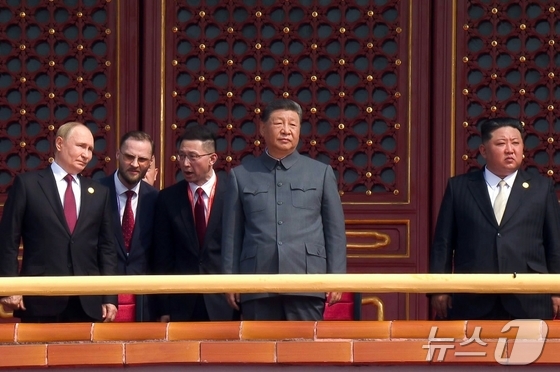
North Korea–China relations, previously strained, have shown signs of improvement following Kim Jong Un’s attendance at China’s 80th Victory Day celebrations last month.
North Korea appears to be leveraging its ties with China and Russia to gain recognition for its nuclear capabilities, potentially distancing itself from the U.S.–South Korea goal of denuclearization on the Korean Peninsula. Russia has expressed understanding for North Korea’s nuclear development, while China has recently avoided using the term denuclearization.
Professor Kang Jun-young from Hankuk University of Foreign Studies noted that a major challenge in the South Korea–China summit is that while South Korea must address North Korea’s denuclearization from a security standpoint, China is unlikely to provide a clear response. The current situation appears to have significant limitations.