President Donald Trump has repeatedly signaled his desire to meet with North Korean leader Kim Jong Un, yet Pyongyang’s response has been to launch missiles.
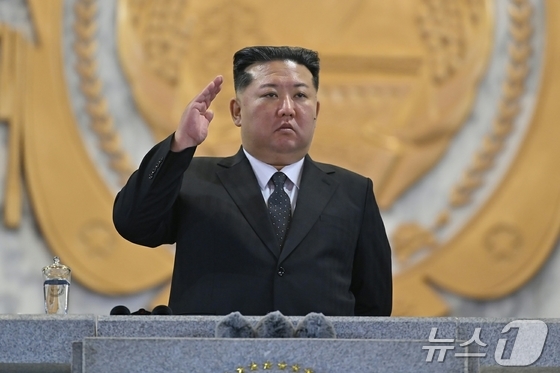
Notably, key figures – including North Korea’s Supreme Leader Kim and his sister, Kim Yo Jong, who might act on his behalf – have remained out of the spotlight. Analysts suggest that North Korea may be assessing the extent to which President Trump is willing to accommodate their position in this high-stakes diplomatic dance.
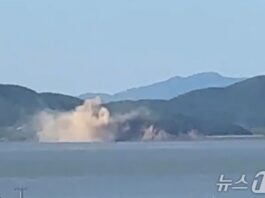
On the morning of Tuesday, North Korea conducted a test launch of ship-to-ground strategic cruise missiles over the Yellow Sea, as reported by the Korean Central News Agency. The modified cruise missiles, launched from naval vessels, reportedly flew for over 7,800 seconds (approximately 2 hours and 10 minutes) before striking their designated targets.
By launching low-altitude, long-endurance cruise missiles, North Korea demonstrated its capability to potentially strike Gyeongju—the site of the upcoming Asia-Pacific Economic Cooperation (APEC) summit—while evading detection by U.S. and South Korean forces.
Pak Jong-chon, North Korea’s second-highest-ranking military official, who observed the test launch, emphasized that this achievement is crucial for operationalizing their nuclear forces. He stated that maintaining nuclear readiness is both a responsibility and a duty, clearly framing this cruise missile launch as a nuclear missile provocation.
Just days earlier, on October 22, North Korea test-fired two short-range ballistic missiles as part of a new weapons system. The missiles were launched toward a target approximately 430 kilometers (about 267 miles) from Pyongyang—roughly the same distance as Gyeongju. These consecutive missile tests clearly signal North Korea’s intent to threaten the APEC summit.
The timing of these missile launches, just before the APEC summit—where a potential emergency meeting between President Trump and Kim was a major talking point—is widely interpreted as Pyongyang’s rejection of dialogue with the U.S. during the summit.
Experts believe that North Korea is deliberately ratcheting up tensions to undermine President Trump’s willingness to engage in talks, particularly as Pyongyang prioritizes strengthening its ties with Russia and China.
Interestingly, these military provocations were not reported in North Korea’s domestic media outlets such as Rodong Sinmun or Korean Central TV, but only through the external-facing Korean Central News Agency. This suggests a calculated effort to control the narrative and diplomatic situation without alarming the North Korean public about potential changes.
Simultaneously, North Korea appears to be testing President Trump’s resolve for dialogue. On October 24, as Trump departed for his Asian tour, he expressed a desire to meet with Kim and referred to North Korea as a nuclear power—a nod to Pyongyang’s long-standing desire for recognition as a nuclear state.
On Monday, while en route to Japan, Trump hinted at the possibility of easing sanctions against North Korea, once again attempting to draw Pyongyang’s attention. From North Korea’s perspective, their silence seems to be eliciting increasingly generous proposals from President Trump.
However, Kim recently stated in a speech to the Supreme People’s Assembly that North Korea would only consider a meeting if the U.S. abandoned its fantastical obsession with denuclearization. Pyongyang may be trying to pressure Trump into explicitly declaring that he will not pursue denuclearization—the scenario that best suits their interests.
Observers note that Kim’s absence from recent missile tests, the silence of his sister Kim Yo Jong (who oversees foreign affairs), and Foreign Minister Choe Son-hui’s current diplomatic trip to Russia and Belarus, suggest that North Korea has yet to make a final decision regarding a potential U.S.-North Korea meeting.
North Korea is likely to announce its decision or convey its position through back channels after carefully observing President Trump’s actions following his visit to South Korea. The upcoming U.S.-South Korea summit is expected to be a crucial factor in shaping North Korea’s decision and the intensity of its response.