

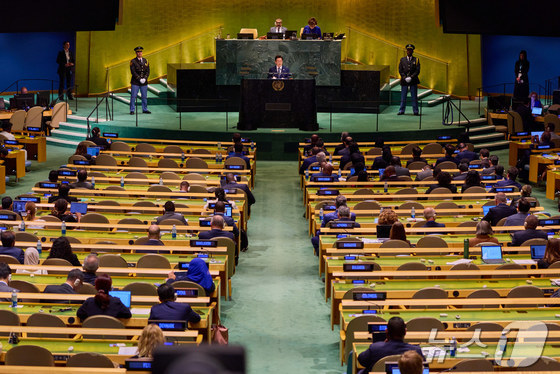
On Tuesday, North Korean human rights organizations disclosed that they had sent an open letter to President Lee Jae Myung, urging South Korea to co-sponsor the North Korean human rights resolution slated for the 80th United Nations (UN) General Assembly.
The open letter was signed by 20 human rights organizations, including Human Rights Watch (HRW), the International Federation for Human Rights (FIDH), Christian Solidarity Worldwide (CSW), Citizens’ Alliance for North Korean Human Rights, and the Transitional Justice Working Group. Notable figures such as UK Lord David Alton and Roberta Cohen, former co-chair of the Committee for Human Rights in North Korea, also endorsed the letter.
In their missive, the signatories expressed deep concern over what appears to be a regression in human rights commitment under the Lee’s administration. They cited recent decisions by the Ministry of Unification, including the discontinuation of the annual North Korean human rights report, the dismantling of the Self-Support Division that assisted North Korean defectors with employment and entrepreneurship, and the dissolution of both the Human Rights and Humanitarian Affairs Office and the Abductee Response Team.
The letter emphasized that sustainable peace on the Korean Peninsula cannot be achieved by sidelining human rights issues.
It pointed out that UN General Assembly resolutions from the past two years have called for the immediate repatriation of all abductees, detainees, and unreturned Korean War prisoners, underscoring these as top priorities for South Korea.
South Korea had consistently co-sponsored the resolution from 2008 to 2018. However, from 2019 to 2022, during the Moon Jae-in administration, it abstained due to concerns about potential impacts on inter-Korean relations. The country resumed its role as a co-sponsor in 2023 with the inauguration of the Yoon Suk Yeol administration.
The signatories stressed that if the Lee administration opts out of co-sponsoring this year’s North Korean human rights resolution, it would send a profoundly troubling message both domestically and internationally. They warned that such a decision would not only undermine the universality of human rights but also diminish South Korea’s standing as a democratic nation committed to upholding the rule of law and human dignity.
The UN has consistently adopted the North Korean human rights resolution on a biannual basis—during the Human Rights Council session in the first half of the year and at the General Assembly in the second half. The General Assembly resolution typically passes through the Third Committee, which deals with human rights issues, in November before its final adoption at the UN General Assembly plenary session in December.