A new analysis released on Wednesday reveals that North Korea continues to engage in transnational repression (TNR), targeting overseas defectors and dissidents beyond the Korean Peninsula and across the Asian continent.
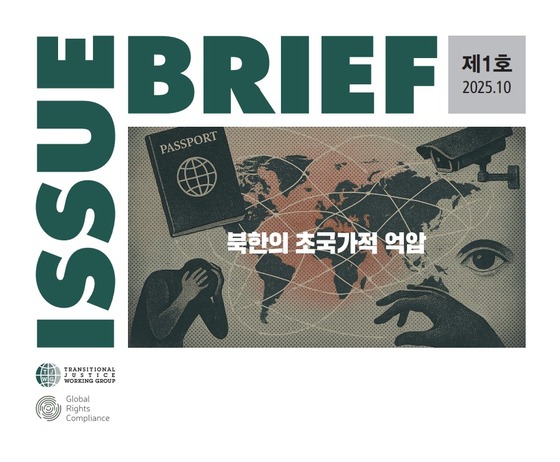
The Transitional Justice Working Group (TJWG) and the international law foundation Global Rights Compliance (GRC) have presented the first report of their jointly designed North Korea’s Transnational Repression project, launched last year. This comprehensive study analyzes four types of transnational repression perpetrated by North Korea and outlines key incidents that have occurred under Kim Jong Un’s regime.
Transnational repression poses severe threats to national security, sovereignty, human rights, and principles of international law. In 2021, the U.S. human rights organization Freedom House investigated 608 incidents of direct and physical repression, including assassinations, assaults, detentions, and deportations, carried out by governments of 31 countries across 79 nations from 2014 to 2020, bringing this term into wider recognition.
In the report, TJWG categorized examples of transnational repression into four types: direct attacks (assassination, abduction), involving foreign countries (forced repatriation cooperation), controlling mobility (passport confiscation, family hostage-taking), and long-distance intimidation (cyber attacks, proxy repression).
Notable examples include the arrest and unlawful repatriation of asylum seekers based on unverified allegations, the confiscation of passports from overseas workers, the hostage-taking of family members in North Korea, and the coercion of North Korean defectors settled in South Korea to provide information about other defectors under threats from North Korean security agencies.
TJWG stated that North Korea’s hereditary regime has meticulously constructed a network of overseas surveillance and repression mechanisms over decades to control its citizens abroad and prevent their escape. They confirmed related cases in ten countries, including South Korea, Japan, China, Malaysia, Laos, Russia, Italy, France, Cuba, and the U.S.
The report noted that since 1948, North Korea has sent its citizens to approximately 90 countries through diplomatic missions, trade offices, overseas labor, and study abroad programs. It emphasized that North Korea exerts influence through embassies and consulates established worldwide, which serve not only as diplomatic outposts but also as operational bases for executing transnational repression.
In 2021, the U.S. enacted the Transnational Repression Accountability and Prevention Act (TRAP Act). In 2023, the Council of Europe designated transnational repression as a threat to the rule of law and human rights, resolving to increase training and resources for judicial authorities in European member states to report, investigate, and identify perpetrators of transnational attacks.
TJWG assessed that while measures such as protecting defectors domestically and apprehending North Korean agents are being implemented, the legal, institutional, and policy frameworks to systematically counter North Korea’s transnational repression abroad remain insufficient.
TJWG plans to expose the realities of North Korea’s transnational repression through a total of three issue brief reports, beginning with this one. The subsequent reports will focus on case studies from China and Russia. They also plan to discuss countermeasures at an international conference scheduled for next year in Seoul and to distribute a comprehensive report internationally based on the released findings.