

In October of last year, North Korea reportedly entered a state of war readiness shortly after the South Korean military’s drone operation into Pyongyang.
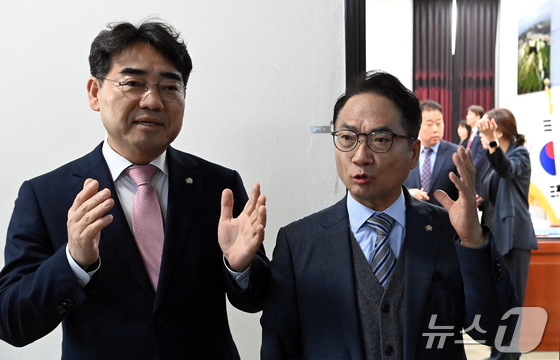
Rep. Park Sun-won, the ruling party’s representative on the National Assembly’s Intelligence Committee, disclosed this information to reporters on November 5 following a closed-door audit of the Military Counterintelligence Command and the Cyber Operations Command.
Park revealed that after drones infiltrated Pyongyang on October 3, 6, and 9, and following Kim Yo-jong’s statement on October 10, the Intelligence Command and the 777th Command were ordered to gather intel on North Korean civilian movements. Reports indicated significant unrest among the North Korean population and that the regime had shifted to a war-ready posture.
He added that Operation Headquarters Chief Lee Seung-oh, upon receiving reports of both military and civilian unrest in North Korea after the drone incursion, initiated a joint intelligence operation. This operation involved close-range flights of Apache helicopters along the Military Demarcation Line (MDL) and at least five additional drone deployments.
Park elaborated that the joint intelligence operation with Apache helicopters involved top brass including the Chief of the Joint Chiefs of Staff Operations, the Operations Planning Director, the Ground Operations Commander, the 1st Corps Commander, and the Operations Commander. The Intelligence Chief recognized this as an official Joint Chiefs of Staff operation, indicating full involvement of all key operational headquarters in countering North Korean threats.
He further stated that on December 2, a day before the emergency martial law declaration, the Intelligence Command briefed its mission for 90 minutes, presenting the 300-unit plan and Alphabet Operation. This resolved all questions about foreign currency retention raised during the mobilization of Pangyo and Seocho units.
The audit also revealed that two Intelligence Command officers were detained by Mongolian authorities while conducting reconnaissance on the North Korean embassy in Mongolia.
Park disclosed that former National Intelligence Service (NIS) Director Jo Tae-yong visited Mongolia from September 8-10 last year to reinforce intelligence cooperation. About two months later, on November 18, two Intelligence Command officers traveled to Ulaanbaatar, Mongolia. They conducted surveillance on the North Korean embassy from the 18th to the 22nd before being apprehended by Mongolian military intelligence.
He continued that to resolve this diplomatic incident, Hwang Won-jin, then the first deputy director of the NIS, and Moon Sang-ho, the Intelligence Command chief at the time, sent an apology to Mongolian defense intelligence officials, securing the release of the two officers.
Park noted that this incident raises concerns about the NIS and Intelligence Command’s operations in Mongolia, sometimes in cooperation with local agencies and other times through unauthorized infiltration, to carry out missions related to the North Korean embassy. Former Director Jo Tae-yong initiated this practice, and it appears the Intelligence Command aimed to formalize these operations.
Additionally, Park revealed a new detail: The head of the Counterintelligence Command’s Scientific Investigation Center received a call from Park Geon-young, a senior prosecutor at the Supreme Prosecutor’s Office, just before deploying to the Central Election Commission in Gwacheon. The prosecutor asked, “We need to deploy too; what’s your plan?”
Park also mentioned the existence of a task force within the Counterintelligence Command dedicated to countering North Korea’s balloon operations. This task force reportedly shared various intelligence with the Drone Operations Command, as uncovered during the inspection.
During the audit, the Military Counterintelligence Command issued a statement: While our primary mission is to prevent state subversion and preemptively detect and stop insurrections, it deeply regrets and apologize for the involvement in this insurrection. Park relayed this information to the press.
Notably, it’s unusual for the ruling party to conduct a solo briefing following an intelligence committee audit. Park emphasized that the core focus of this audit is addressing the insurrection, restoring public welfare, and normalizing national operations.
Lee Seong-gwon, the opposition party’s representative on the intelligence committee, left the briefing early, stating that the Defense Intelligence Agency, Counterintelligence Command, and Cyber Operations Command do not officially handle martial law-related duties, so there’s no reason for me to attend this briefing.