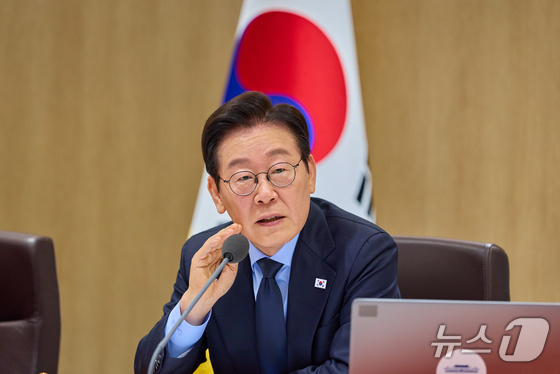
The Lee Jae Myung administration, which had previously pursued a conciliatory approach towards North Korea, has joined as a co-sponsor of a United Nations (UN) General Assembly resolution on North Korean human rights. This move expresses concerns over human rights violations by North Korean authorities and calls for improvements. Analysts view this decision on Thursday as a significant departure from the previous Moon Jae-in administration’s active engagement in inter-Korean dialogue.
On Wednesday, South Korea co-sponsored the human rights resolution presented by the UN General Assembly’s Third Committee, alongside 41 other countries including Japan, France, and Germany.
Many in diplomatic circles had expected the government to take a passive stance on North Korean human rights, a topic Pyongyang strongly dislikes. Indeed, the Yoon Suk Yeol administration recently scaled back the Ministry of Unification’s North Korean human rights functions and announced plans to overhaul the North Korean Human Rights Center established by the previous administration.
The government’s unexpected co-sponsorship of the resolution is seen as aligning with a pragmatic diplomatic approach. Some interpret this move as a response to the slim prospects for resuming inter-Korean dialogue. With North Korea maintaining hostility towards South Korea and U.S.-North Korea talks stalled, analysts suggest the government prioritized upholding international norms over managing inter-Korean relations.
Participation in adopting these resolutions has varied between administrations, with notable differences between progressive and conservative governments. Since the first adoption by the UN Human Rights Commission in 2003, involvement has been influenced by inter-Korean relations and each administration’s policy stance.
The Roh Moo-hyun administration abstained from adopting the resolution in 2003 during a period of warming inter-Korean relations, and again in 2004 and 2005. The government’s abstention in 2005, when the resolution was first discussed at the UN General Assembly level, drew criticism.
However, after North Korea’s first nuclear test on October 9, 2006, which disrupted the peaceful atmosphere, the Roh administration voted in favor of the North Korean human rights resolution at the UN General Assembly for the first time in December that year.
Following the 2007 inter-Korean summit, as dialogue resumed, the government again chose to abstain. This decision sparked significant political controversy, with allegations that the government had consulted North Korea before abstaining. Former Foreign Minister Song Min-soon revealed this in his 2016 book The Iceberg Moves.
From 2008 to 2016, spanning the Lee Myung-bak and Park Geun-hye administrations, South Korea consistently co-sponsored the resolution. Under Moon’s administration, South Korea supported the resolution in 2017, when North Korea declared its nuclear force complete, and in 2018, during U.S.-North Korea denuclearization talks.
However, from 2019 to 2021, as inter-Korean dialogue stalled, South Korea withdrew from co-sponsorship. The Yoon administration, critical of North Korea, has participated in co-sponsorship since 2022, supporting UN resolutions.
Initially, the Lee administration pursued an engagement policy with North Korea. It halted loudspeaker broadcasts and psychological warfare operations in response to North Korean provocations. The government also adjusted joint U.S.-South Korea military exercises, which North Korea had labeled as invasion drills.
Since then, the government, led by the Ministry of Unification, has continued to send conciliatory messages to North Korea, urging a return to dialogue. Given this context, a passive approach to human rights issues, which North Korea views as an affront to Kim Jong Un, was anticipated.
Within the government, opinions were divided. Some argued for withdrawing from co-sponsorship to consider inter-Korean relations, while others maintained that North Korean human rights are a universal value issue.
President Lee’s recent engagement with the UN, including chairing a Security Council meeting and proposing the E.N.D Initiative at the General Assembly, likely influenced the decision to align with international standards.
With North Korea closing off dialogue and maintaining hostility towards South Korea, many argued that responding to international issues would be diplomatically advantageous, reducing the need to be overly cautious of North Korea’s reactions.
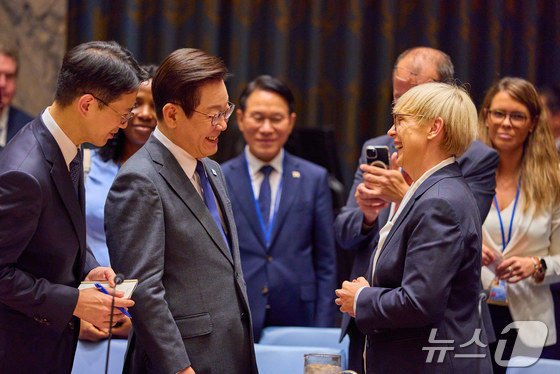
Some view President Lee’s decision as favoring the alliance-focused approach to Korean Peninsula issues over the self-reliance approach emphasizing direct inter-Korean dialogue.
Professor Park Won-gon of Ewha Womans University commented that given the lack of progress in inter-Korean relations, withdrawing from co-sponsorship could significantly impact South Korea’s international standing. The Lee administration’s pragmatic diplomacy allows for flexibility beyond ideological constraints. This decision aligns with international norms and principles.