The Lee Jae Myung administration has officially proposed its first inter-Korean talks since taking office. However, given North Korea’s recent stance of defining inter-Korean relations as between two hostile states and refusing to recognize South Korea as a dialogue partner, the likelihood of a positive response appears slim.
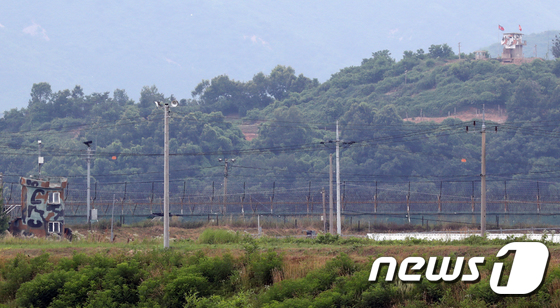
On Monday, the Ministry of National Defense issued a statement to North Korea proposing military talks between the two Koreas to discuss establishing a baseline for the Military Demarcation Line (MDL) within the Demilitarized Zone (DMZ). This proposal comes in response to the loss of many MDL markers installed during the 1953 armistice agreement, which has led to North Korean troops inadvertently entering South Korean territory and potentially triggering accidental conflicts.
Military talks between the two Koreas aim to reduce military tensions and foster trust between the armed forces. These include various levels of engagement, from defense minister meetings to high-level military talks, general-level discussions, and working-level meetings.
Analysts predict that North Korea is unlikely to respond favorably to this proposal, citing a lack of tangible benefits for the regime. They note that North Korea’s recent characterization of inter-Korean relations as two hostile states, along with measures to sever ties at the border, suggests that engaging in dialogue could weaken its stance in the eyes of its citizens.
Hong Min, a senior researcher at the Korea Institute for National Unification, stated that North Korea does not currently perceive an immediate military threat from the South, noting that South Korea’s warning shots are merely responses to North Korea’s border activities. He noted that without a clear threat or risk of imminent conflict initiated by the South, North Korea likely sees no pressing need to pursue talks.
North Korea is preparing for several significant internal political events, including a plenary session of the Central Committee in mid-December, the 9th Party Congress early next year, and the Supreme People’s Assembly in the first half of next year. Analysts suggest that with these internal agendas focused on performance assessments and strategy announcements, North Korea has little incentive to introduce major variables in inter-Korean relations.
Some experts speculate that North Korea may not only ignore the proposal but also attempt to shift blame for border tensions onto South Korea. Even if North Korea responds, it may claim to intend to consult with the United Nations Command or the United States, potentially sidelining South Korea in the process.
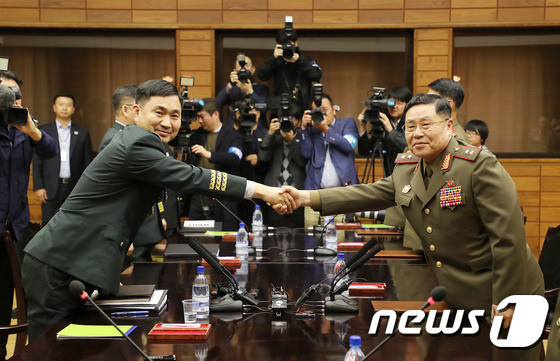
The Moon Jae In administration proposed military talks to North Korea in 2019 but received no response. The Yoon Suk Yeol administration has not made any formal proposals to date. The most recent military talks were held in October 2018 during the 10th general-level meeting, preceded by two defense minister meetings, ten general-level talks, and forty working-level discussions.
Despite the low likelihood of engagement, the South Korean government’s proposal reflects a commitment to strengthening the safety of residents in border regions. The move acknowledges the frequent MDL violations by North Korean forces during border operations, which risk accidental encounters or misfires from South Korean troops.
With no communication channels currently active between North and South Korea, the proposal is viewed as an attempt to establish minimal dialogue and reduce the risk of accidental clashes. Even if talks do not materialize immediately, Seoul’s willingness to propose dialogue and publicly signal a desire to ease tensions could help lay the groundwork for future communication.
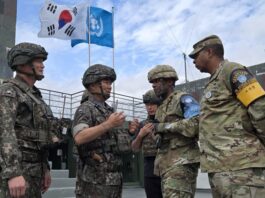
The military authorities also noted that they had previously communicated the need for talks to reset the MDL through the United Nations Command channel, but received no response from North Korea.
The decision to focus the talks’ agenda on establishing the MDL is viewed as a practical choice that could benefit both sides. Since early 2024, North Korean forces have repeatedly encroached southward while laying mines and constructing tactical roads and fences near the MDL. Incursions have increased from fewer than ten instances last year to more than ten this year, including a notable incident in August when more than thirty North Korean soldiers crossed the MDL before retreating after warning shots from South Korean forces.
Given these circumstances, the proposal to clarify the MDL baseline could be seen as a practical agenda aimed at reducing the risk of accidental clashes for both North and South Korea.