

The government is pursuing a plan to use the Inter-Korean Cooperation Fund more flexibly, a fund that has remained largely dormant due to strained relations between North and South Korea.
Despite an annual budget allocation of 1 trillion KRW (approximately 750 million USD), the current political climate makes it difficult to carry out inter-Korean exchange projects. The government aims to amend existing laws to broaden the fund’s use for domestic unification-related initiatives, research, and development in border regions. These efforts are intended to prepare for improved inter-Korean relations and shape public opinion on unification.
According to the Ministry of Unification on Friday, next year’s Inter-Korean Cooperation Fund budget totals 1.427 trillion KRW (1.07 billion USD). Of this, 1.03 trillion KRW (772.5 million USD) is earmarked for actual project costs. The remaining budget includes 370 billion KRW (277.5 million USD) for KEDO public fund repayments, 54.5 billion KRW (40.88 million USD) in Ministry of Economy and Finance surplus, and 2.2 billion KRW (1.65 million USD) for Export-Import Bank fund management.
Project costs, the fund’s main component, have increased compared to the previous administration. These costs remained around 1 trillion KRW (750 million USD) until 2023 but decreased to 872.2 billion KRW (654.15 million USD) in 2024 and 798.1 billion KRW (598.58 million USD) in 2025 under President Yoon Suk Yeol. However, the Lee Jae Myung administration, which prioritizes inter-Korean cooperation, has raised the budget back above 1 trillion KRW (750 million USD).
Despite this, prolonged tensions have resulted in minimal fund usage. Execution rates for the past three years were 6.1 percent in 2022, 1.9 percent in 2023, and 3.8 percent in 2024, averaging just 3.9 percent.
Consequently, experts have consistently argued that expanding and reforming the fund’s use to align with current dynamics on the Korean Peninsula is more crucial than simply increasing the budget.
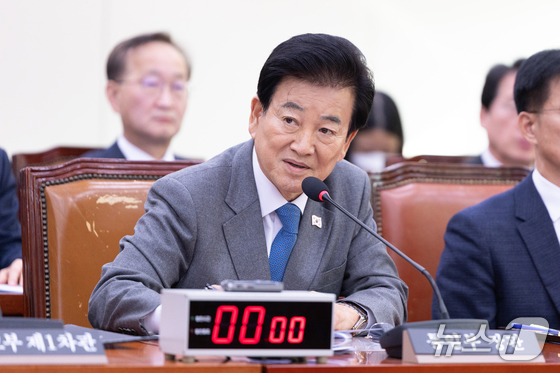
To enhance the fund’s effectiveness, amending the Inter-Korean Cooperation Fund Act is crucial. Currently, Article 8 limits the fund’s use to direct exchange projects between North and South Korea.
Unification Minister Jeong Dong-young said on Wednesday that the fund has been budgeted for decades without being used and explained that the government is pushing for amendments that would allow the fund to support projects promoting peaceful unification, even without North Korea’s explicit agreement.
A partial amendment to the Inter-Korean Cooperation Fund Act was proposed in the National Assembly in October, led by Democratic Party lawmaker Kim Young-bae.
The amendment aims to expand the fund’s use to include cooperation projects in climate, cultural heritage, and forestry; financial support for businesses affected by inter-Korean trade suspensions; support for private organizations promoting inter-Korean exchanges; and projects in the DMZ and border areas fostering inter-Korean cooperation.
A government official explained that amending the Act has been a long-standing goal. Given recent challenges, the fund’s use has been limited, but if amended, the government could more flexibly support activities and research aimed at building a foundation for peaceful unification.
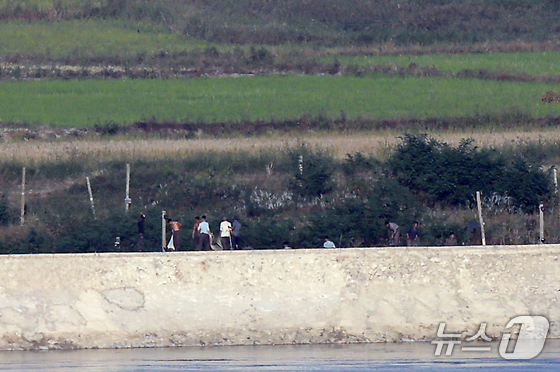
This aligns with the Ministry of Unification’s plan to develop Peace Economic Special Zones. The government proposes designating economically marginalized border regions as special zones and turning the DMZ into an international eco-tourism and peace cooperation area.
The Ministry’s plan, announced in April and October, outlines the development of 17 border cities and counties into three main regions.
The western region will focus on innovative manufacturing and advanced industries, the central area on agriculture, tourism, and light industry integration, and the eastern region on tourism-centered logistics and specialized services.
Kim Sa Woo, an expert at the National Assembly’s Foreign Affairs and Unification Committee, noted that expanding the fund’s use to border area projects could promote balanced regional development and strengthen economic ties between North and South Korea.
The government aims to finalize an expanded plan by year-end and begin establishing special zones next year, with the key challenge being finding consensus between political parties.
Song Eon Seok, floor leader of the People Power Party, proposed an amendment requiring parliamentary approval for fund usage exceeding 30 billion KRW (22.5 million USD) annually or 50 billion KRW (37.5 million USD) for multi-year projects.
This proposal aims to increase transparency in the Ministry’s budget planning for undisclosed inter-Korean projects.
However, the lack of full disclosure requirements in the current Act has made the government and ruling party reluctant to actively pursue this legislation.