

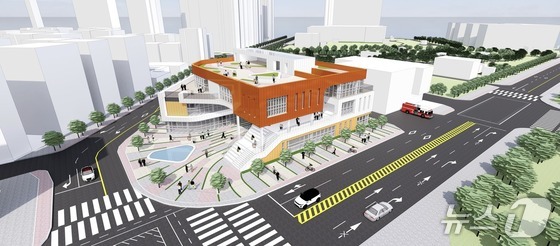
The Ministry of Unification is abandoning the previous administration’s plan to establish a National North Korean Human Rights Center and is instead pursuing the creation of a Center for Peaceful Coexistence on the Korean Peninsula. However, critics argue that this abrupt shift in the center’s name and purpose, due to the change in administration, has obscured its role and identity.
According to a comprehensive report by News1 on November 29, the Ministry outlined three primary objectives for the center in its Plan for the Center for Peaceful Coexistence on the Korean Peninsula: (1) establishing a social hub to maintain ongoing peaceful coexistence between North and South Korea, (2) creating a tangible platform for sharing experiences of displaced persons and North Korean defectors, and (3) preparing a public forum for civil society and the international community to discuss the future of the Korean Peninsula.
As reflected in its new name, the center’s main purpose appears to be highlighting the government’s policies aimed at fostering inter-Korean exchange, cooperation, and peaceful coexistence.
The proposal states that given the intensifying pain of division and the detrimental effects of North-South disconnection, it will create a permanent space for civil organizations, businesses, and academic groups to promote the value of coexistence. It will also provide a public forum for civil society and the international community. It emphasizes the need to build consensus on peaceful coexistence on the Korean Peninsula through direct dialogue and participation across various generations and social classes.
Simultaneously, the proposal outlines plans to create spaces for displaced persons and North Korean defectors. It states that by sharing the experiences of displaced persons and North Korean defectors, it aims to reconstruct the daily lives of North Korean residents and respect their identities. The Ministry plans to establish a digital archive based on their testimonies and create related exhibition spaces.
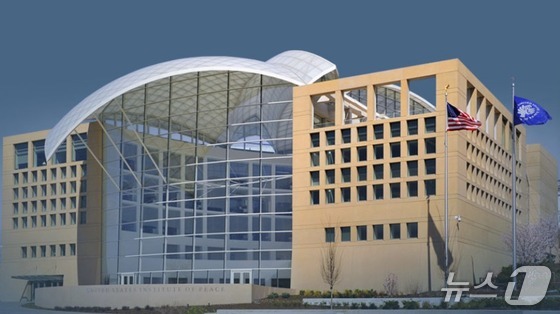
To achieve these goals, the Ministry intends to draw inspiration from international peace-themed complexes such as the U.S. Institute of Peace (USIP) in Washington, D.C., the Hiroshima Peace Memorial Museum in Japan, and the Topography of Terror in Berlin, Germany.
This approach aims to highlight the presence of North Korean defectors and illuminate the daily lives of North Korean residents. However, it can also be interpreted as an attempt to dilute the original focus on ‘North Korean human rights’ while retaining some related content.
Nevertheless, as the current administration pushes for both ‘inter-Korean exchange and cooperation’ and a public forum for citizens, critics point out that the center lacks a clear direction.
Additionally, some have criticized the complete overhaul of the center’s projects following the change in administration, arguing that it leads to unnecessary waste of budgetary resources.
According to the proposal, out of the total project budget of approximately 39.6 billion KRW (about 26.9 million USD) for the Center for Peaceful Coexistence on the Korean Peninsula, 1.258 billion KRW (about 1.5 million USD) is allocated for design costs. Despite the previous government’s selection of Archimir’s design plan as the winner in the competition for the National North Korean Human Rights Center, this plan will be discarded in favor of starting from scratch.
The Ministry plans to establish a basic architectural plan between January and March 2026, form a site selection committee in June or July 2026, begin the design process in August 2026, break ground in 2028, and complete construction by 2030.
To launch the project in just over a month, it seems crucial to clearly define the center’s objectives.
On November 19, the National Assembly’s Foreign Affairs and Unification Committee voted to eliminate the entire budget of 8.176 billion KRW (about 5.56 million USD) for the North Korean Human Rights Center and approved a new budget of 3.2 billion KRW (about 2.18 million USD) for the construction of the Center for Peaceful Coexistence on the Korean Peninsula.
Initially, the Ministry had budgeted over 10 billion KRW (about 6.8 million USD) for the center’s construction. However, opposition lawmakers pointed out a lack of public consensus on the necessity of the center, and even some ruling party members agreed, resulting in a final budget reduction of about 20%.
Lee Jae-gang, a member of the Democratic Party, stated that the Center for Peaceful Coexistence on the Korean Peninsula must not merely serve as a substitute for the previous administration’s project but should establish itself as a policy infrastructure that genuinely promotes peace and coexistence on the Korean Peninsula. He also suggested that since the Ministry is preparing a project to systematically collect and digitize records related to separated families, the center could be developed as a space aimed at fostering exchange and peace between North and South Korea through the lens of separated families.