

Experts unanimously agreed on December 5 that promoting health and medical cooperation between North and South Korea requires engaging in multilateral collaboration involving international organizations and third countries.
At the Current and Future of Health and Medical Cooperation with North Korea conference held at the Royal Hotel, Professor Shin Young-jun from Hanyang University’s Department of Preventive Medicine emphasized the necessity of cooperation through international bodies or multilateral systems. He particularly highlighted that partnership with China could be a game-changer in this context.
Shin further advocated for exploring Vietnam’s role, given their recent agreement on health sector cooperation with North Korea. He also called for the revival of the Northeast Asia Infectious Disease Network, a past initiative involving South Korea, North Korea, China, Japan, the U.S., and Mongolia. It’s worth noting that North Korea signed a wide-ranging cooperation agreement with Vietnam in October, covering areas such as foreign affairs, defense, and health.
Lee Eun-kyung, head of the Korea Institute of Oriental Medicine, proposed a South-North-Russia cooperation model in traditional medicine. She suggested exploring medical tourism opportunities linked to the Rajin-Khasan project and urged for a joint entry into the Eurasian traditional medicine market. Lee also emphasized the importance of leveraging the World Health Organization’s (WHO) traditional medicine cooperation network.
Professor Hwang Na-mi from the National Cancer Center Graduate School proposed a shift from bilateral and multilateral cooperation to a triangular governance model. She argued that South Korea should utilize international organizations, third countries, or non-governmental organizations (NGOs) as implementing bodies, enabling more effective planning and evaluation.
However, Hwang cautioned that the role of third parties is crucial. She explained that while combining multilateral expertise with bilateral technical sharing could help rebuild inter-Korean trust, this process might be subject to political influences and face monitoring challenges.
Several experts highlighted the need for North-South health cooperation to incorporate the growing trends in information and communication technology (ICT).
Dr. Moon Jin-soo, director of the Unified Medicine Center at Seoul National University College of Medicine, advocated for developing health cooperation strategies in digital healthcare through blockchain-based medical information research. He noted that this area, falling under humanitarian support, faces fewer sanctions-related concerns and offers significant collaboration potential.
Moon also emphasized the importance of cooperating with North Korea in healthcare modernization through medical automation, citing North Korea’s current use of artificial intelligence (AI) for robotic medical services in Pyongyang pharmacies.
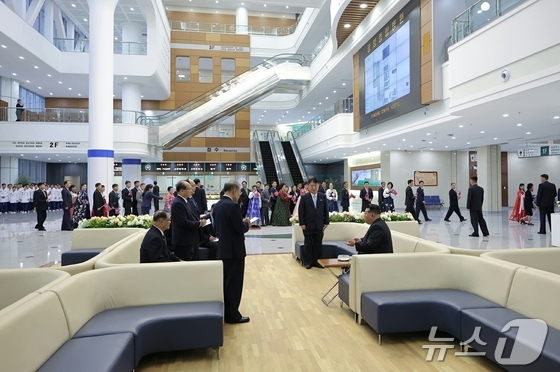
Meanwhile, North Korea has declared this year as the Year of Health Revolution, focusing on renovating and modernizing its healthcare sector. The country plans to launch pilot projects in Kangdong, Yonggang, and Guseong, with aims to construct 20 hospitals and health centers across various cities and counties annually from next year. In October, North Korea also promoted the completion of the Pyongyang General Hospital after five and a half years, touting it as a world-class medical facility.