

The presidential office has announced plans to actively pursue dialogue with North Korea in the new year, aiming to launch a Korean Peninsula Coexistence Process. Having successfully stabilized relations with the U.S., Japan, and China this year, the administration intends to channel that diplomatic momentum into addressing inter-Korean relations in the coming year.
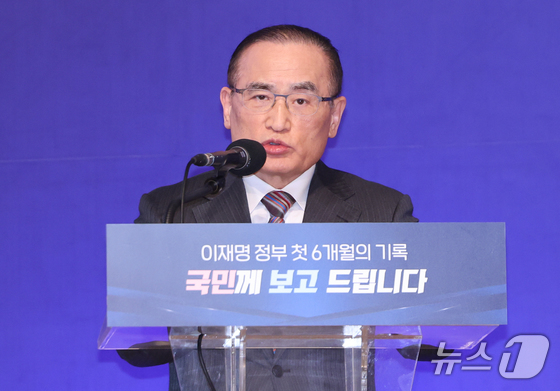
On December 7, the presidential office designated 2026 as the Year of Leap Beyond Recovery and outlined its policy to solidify the Korean Peninsula coexistence process through renewed dialogue with North Korea. National Security Advisor Wi Seong-lac assessed the past six months during a briefing on the achievements of the Lee Jae Myung administration, stating that while it hasn’t made significant progress in the last six months, it has made strides in creating favorable conditions for advancing the peace process on the Korean Peninsula.
Wi highlighted key accomplishments, including the decisive stabilization of U.S.-South Korea relations, the progressive shift in South Korea-Japan relations, and the restoration of South Korea-China relations from their lowest point. He emphasized that based on these achievements, it aims to project the diplomatic energy into the Korean Peninsula starting next year. While North Korea’s response is crucial, the international relationships they’ve established with neighboring countries are developing, so it plans to make a concerted effort.
Wi also specifically mentioned Russia, which has restored its military alliance with North Korea, stating that while there hasn’t been significant progress, we maintain communication channels with Russia. He added that it will continue to strengthen the collaboration with neighboring countries, keeping the Korean Peninsula issue at the forefront.
He hinted that contact between the U.S. and North Korea might precede inter-Korean dialogue. Wi stated that it’s difficult to pinpoint the timing, but U.S.-North Korea engagement might occur before inter-Korean talks. If either side initiates contact, it could create a positive cycle of diplomacy.
Since its inception in June, the Lee administration has consistently sent conciliatory gestures aimed at easing tensions and building trust. These include removing loudspeakers aimed at North Korea, halting psychological warfare broadcasts, and proposing military talks to establish criteria for the Military Demarcation Line (MDL) in the Demilitarized Zone (DMZ).
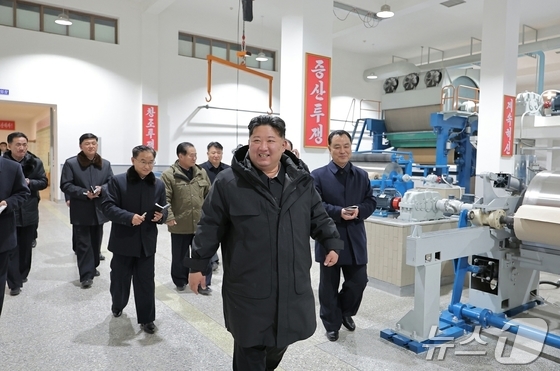
However, North Korea has not responded to these repeated proposals. This lack of engagement raises concerns that while the government expresses its ambition to resume dialogue with North Korea next year, significant challenges lie ahead.
No Response from North Korea… Experts Say Expecting U.S. Assertiveness is More Realistic than South Korea-Led Approach
The presidential office has stated that it will consider various strategies to advance inter-Korean relations next year. However, it has drawn the line at using the suspension or reduction of joint military exercises as direct negotiation leverage. Wi clarified that they are not directly considering joint exercises as a bargaining chip; it will explore various diplomatic options.
Additionally, some argue that fundamental institutional changes, such as discussions around Article 3 of the Constitution (territorial clause), driven by the so-called self-reliant faction, are necessary for North Korea to take action. However, experts widely believe this is unlikely to proceed without national consensus, making it a low-probability scenario. Consequently, many predict that the current stalemate between North and South Korea will persist for the foreseeable future.
Ultimately, analysts conclude that the success of the Korean Peninsula coexistence process hinges on whether the government can present substantial incentives to bring North Korea to the negotiating table. While North Korea actively leverages its nuclear capabilities amidst U.S.-China strategic competition and military closeness with Russia, experts suggest that diplomatic efforts from neighboring countries could open new pathways.
Professor Park Won-gon from Ewha Womans University noted that the presidential office’s use of the term coexistence in relation to dialogue with North Korea is noteworthy. It reflects a strong commitment to address North Korean issues. He added that however, as North Korea is not directly engaging with South Korea, leveraging relationships with neighboring countries, as Wi mentioned, is key.
Professor Park continued that while improved relations with China are worth pursuing, regardless of immediate effectiveness, if dialogue between North Korea and the U.S. progresses, it will create diplomatic space for South Korea to act. Therefore, pre- and post-communication with the U.S. is crucial.
He emphasized that however, for the Russia card to be viable, the war between Russia and Ukraine must end. While there is potential for improved relations with Russia, even if the war concludes, achieving normalization will take considerable time due to existing economic sanctions and sensitive country designations. Given this context, the likelihood of Russia taking significant action regarding North Korea appears low.
Senior Research Fellow Hong Min from the Korea Institute for National Unification remarked that if the government had any effective cards to play against North Korea, it would have already used them. He added that the government is relying on how actively the U.S. engages with North Korea, so rather than leading with its own initiatives, it is realistically expecting U.S. assertiveness.
Senior Research Fellow Hong noted that it seems that the U.S. is also making efforts to create an environment for U.S.-North Korea dialogue. If the atmosphere continues to develop this way, there’s a possibility that North Korea will eventually engage in some form of contact. Depending on the U.S. response, we might even enter a negotiation phase.