

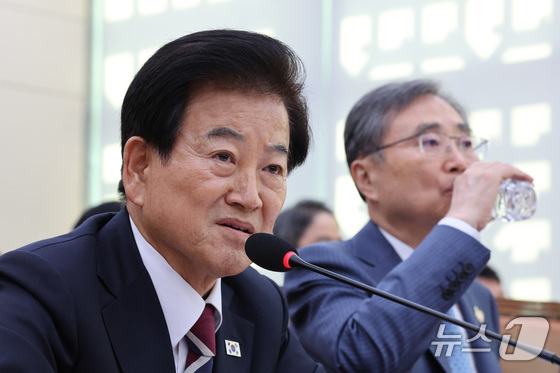
The conflict between the independent faction and the alliance faction within the government is causing significant disruptions in U.S.-South Korea coordination on North Korea policy. The Ministry of Unification’s decision to skip the regular consultations led by the Ministry of Foreign Affairs underscores the government’s inability to present a unified stance on this critical issue.
On Monday, the Ministry of Unification announced that it would not participate in the U.S.-led discussions organized by the Ministry of Foreign Affairs. Instead, they plan to discuss North Korea policy separately with the U.S., stating that the current talks are follow-up consultations based on the joint fact sheet from the recent U.S.-South Korea summit.
This move by the Ministry of Unification effectively diminishes the importance of the U.S.-South Korea coordination meeting led by the Ministry of Foreign Affairs. They assert that as allies, different ministries handle specific policy areas: the Ministry of National Defense coordinates defense policy, while the Ministry of Foreign Affairs manages foreign policy discussions. The Ministry of Unification claims it will separately negotiate North Korea-related issues, such as inter-Korean dialogue and cooperation, when necessary. This stance suggests that the opinions expressed by the Ministry of Foreign Affairs during the upcoming U.S.-South Korea consultations on Tuesday may not reflect the government’s official position.
A key issue is the Ministry of Unification’s current inability to effectively communicate with the U.S., including coordinating schedules for individual consultations. A Ministry official admitted that it needs to discuss individual consultations with the U.S. in the future.
This situation raises concerns about sending mixed signals to the United States. A former high-ranking official pointed out that the U.S. will likely ask, What is the South Korean government’s position? during tomorrow’s meeting. This undermines the credibility of the government’s messages to the U.S.
In fact, U.S. Chargé d’Affaires ad interim to South Korea, Kevin Kim, reportedly emphasized the need for a unified South Korean government position during a meeting with Minister of Unification Chung Dong-young on November 25.
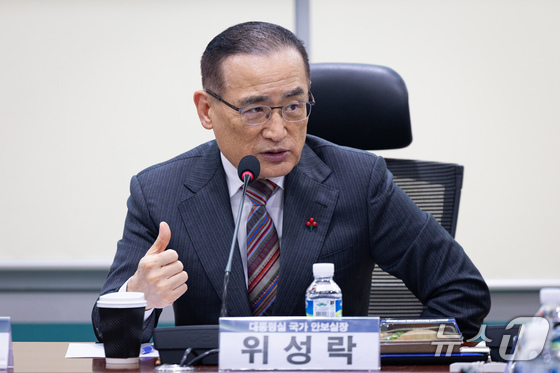
The Pro-Independence Faction and the Alliance Faction Clashed Over Every Issue… Some Pointed Out that the President Must Make a Decision
This discord has persisted since the government’s inception.
Minister Chung, associated with the independent faction, has adopted North Korea’s two-state theory proposed in December 2023, framing it as a realistic two-state theory. In response, National Security Office head Wi Sung-lac, leader of the alliance faction, countered that the two-state theory is not the government’s official position, asserting that the administration does not support or recognize it.
Regarding U.S.-South Korea joint military exercises, Minister Chung argues for halting or reducing the drills to encourage dialogue with North Korea. Conversely, Director Wi maintains that suspending or scaling back joint exercises is not being considered as a means to facilitate inter-Korean dialogue.
This conflict has extended to the operational methods of the National Security Council (NSC), which is primarily led by the alliance faction. During a forum held by senior members of the independent faction on December 3, Professor Moon Chung-in from Yonsei University publicly suggested that NSC Permanent Chair Wi should reconsider his position, stating that he may believe he’s doing well in this role, but in Moon’s view, some adjustments are necessary.
The elder statesmen recalled when Minister Chung held the NSC chair in 2005, effectively calling for Director Wi to step down. Reports also emerged that Minister Chung himself stated during an NSC meeting that the Minister of Unification should chair the council.
The two officials reportedly engaged in heated discussions within the NSC regarding the Ministry of Unification’s participation in the upcoming U.S.-South Korea regular consultations. Observers suggest that the emotionally charged statement from the Ministry of Unification arose from this context.
A Foreign Ministry official expressed frustration, stating that the fact sheet between the U.S. and South Korea mentions coordination on North Korea policy, which is why they are holding consultations. The Ministry of Unification may not want to acknowledge this situation, but South Korea and the U.S. will clearly discuss North Korea policy.
The government believes that a significant turning point in Korean Peninsula affairs will occur around President Donald Trump’s visit to China in April next year. However, the ongoing internal conflicts are likely to negatively impact communication with the U.S.
Some speculate that during the scheduled reports from the Ministry of Foreign Affairs and the Ministry of Unification on Friday, President Lee Jae Myung may make a decision to resolve these conflicts. Whether the discord will be amicably resolved or erupt into further issues remains uncertain. There are ongoing calls to prevent the spread of negative messages both domestically and internationally if the conflicts persist. Consequently, the president’s determination on this matter is drawing significant attention.