

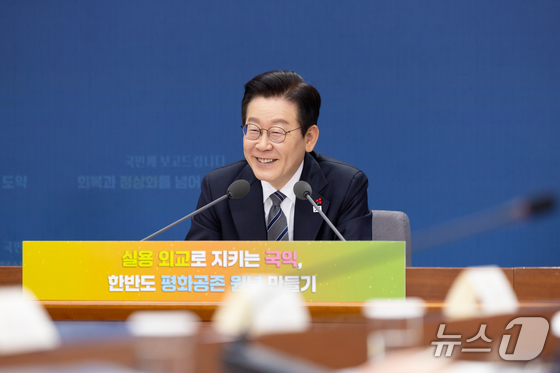
President Lee Jae Myung has emphasized that the Ministry of Unification will spearhead the government’s North Korea policy. This shift means that the Ministry of Unification will now be responsible for conceptualizing and implementing policies related to North Korea. On December 20, observers noted that this change presents a new situation for the U.S., which has previously discussed North Korean issues through the South Korean Ministry of Foreign Affairs and U.S. Department of State channels.
During the ministry reports on the 2026 work plan, President Lee remarkeed that it appears that relations between North and South Korea have truly become adversarial. He urged the Ministry of Unification to take proactive steps to ease tensions between the two Koreas.
The presidential office has previously announced plans to designate next year as the inaugural year for the Korean Peninsula Peaceful Coexistence Process, aimed at improving inter-Korean relations. It is anticipated that the Ministry of Unification will oversee relevant policies in the coming year. This change is expected to alter the communication framework between South Korea and the U.S., as North Korea-related matters have traditionally been handled through the Ministry of Foreign Affairs and the Department of State.
The Unification Diplomatic Security Policy Coordination Meeting, established during the Kim Young-sam administration, was restructured into the National Security Council (NSC) under Kim Dae-jung. Through the Roh Moo-hyun administration, the Minister of Unification served as the permanent chair of the NSC, placing the Ministry of Unification at the forefront of North Korea policy.
However, the Lee Myung-bak administration’s changes to the NSC shifted leadership to the Ministry of Foreign Affairs. This structure persisted during the Moon Jae-in administration, with the National Intelligence Service and the Ministry of Unification functioning as channels for North Korean negotiations and communications, while the Ministry of Foreign Affairs managed discussions with the U.S.
Notably, the Moon administration established a working group to coordinate overall North Korea policy. Given the significant influence of U.S.-North Korea negotiations over inter-Korean dialogue, the Ministry of Foreign Affairs took the lead in this working group, effectively controlling the policy direction.
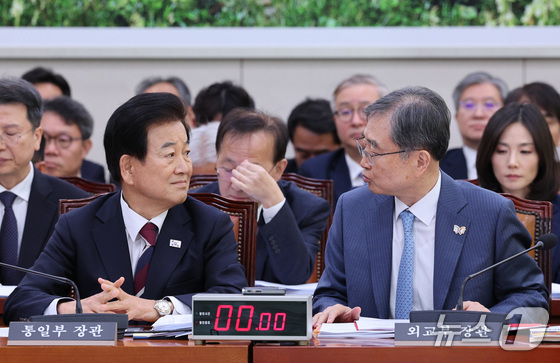
This approach has drawn criticism from the self-reliant faction, which advocates resolving Korean Peninsula issues through bilateral means. They argue that the Ministry of Foreign Affairs aligns too closely with the U.S., failing to positively impact the development of inter-Korean relations.
President Lee’s reorganization has given the Ministry of Unification a fresh opportunity after nearly 17 years. The key question now is whether the U.S. will respond favorably to this change.
While the U.S. is unlikely to explicitly oppose South Korea’s sovereign decisions, experts believe that the 2018 working group model represents the ideal approach from the U.S. perspective. A sudden advancement in inter-Korean relations could potentially disrupt U.S.-North Korea negotiations and Trump-style diplomacy, potentially conflicting with President Donald Trump’s desire to be seen as a peace mediator.
The U.S. administration, including the State Department, may raise concerns about the level and rank of communication channels. They argue that it’s more natural to communicate through the National Security Council or the Ministry of Foreign Affairs, which have established similar systems and maintained close communication over time. Currently, the U.S. State Department lacks a direct communication channel with the Ministry of Unification.
The prominent role of the Ministry of Unification may raise questions about its relevance in the current international context, where North Korea sanctions have solidified and the focus has shifted from exchange and cooperation to nuclear issues.
Minister Chung Dong-young recently announced plans to establish a Special Envoy for Peace on the Korean Peninsula, seemingly aimed at addressing potential communication issues with the U.S.
Minister Chung clarified that this role differs from a Special Envoy dispatched to North Korea, stating that he believes appointing a high-level special representative for North Korea is necessary to facilitate a U.S.-North Korea summit. Given the need to create openings in relations with North Korea, this system is essential for communication with neighboring countries. This suggests that the role will oversee North Korea issues separately from the Office of National Security or NSC, which handle broader foreign affairs.
Minister Chung indicated that the Special Envoy for Peace will serve as a counterpart to the U.S. Special Representative for North Korea Policy, a position currently vacant. However, the U.S. response to this proposal remains uncertain.
Experts believe that due to the lack of meaningful communication between the U.S. and North Korea, the U.S. is unlikely to rush to express a position on the Lee administration’s decisions. They anticipate a gradual process of position alignment in future communications between the two countries.
Professor Kim Jong of North Korea University stated that the U.S. will neither express a special position regarding the Ministry of Unification’s involvement nor welcome it.
Professor Kim added that whether North Korea will respond is a separate matter. If North Korea does not engage, the Ministry of Unification could find itself in a difficult situation.