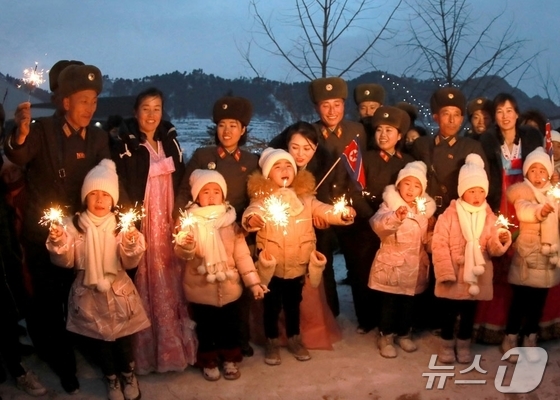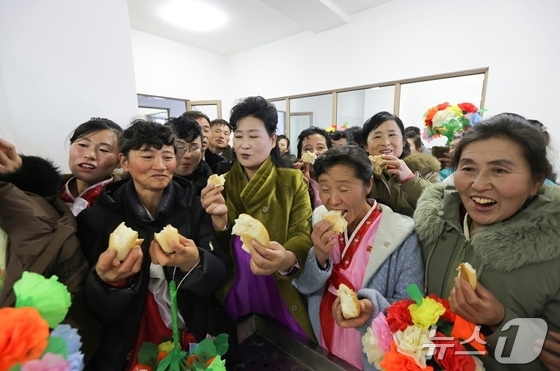
North Korea is celebrating the construction of local industrial factories on a daily basis, extensively promoting these developments. This week alone, ten factories opened across various regions, with Kim Jong Un, the General Secretary of the Workers’ Party of Korea, attending inauguration ceremonies for two of these facilities to highlight year-end achievements. North Korea has even begun referring to the recent flurry of activity as the season of inaugurations.
On December 18, Kim attended the inauguration ceremony for a local industrial factory in Changyon County, South Hwanghae Province. This appearance came just three days after he attended the ceremony for the local industrial factory and comprehensive service center in Kangdong County on December 15.
According to Rodong Sinmun, North Korea’s state-run newspaper, on December 15, in addition to the factory in Kangdong County, new factory inauguration ceremonies also took place in Sinyang, Rangrim, Daegwan, and Bullyeong counties. On December 16, another ceremony occurred in Hwangju County, followed by ceremonies on December 18 in Changyon, Pukchang, Cheorwon, and Janggang counties for new local industrial factories.
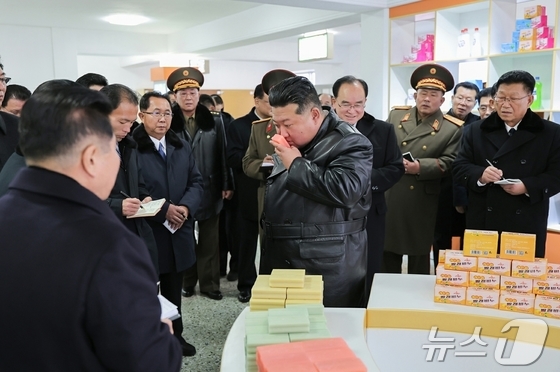
What’s particularly striking is that all the inauguration ceremonies were staged like festivals. The December 16 edition of Rodong Sinmun featured a photo from the Kangdong County factory inauguration that unusually focused on the factory itself rather than Kim, a rare approach in North Korea where images of the supreme leader typically dominate media coverage.
Attendees at the ceremonies held the distinctive North Korean flower sticks, with fireworks exploding above and below the buildings. The media prominently featured scenes of Kim inspecting the factory with officials, sampling food, and expressing satisfaction, alongside residents exploring the facility and enjoying newly produced goods.
The newspaper emphasized images of children enjoying the new factory and products, underscoring the regime’s people-oriented policies and the supreme leader’s achievements for future generations.
This approach was repeated in the report from December 19, which covered the inauguration of five factories. The Rodong Sinmun, which usually publishes six pages, expanded to eight pages on December 16 and 19, dedicating virtually all the space to news of the new factory inaugurations with over 100 photos featured in each edition.
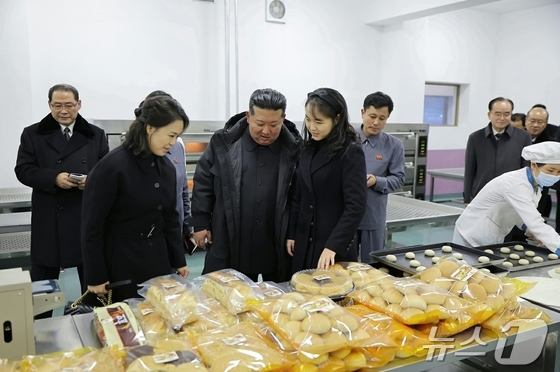
Through this extensive propaganda campaign, North Korea appears to be emphasizing achievements during a crucial period as it approaches the final year of implementing decisions from the 8th Party Congress and the upcoming 9th Party Congress early next year. The regime seems to be aiming to win public support and strengthen unity.
The National Security Strategy Institute, affiliated with South Korea’s National Intelligence Service, recently published a report titled, 2025 Situation Assessment and 2026 Prospects. The analysis suggests that Kim prioritizes on-site leadership and focuses on showcasing economic achievements and events through direct engagement with the people.
Earlier, Kim announced the Local Development 20X10 policy as a key economic initiative, pledging to establish local industrial factories in 20 regions each year for the next decade. This policy appears set to continue long-term, independent of the five-year national plans established by party congress decisions.